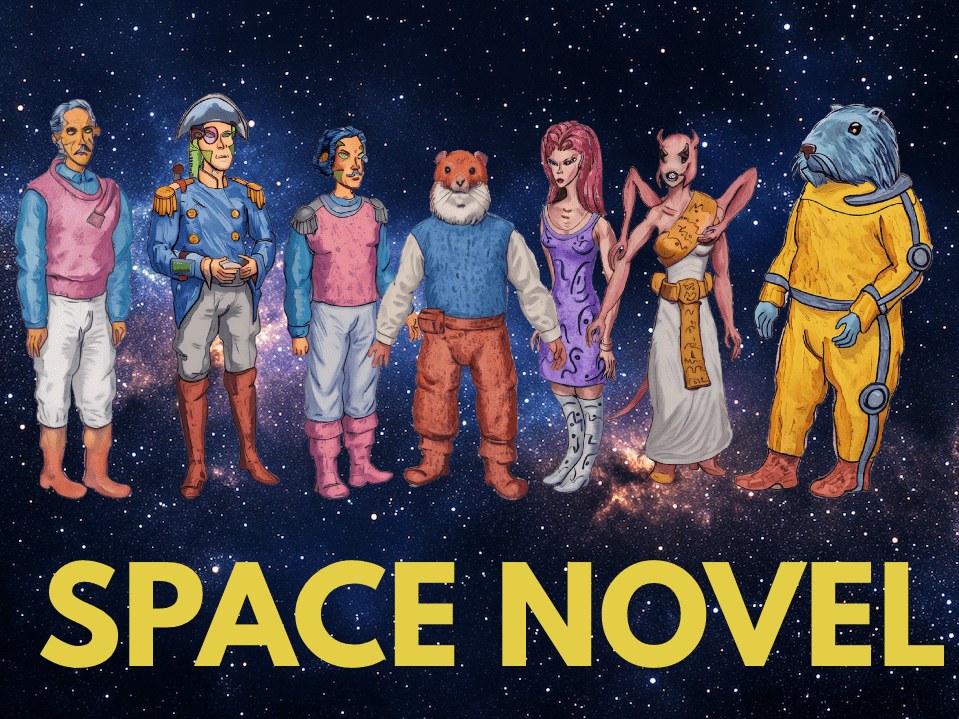
How I've spent almost twenty years building the sci-fi universe of Space Novel — its races, powers, history, and illustrations.
Hi, my name is Dmitrii. Today I decided to tell you about the hobby I've been pursuing for almost twenty years.
Back in the 2000s I was still a child, and that's when I became seriously hooked on science fiction. Mostly it was adventure sci-fi: "The Star Kings" by Edmond Hamilton, the fiction of Poul Anderson and Harry Harrison, the books of Stanisław Lem, the worlds of the Strugatsky brothers, and many other works of the genre. But simply reading wasn't interesting enough for me, so alongside it I began building a fictional universe of my own.
At first it was very naive and simple, and in many ways it essentially copied the world of "The Star Kings", which back then, at around twelve, I truly loved. But I grew up, and my love for science fiction and for inventing my own worlds never went away. I kept coming back to this universe again and again over many years. In that time I completely reimagined it several times, and by now it bears little resemblance to that early source of inspiration. It has become far more original — and it's this world that I want to share today.
Of course, over all these twenty years I wasn't working only on this universe: I have a steady job, and there wasn't all that much time for creative work. Sometimes I abandoned the project for months, even years. But in 2020, when we were all sitting in lockdown, I came back to it again — with new enthusiasm and new energy.
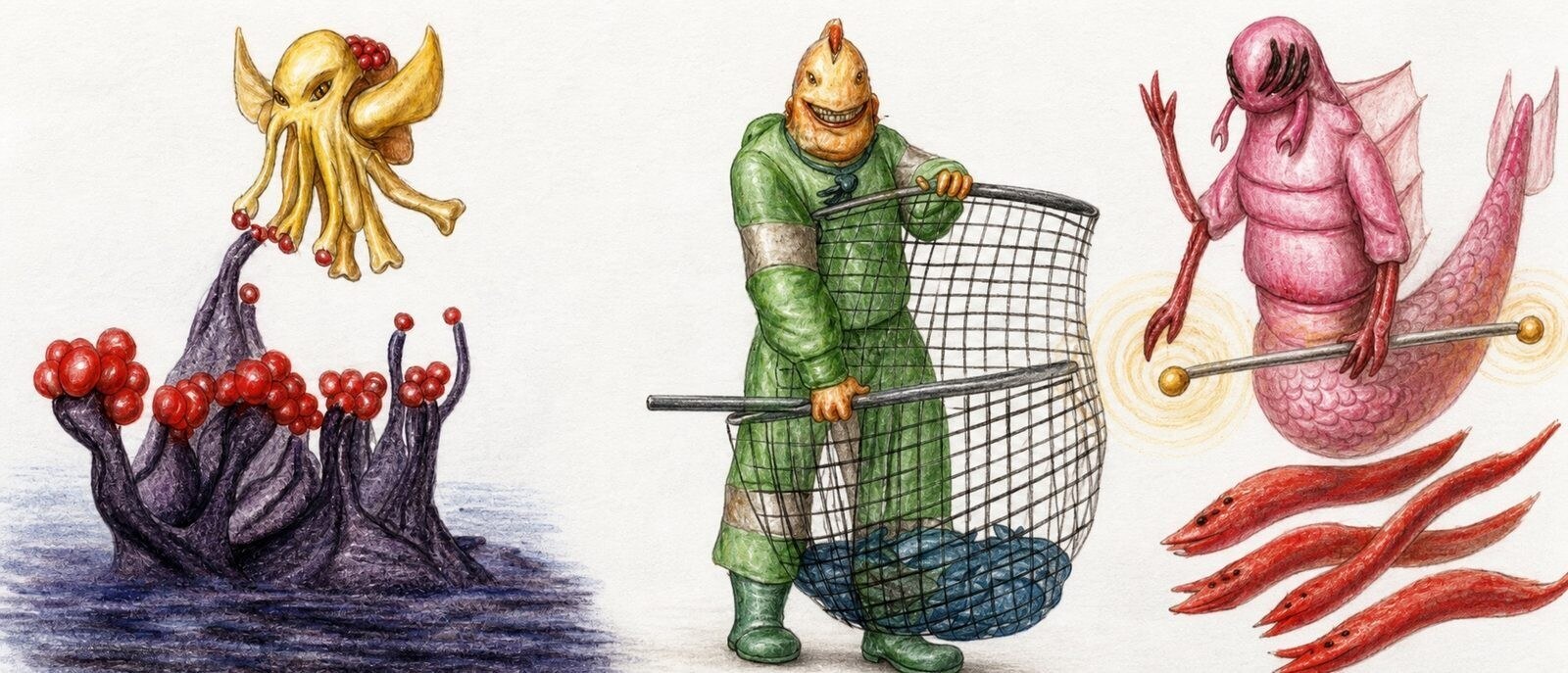
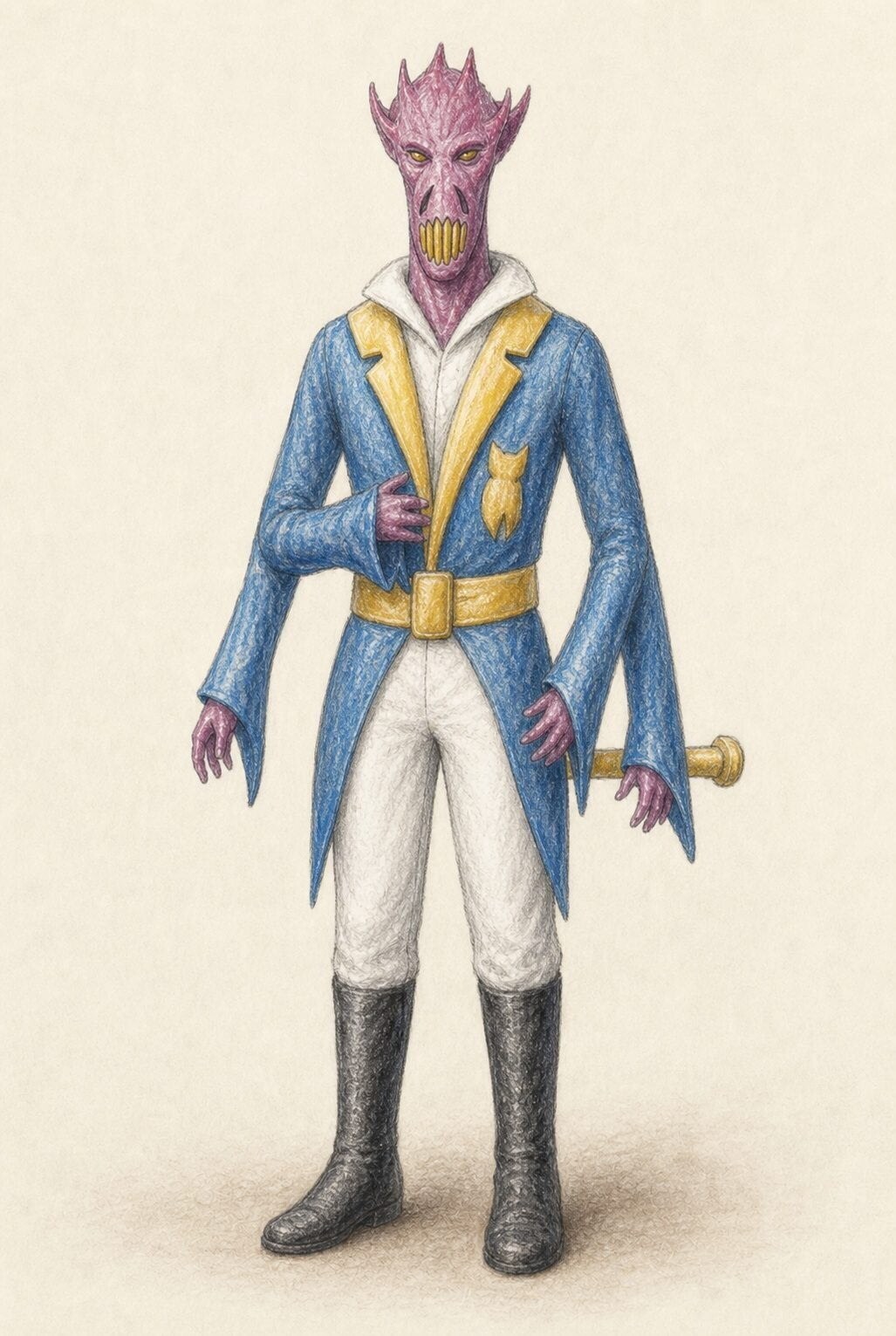
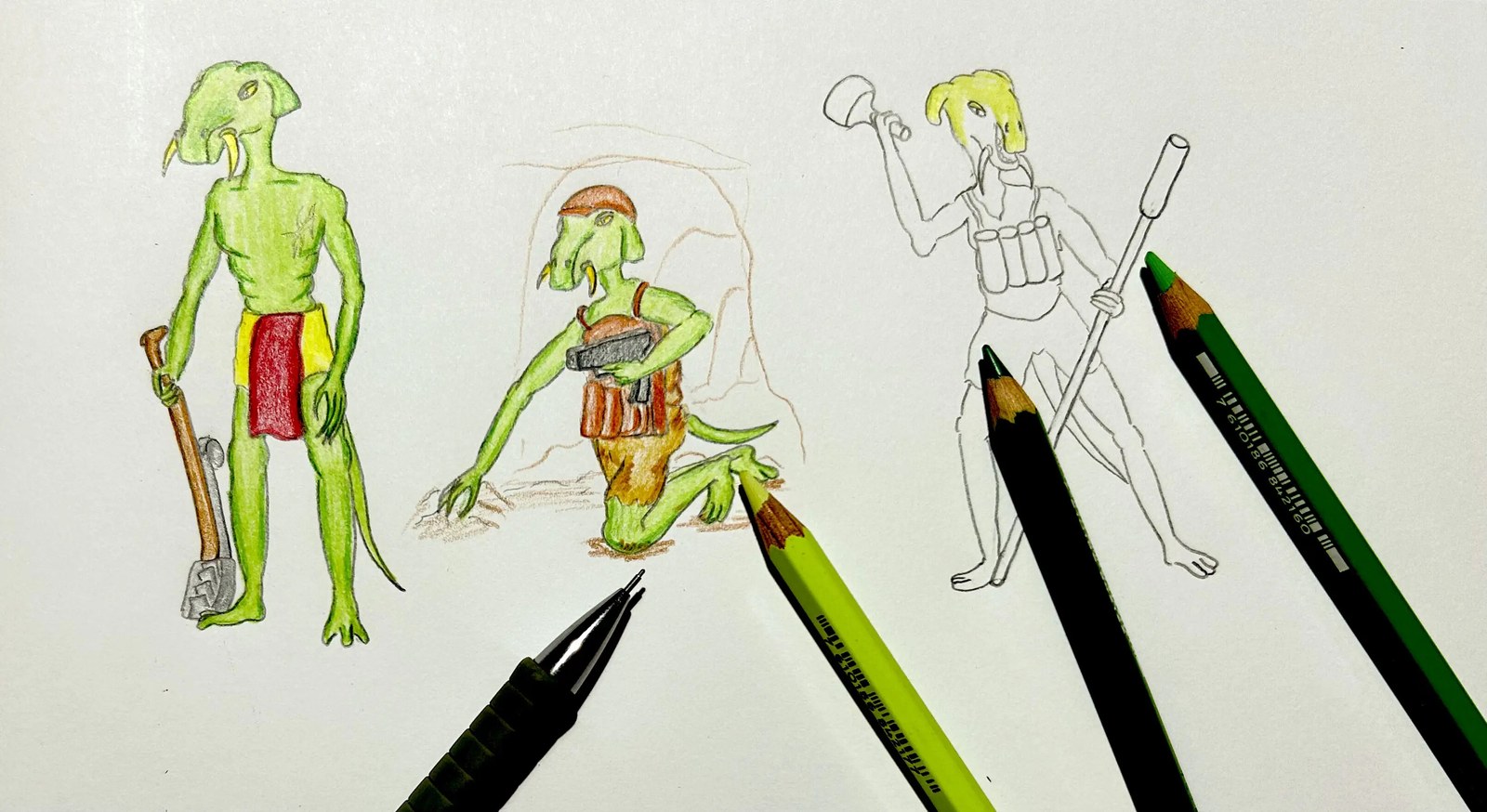
Over my work on this universe I not only described races, states, and events, but also began illustrating what happens in it. That said, I'm not from a creative profession — I'm a techie — so I wouldn't rate my artistic skills too highly. What I love most is drawing in pencil and then refining the drawings. I used to process them in Photoshop, and these days neural networks help a great deal. Even so, I try to make sure the final illustrations still keep my own style.
Now we can move on to the universe itself.
The era of humanity is already over. The events unfold in another galaxy, in an age where humanity long ago ceased to be the only great power. More than ten thousand years ago there was the dawn of humanity, when it occupied most of the galaxy and possessed incomparable military and scientific might. But that is now in the distant past: the Great Ancient Empires, the human empires, perished in the fire of a terrible war, and much technology was lost.
Today, ten thousand years after the war that effectively destroyed humanity and set its development back by millennia, we face an entirely different galaxy — far more diverse and far less uniform.

Before talking about who inhabits the galaxy now, it's worth at least briefly running through its history.
After the decline of humanity came the Age of Oblivion, when old and young races filled the niches left behind by humans. Alliances and unions formed, and the minor races grew ever more numerous. Many of them built their own unions and empires, and some races earned the nickname of Great Races for their enormous influence on the galaxy's political landscape. Humanity itself did not vanish entirely — it gave the galaxy new powers — but now new threats loom over it. Extragalactic forces such as the Star Wanderers, the Galactic Union of Races, and above all the Ancients want to claim their piece of the pie here. For the first time in 10,000 years, the races inhabiting the galaxy face challenges that could shake its order to the foundations.
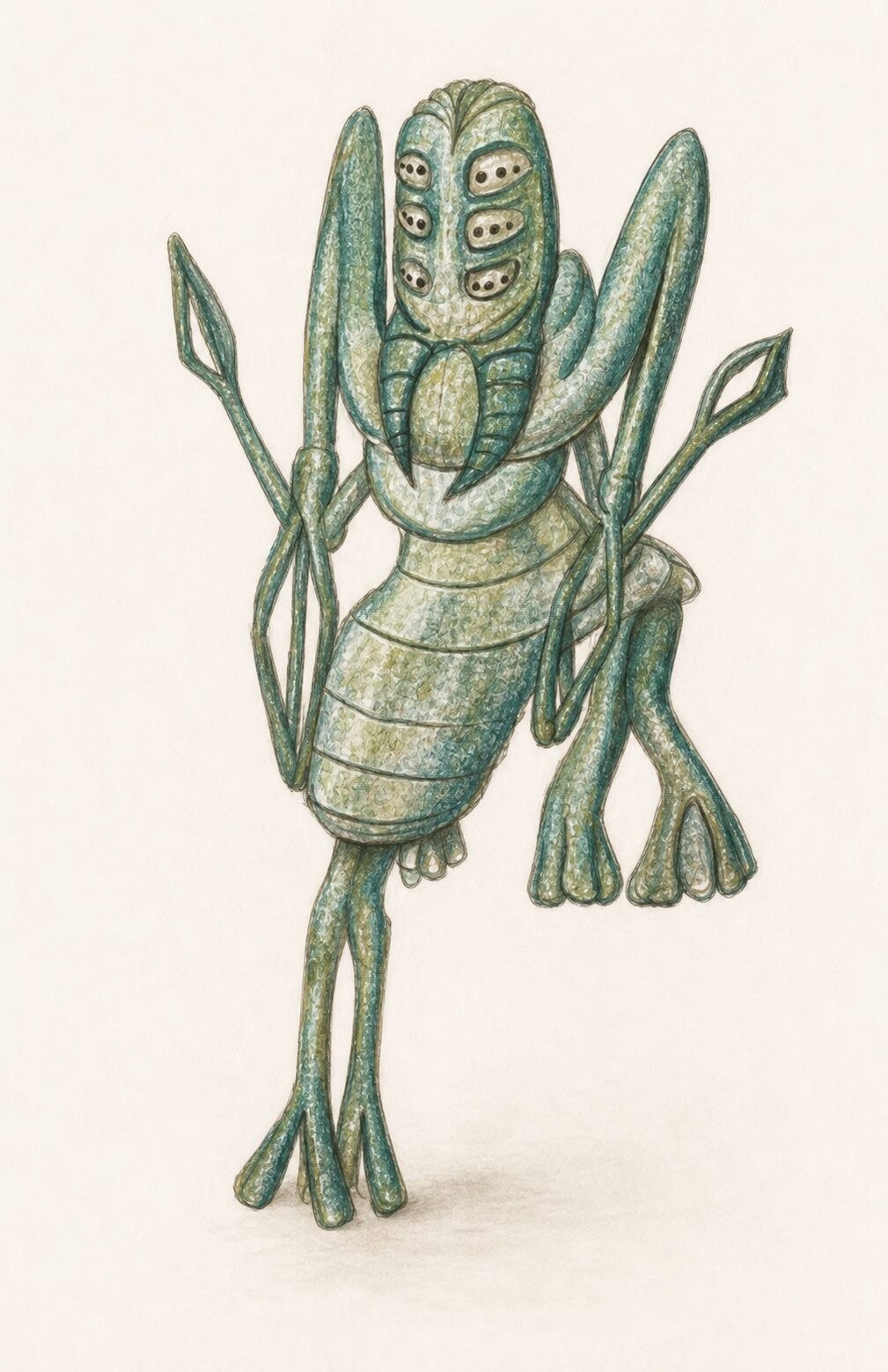
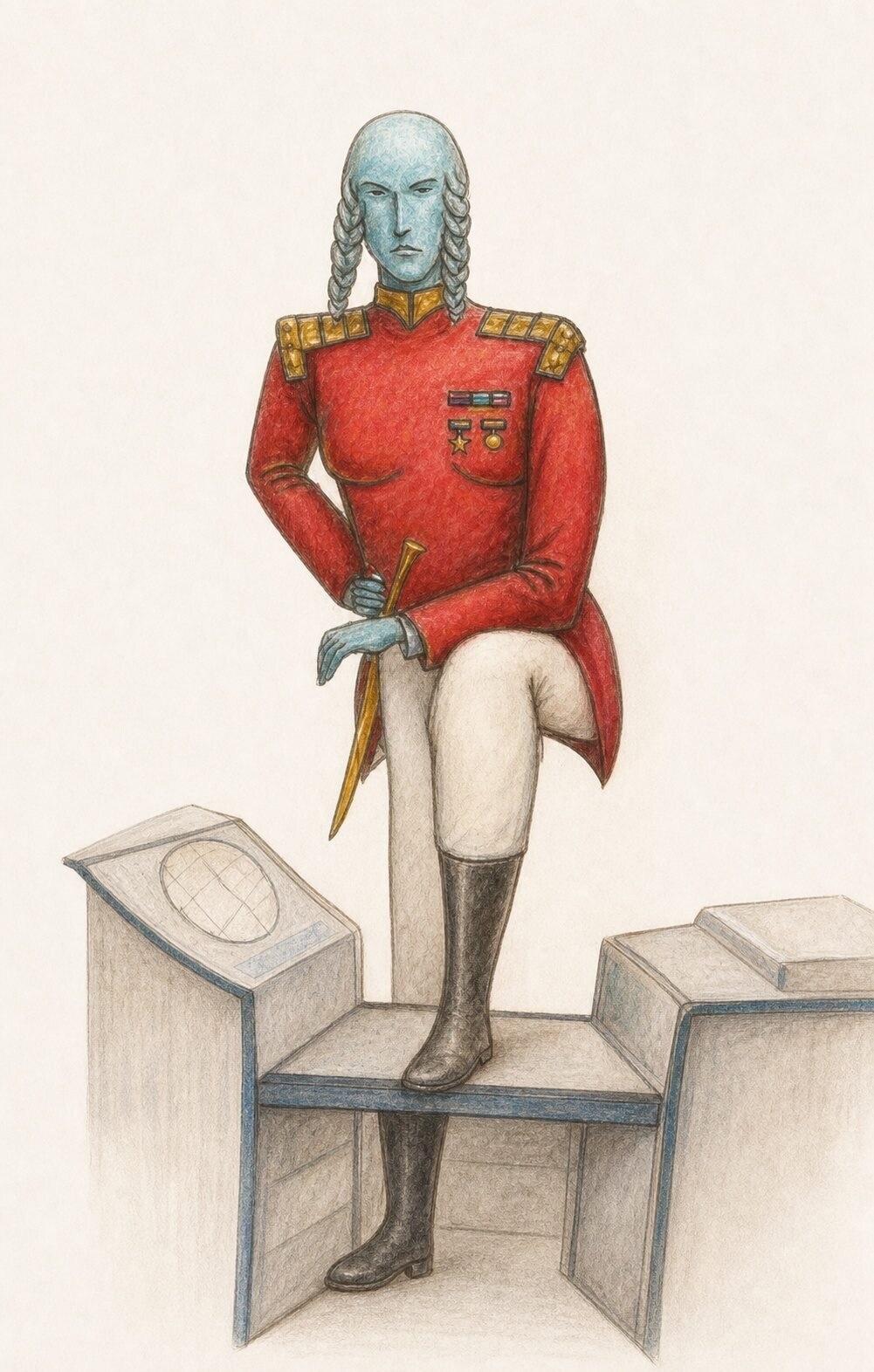
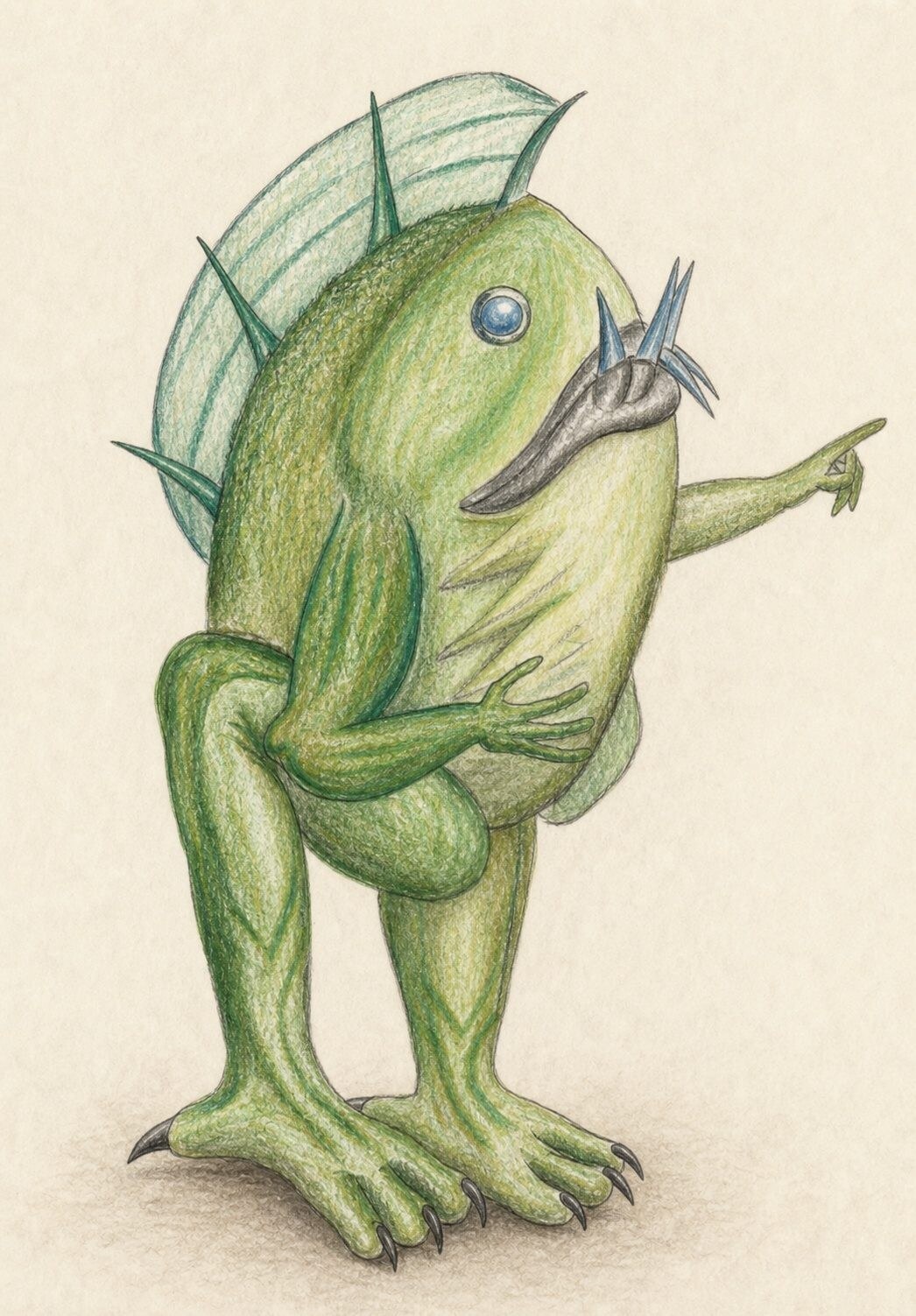
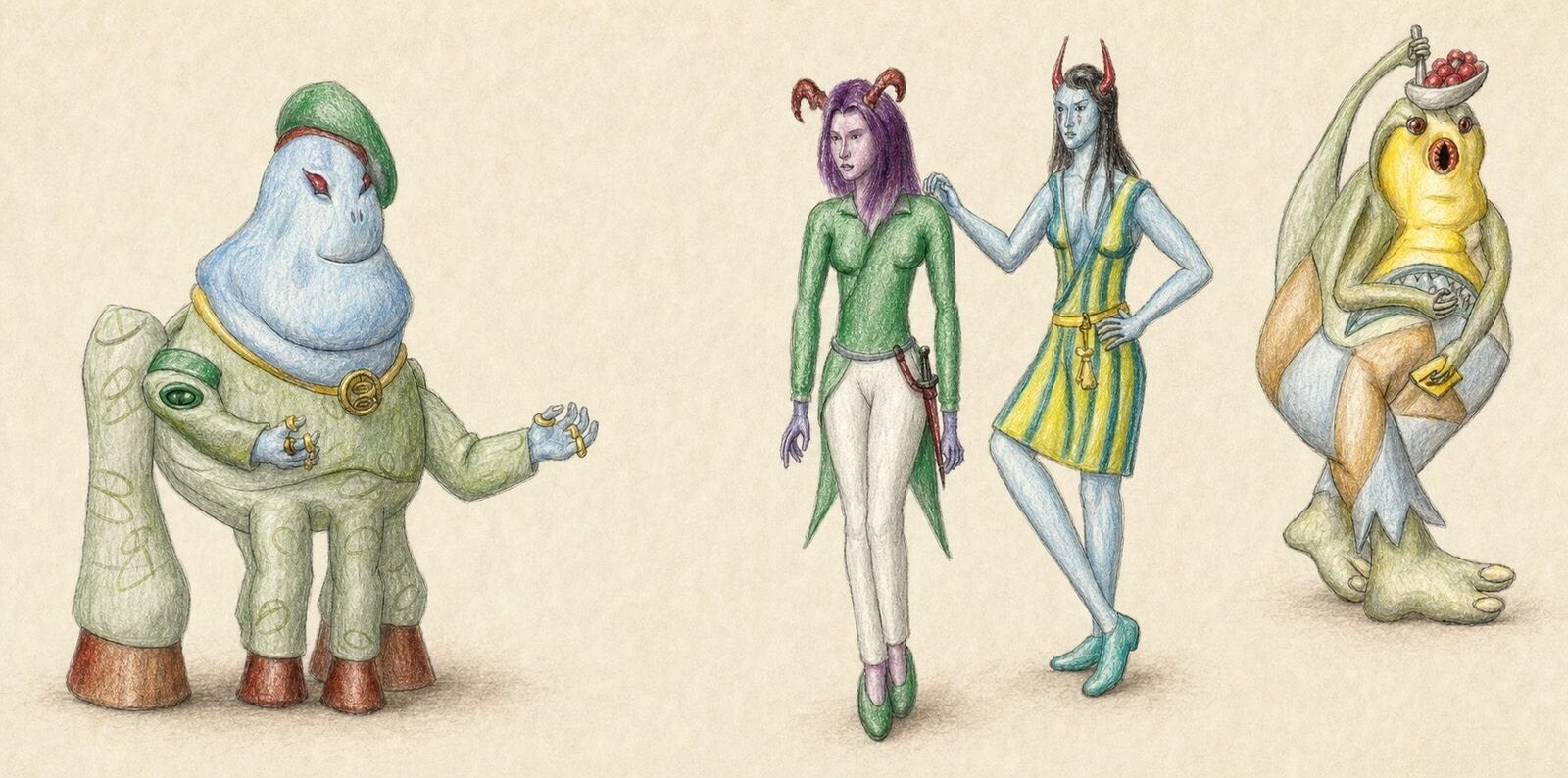
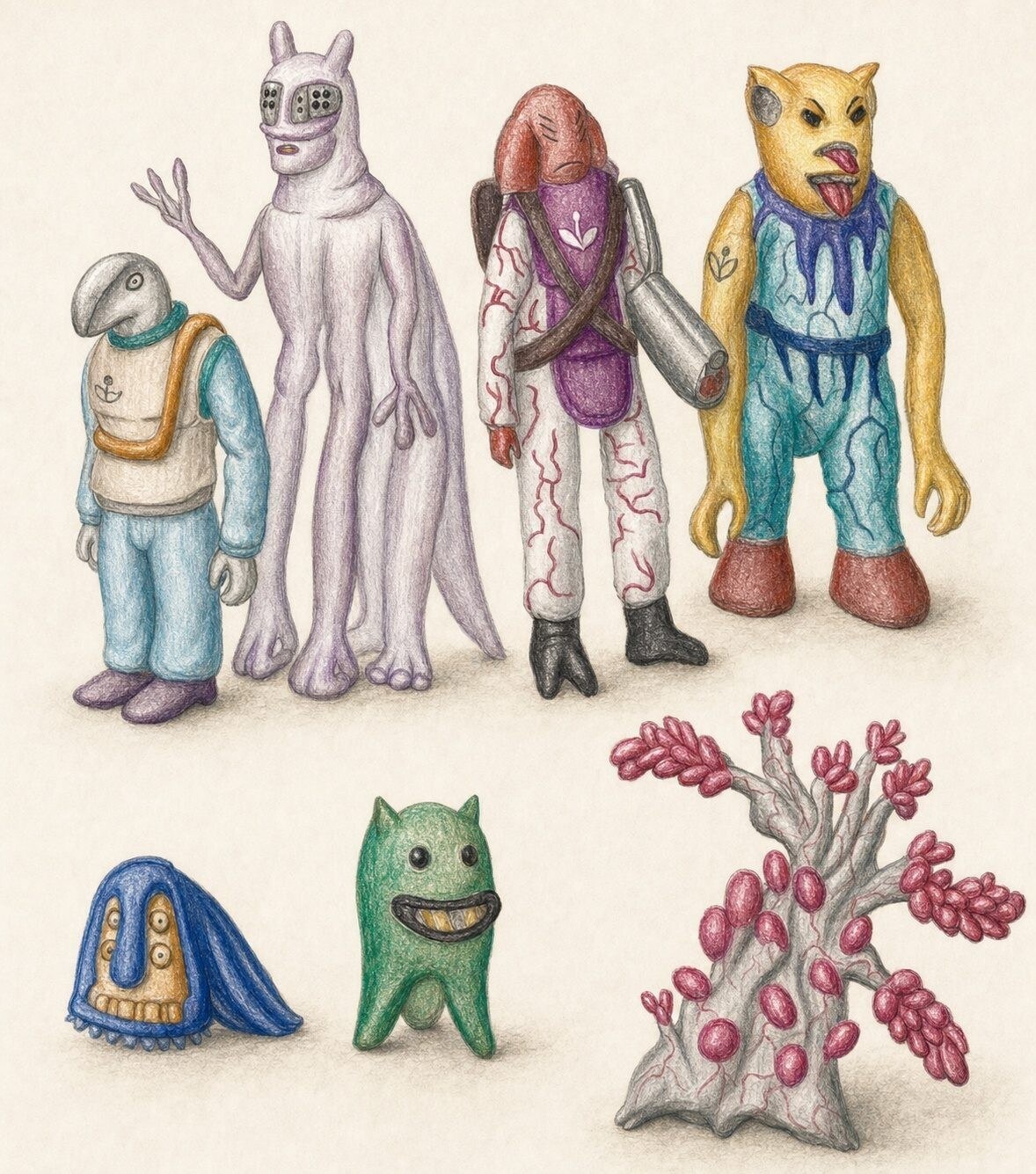
The galaxy is inhabited by hundreds of sentient races — from ancient superpowers to barely discovered tribes. In my archive I try to describe them in as much detail as possible: their appearance, origin, character, and place in galactic politics. Here are a few of those I've already managed to illustrate.
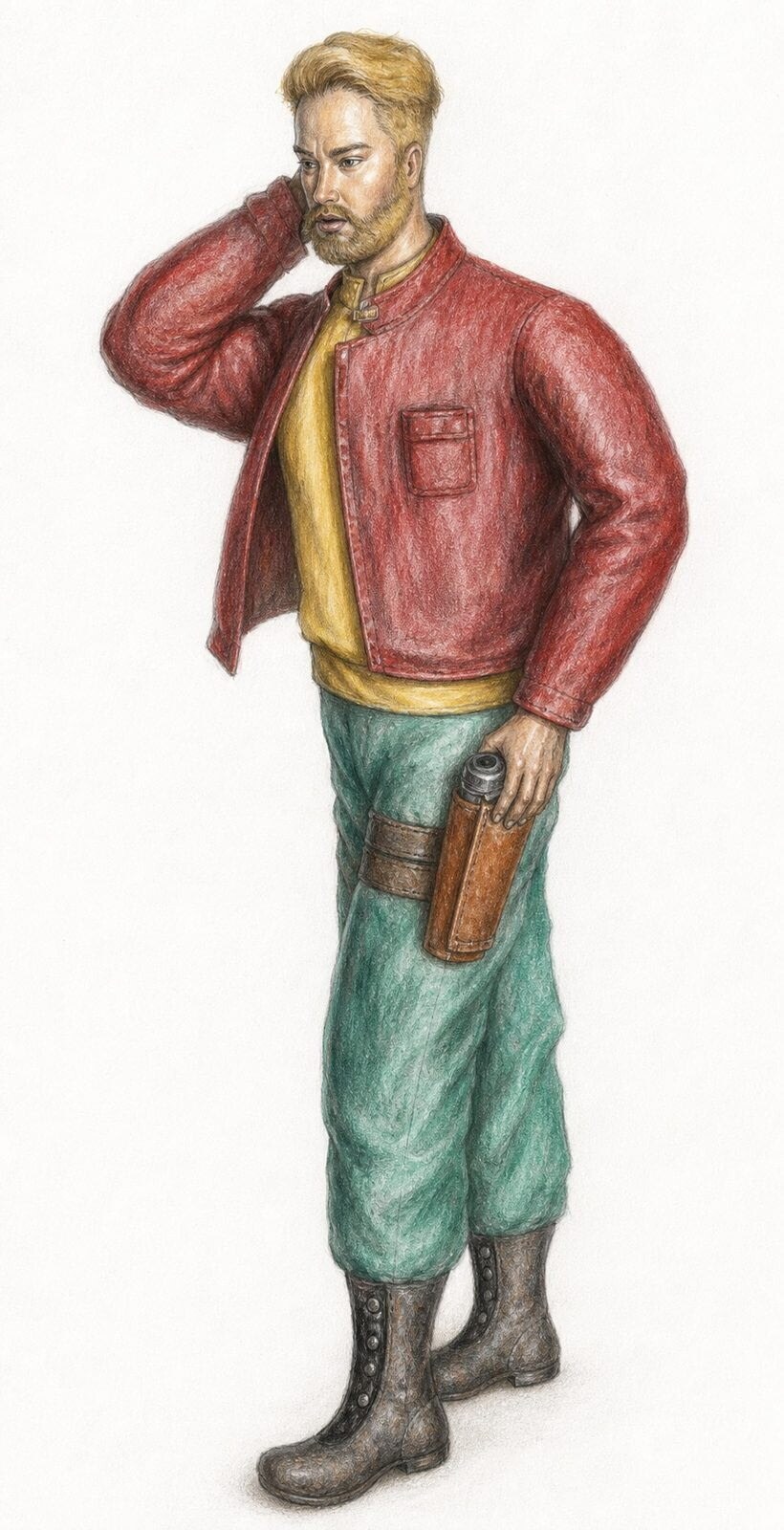
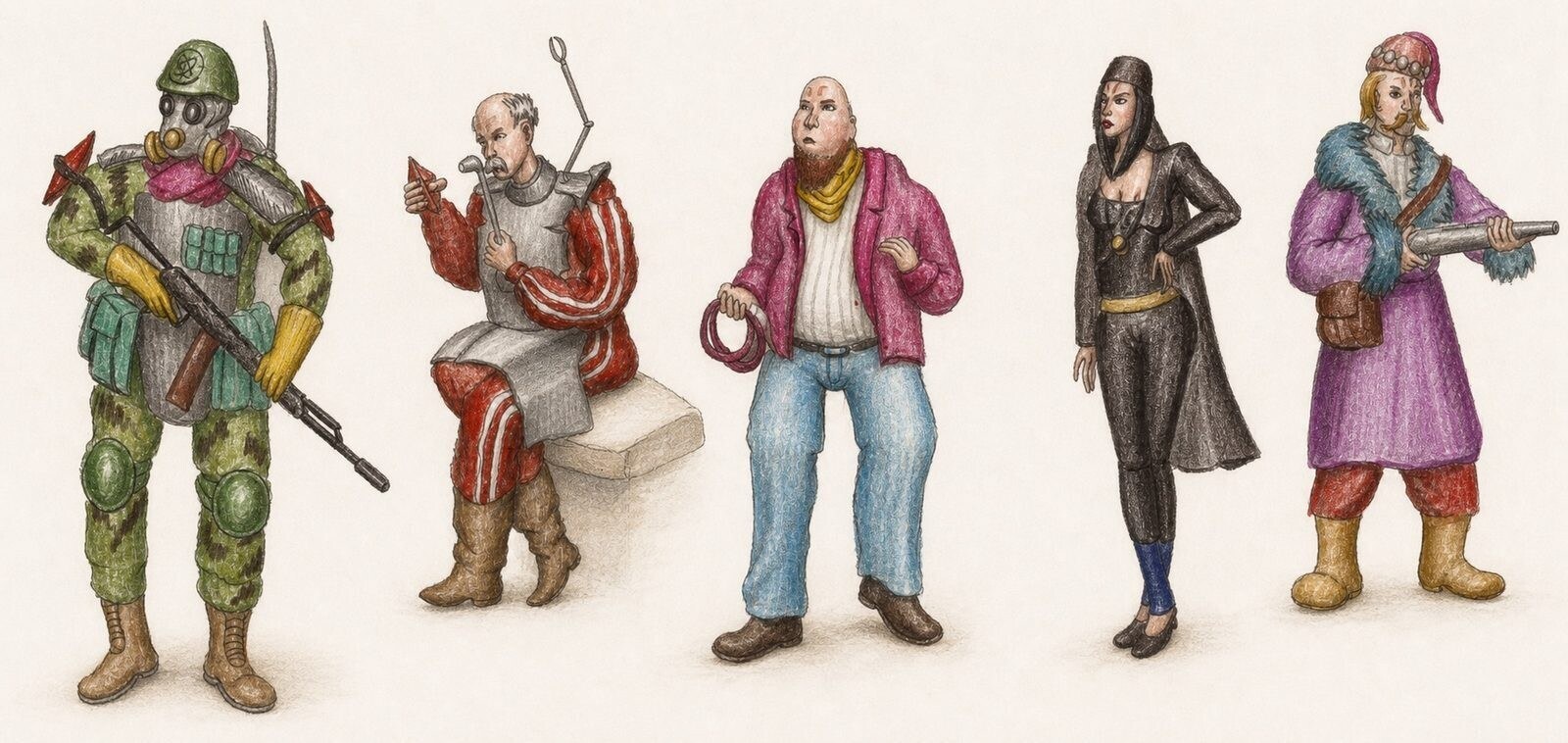
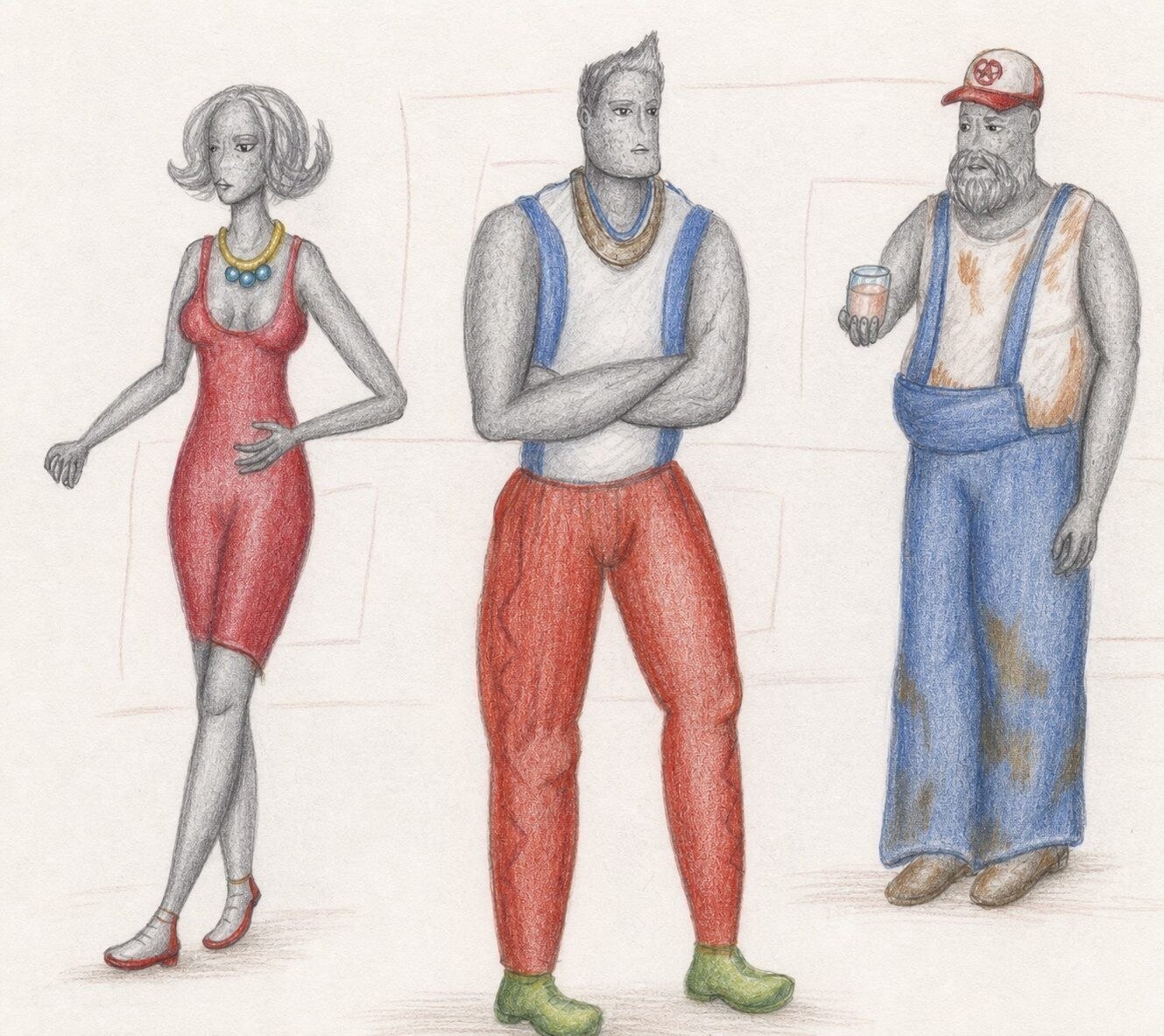
Humans — once masters of the galaxy, now a numerous and extremely diverse race: they live across many powers and remain the main force behind extragalactic expansion.
During the age of the Great Ancient Empires it was humans who ruled the galaxy — but only memories remain of their former unity and might. Today humans are scattered across many states: they are the titular race of the Horde, hold important positions in the Empire of the Golden Suns, and the Infinite Alliance was originally created by humans in the first place. That said, many have reshaped their minds and bodies so heavily that these Novolyudi can hardly be called human in the old sense.
If human societies had to be described in a single phrase, it would be extreme diversity. Humans live in almost every corner of the galaxy and remain the main driving force behind extragalactic expansion: the Horde's project "Distant Shores 2" is devoted to colonizing distant galaxies and building outposts beyond its edge.
And although the era of humanity is long past, in the eyes of many humans still remain a potential threat: many fear that something like the Great Ancient Empires might one day be recreated. Few besides humans themselves would wish to see it return.

Aralek — founders of the second most significant religion and one of the wealthiest races: their monopoly on benzoranj technology keeps the entire rare-fuel market under their control. These days they are going through hard times of religious schism — a young and far more aggressive faith, Avsahism, threatens to turn their world upside down.

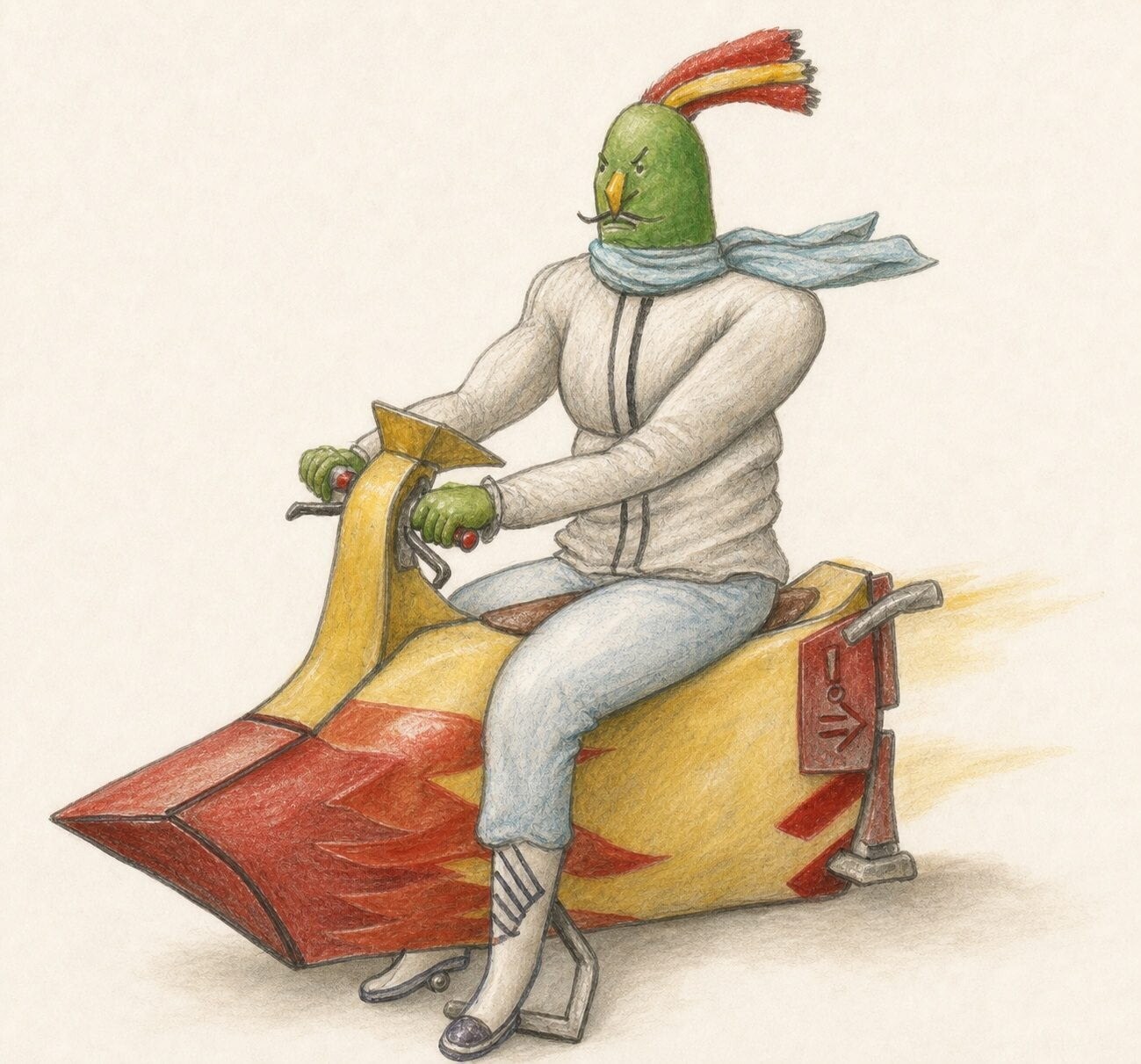
Kiorns — warlike bird-like beings with a culture of duels and honor combat; at the same time advanced scientists whose internal feuds are sometimes fiercer than their wars with outsiders.

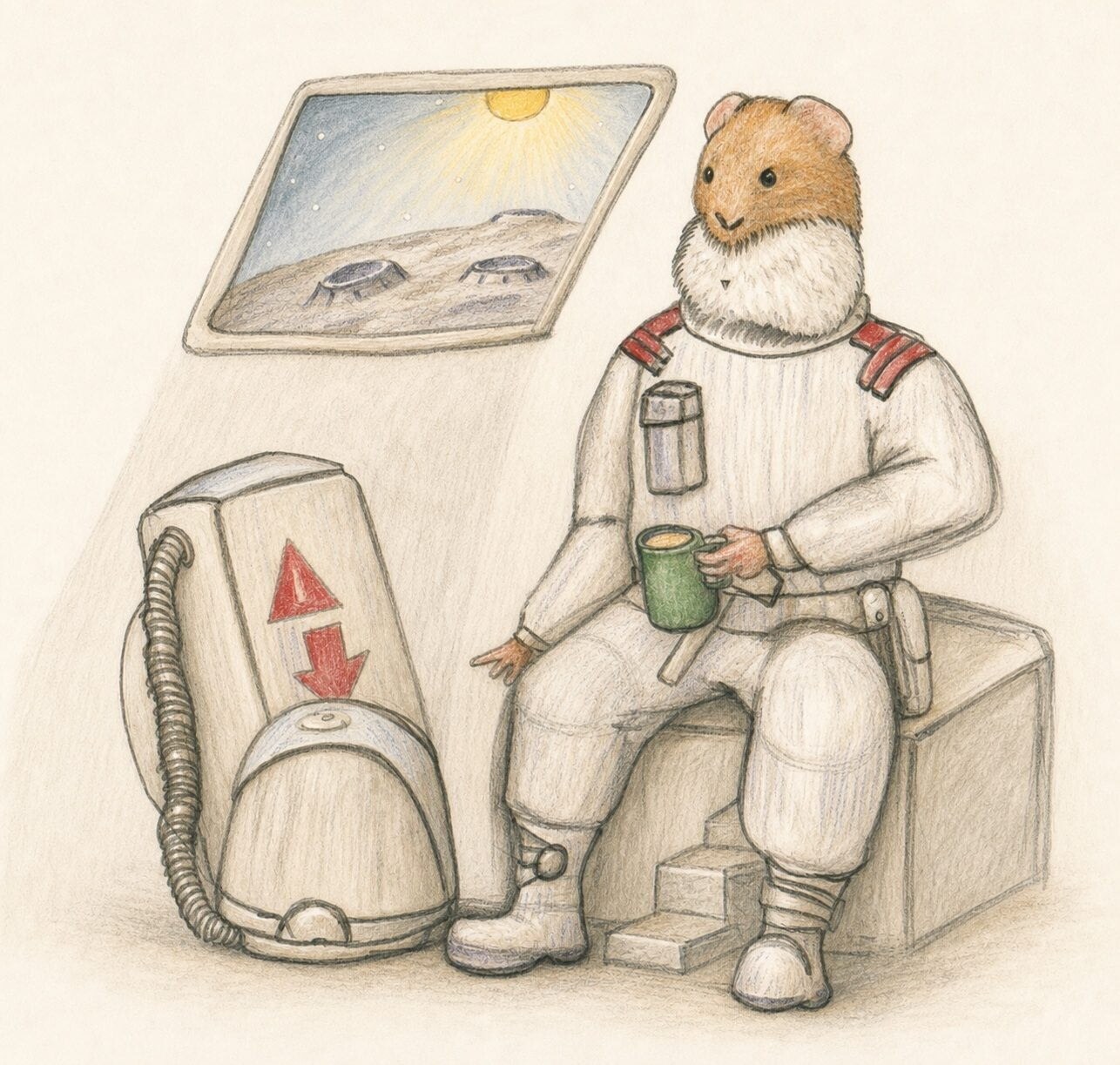
Homyaks — one of the galaxy's most widespread races, hardy and resistant to radiation. An acute shortage of females (one in ten) gave rise to a unique society of contract births, in which the males raise the children. And for the chance to continue one's line, one must work half a lifetime.

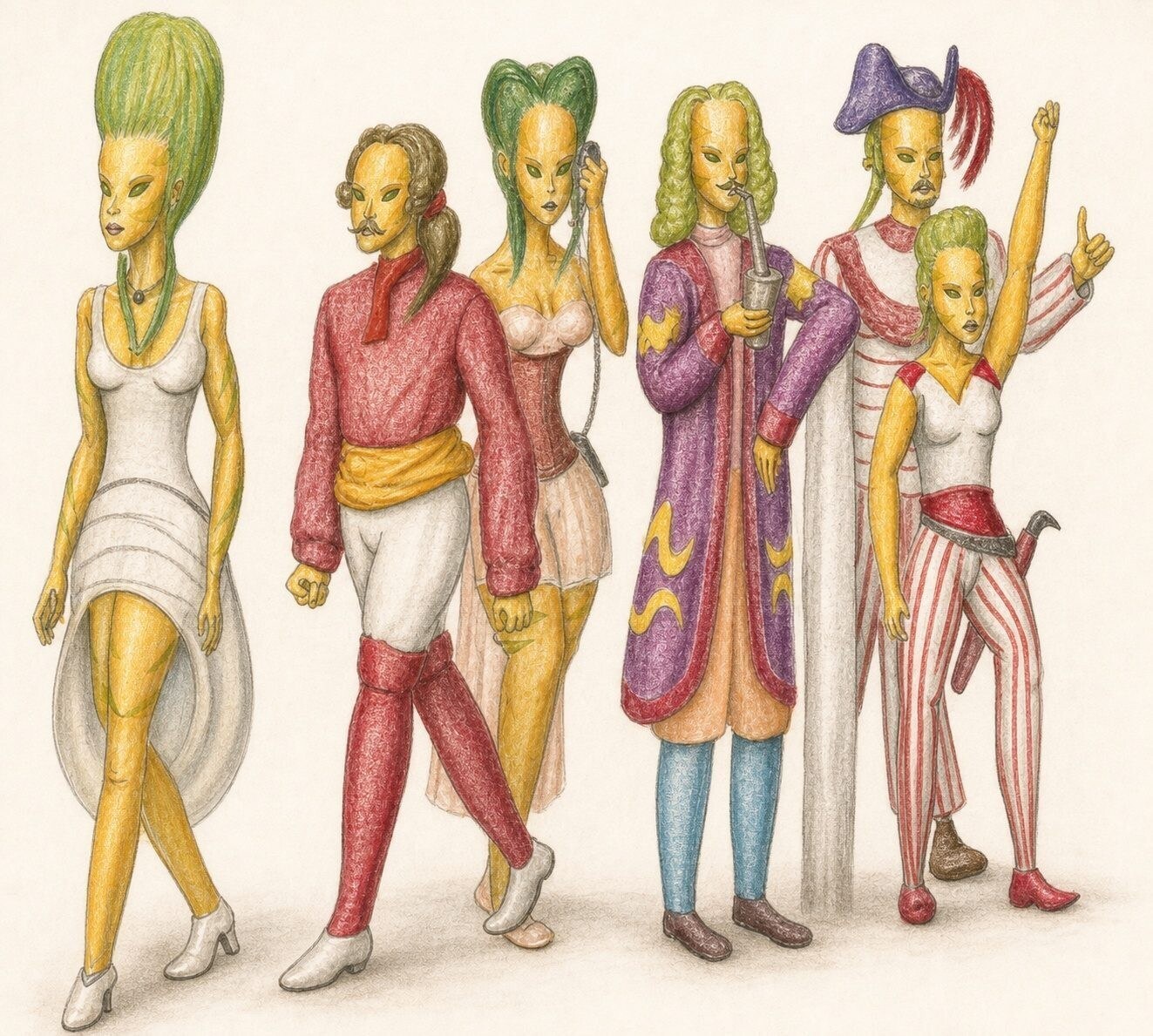
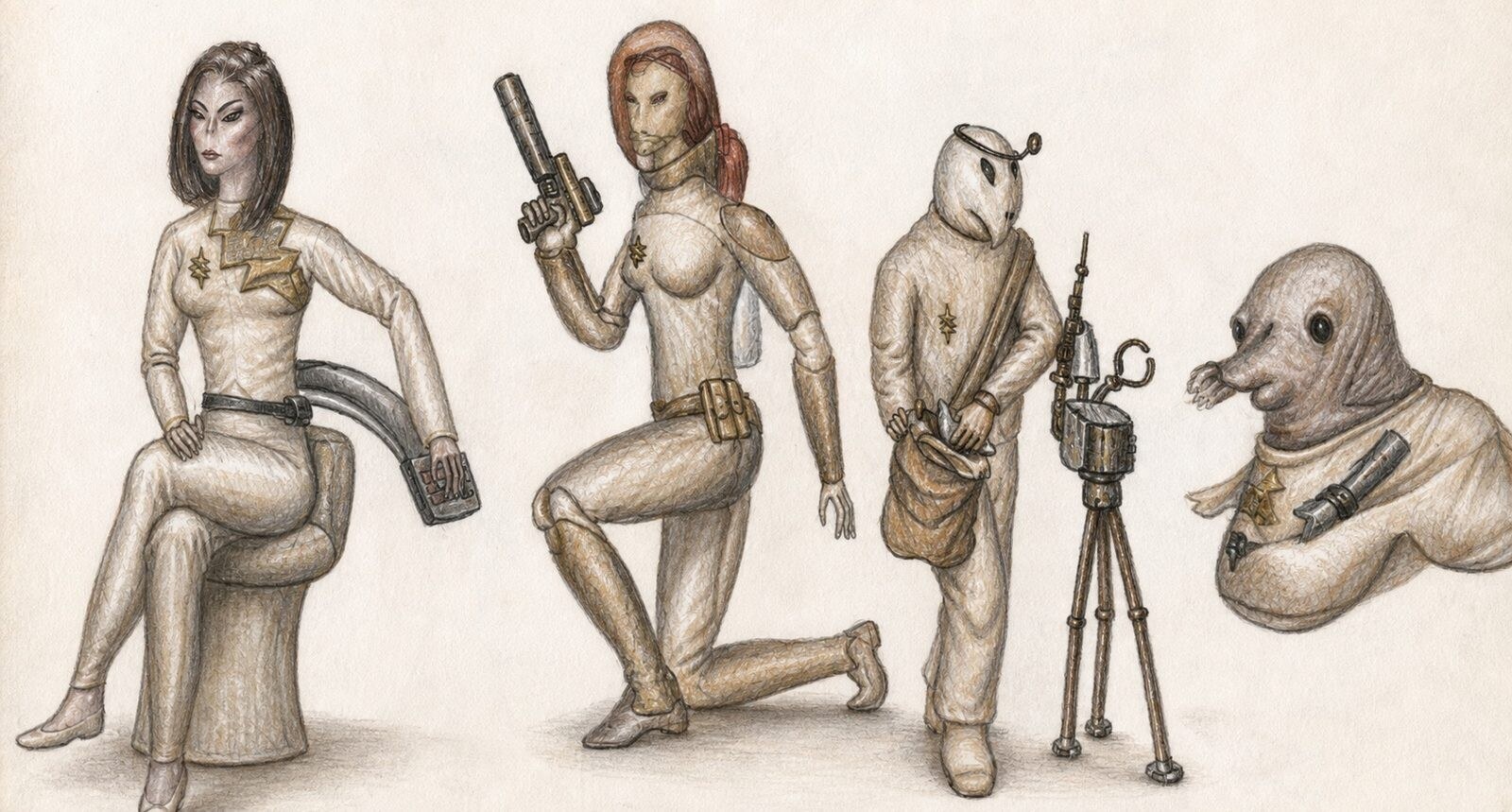
Agatylais — a race close to humans with sharp sexual dimorphism: the women are almost indistinguishable from humans, while the men stand out with a large nose and heavy brow ridges. For a long time they were subordinate to more powerful races, but now they are trying to claim their own place under the galaxy's sun.

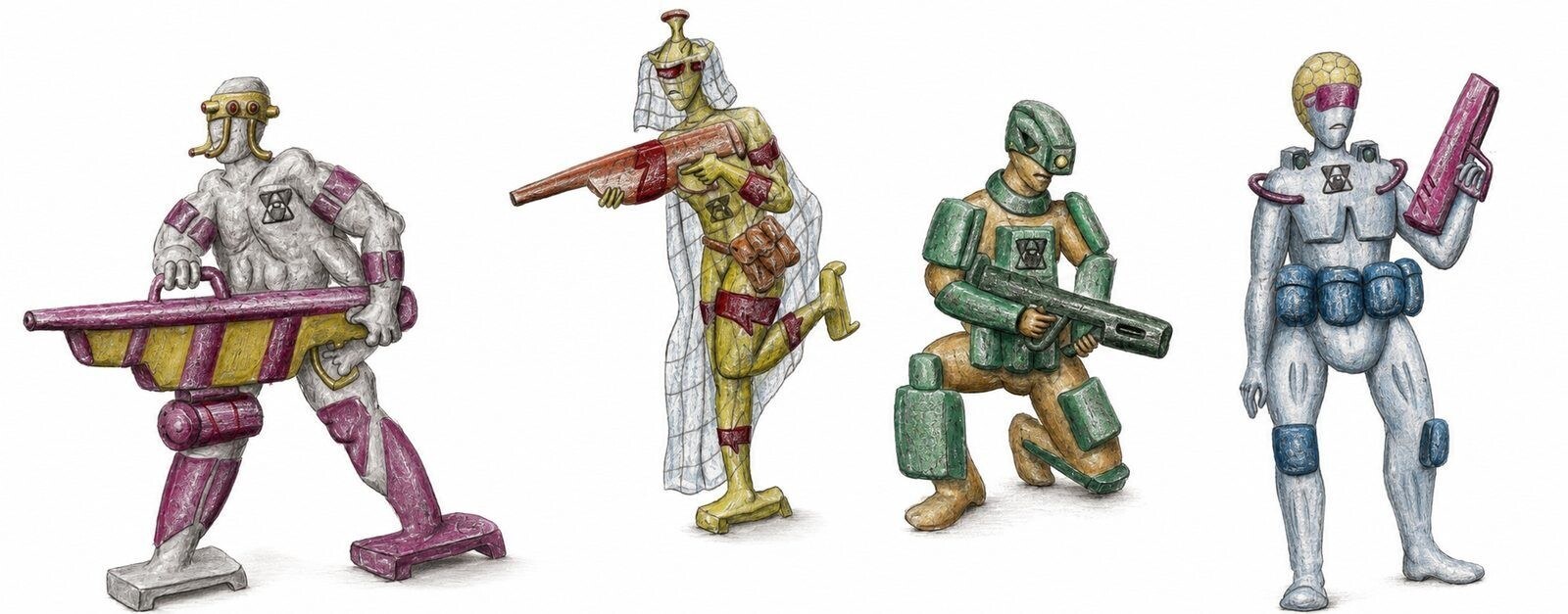
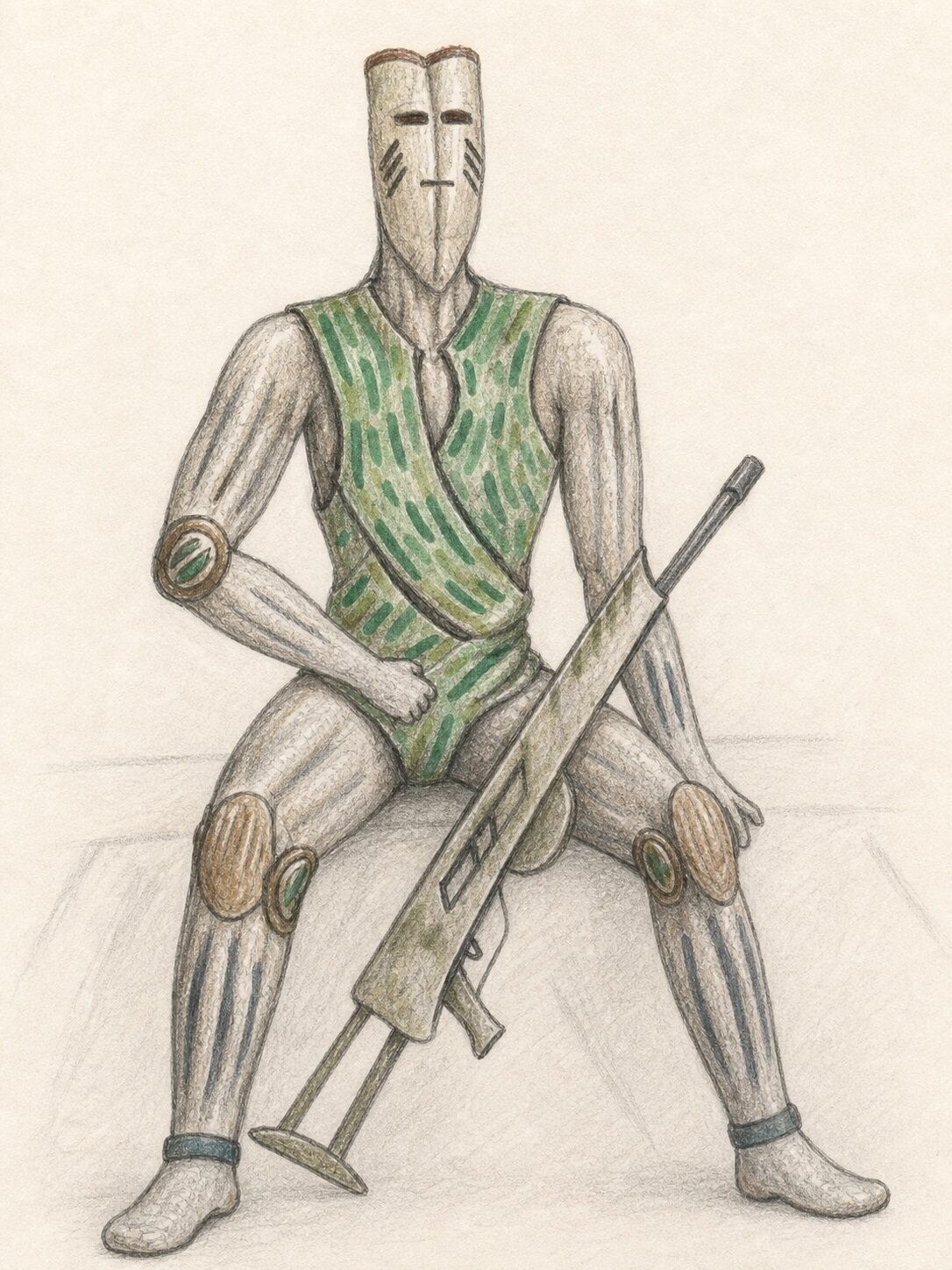
Nechota — sinister and extreme racists, convinced that all others should serve them, as either slaves or food. They deliberately destroy feelings and compassion within themselves: nothing must distract a true Nechota from expansion. Even death is not the end — the dead are cyborgized to serve as automatons doing menial work or as cannon fodder in battle.

Marihays — widespread humanoids for whom the meaning of life lies in conspicuous consumption and the pursuit of money. Wealthy thanks to technology, numerous and arrogant, they consider themselves champions of freedom — yet fail to notice that their institutions of power have long been controlled by banks and corporations, and that the electoral system they take pride in brings to power only those who can secure greater profit for this race's real masters.

Zhaks — a numerous race whose society is built around "threads" — something between dynasties and estates, where birth, development in the womb and after it are controlled by great orders, and everyone's place is set from the start. The race is split into movements — after all, not everyone is happy to live in a society of total certainty.

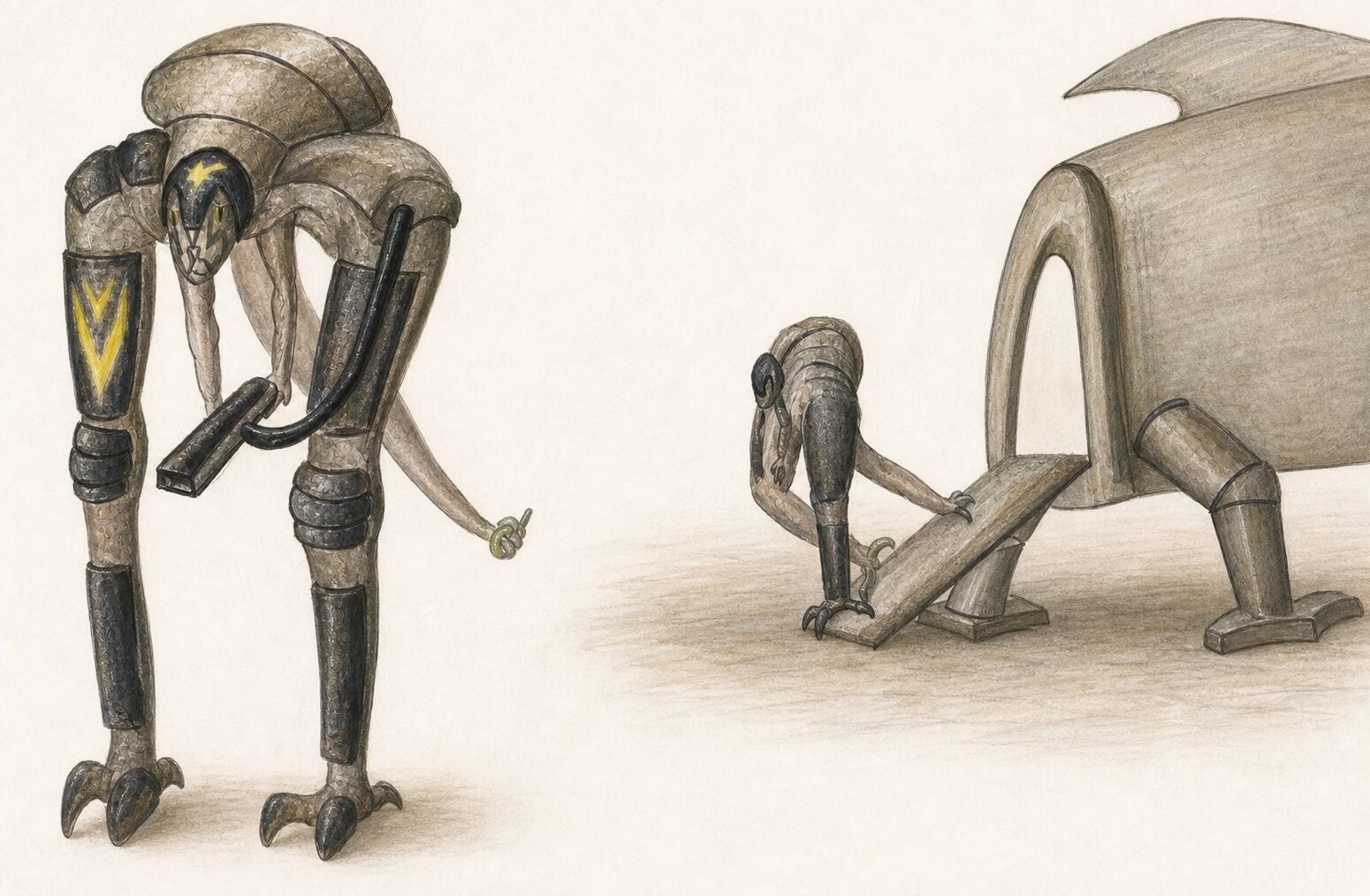
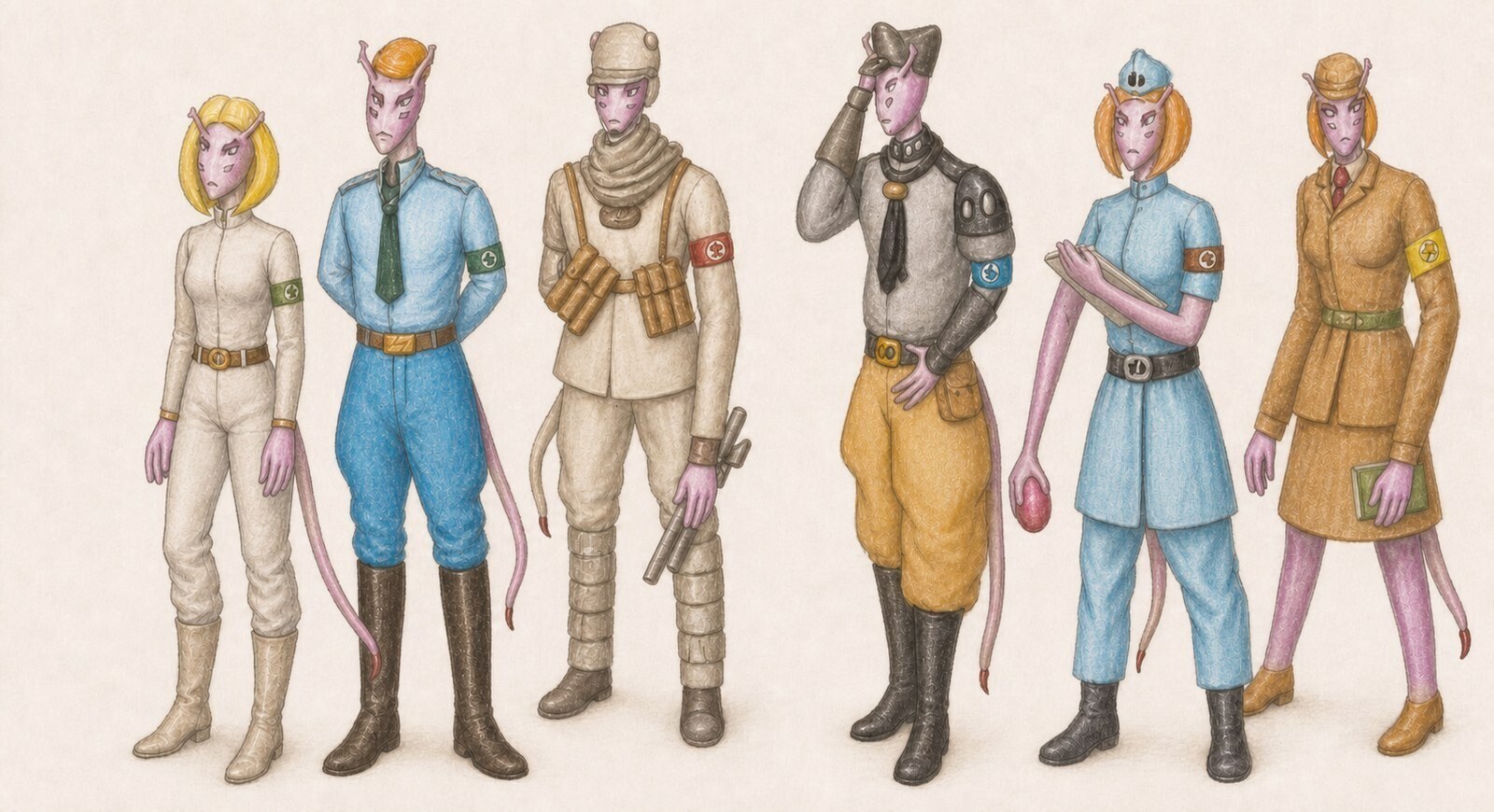
Emans — a race close to the Zhaks and fairly widespread: mid-height humanoids (about 170 cm) with a tail and a venomous spine on it. Pragmatic, excellent soldiers, and fanatically devoted to the society they live in. Like the Agatylais, they spent many years as a slave race and will do anything never to return to it. For them the end always justifies the means, and alliances with other races and states are merely a temporary measure on the path to dominance.

And this is only a small part — I keep developing my universe and the site, and I'll be adding new sections. I try to accompany each race with an illustration: usually a pencil drawing refined into its final look.
Beyond racial groupings, the galaxy holds a number of supra-racial powers. There are many of them, and they differ greatly in spirit and structure. I loosely divide them into the old empires, whose roots reach deep into antiquity, the great states, and the other countries that shape the balance of power today.
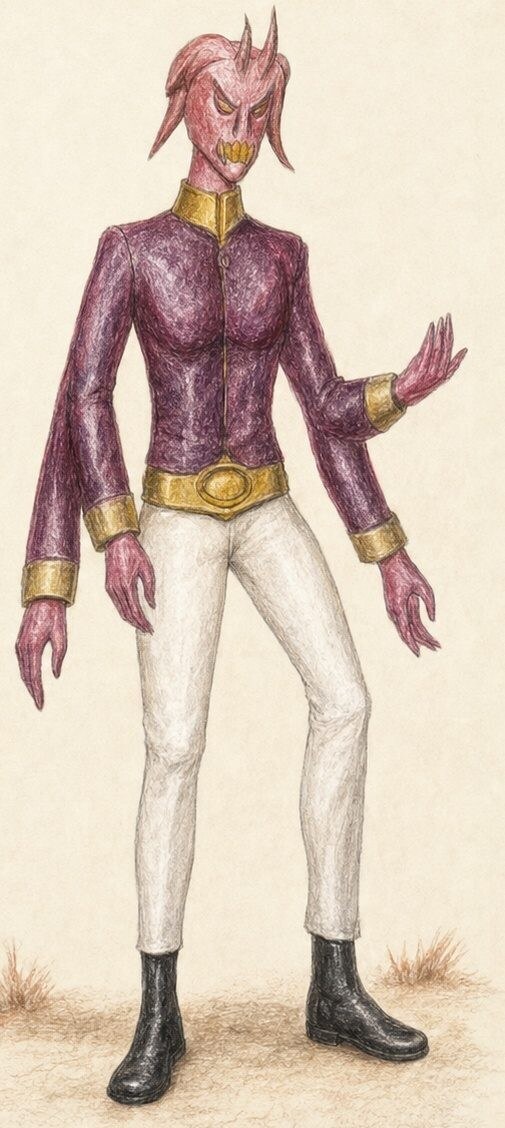
The Surditar Dynasty — an ancient warlike race of rulers from the south of the galaxy. They are few, but with an iron hand they hold their satrapies and vassal worlds under the cult of the supreme ruler Shyytar: practical, warlike, and infamous for their cruelty.

The Union of Povod Dynasties — the most ancient underwater superpower, whose empire is older than the Great Ancient Empires themselves. It rules from the flooded capital of Volias and never gives up its dream of restoring its former dominion over the seas.

The Furdan Dynasty — those mistaken for good-natured fat folk. In truth they are calculating and vindictive masters of genetic engineering: they breed slave races and wage long wars of "softening up," where control over a society is taken gradually rather than through military campaigns.

The Infinite Alliance — an amorphous union of several major forces at once. To understand its nature you need to know the history of the Novolyudi — a race that was once human. The most interesting among them is the faction of the Transcended, who have cast off the physical shell.

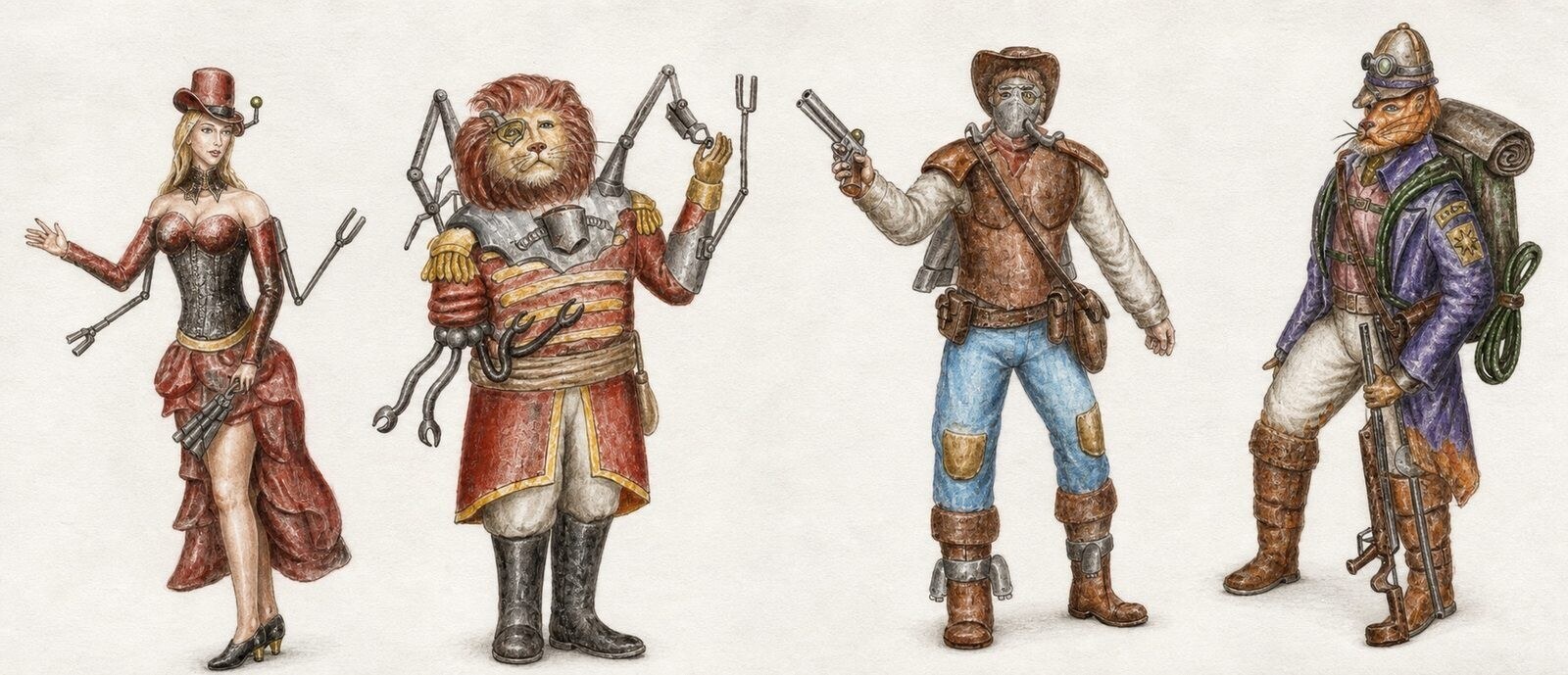
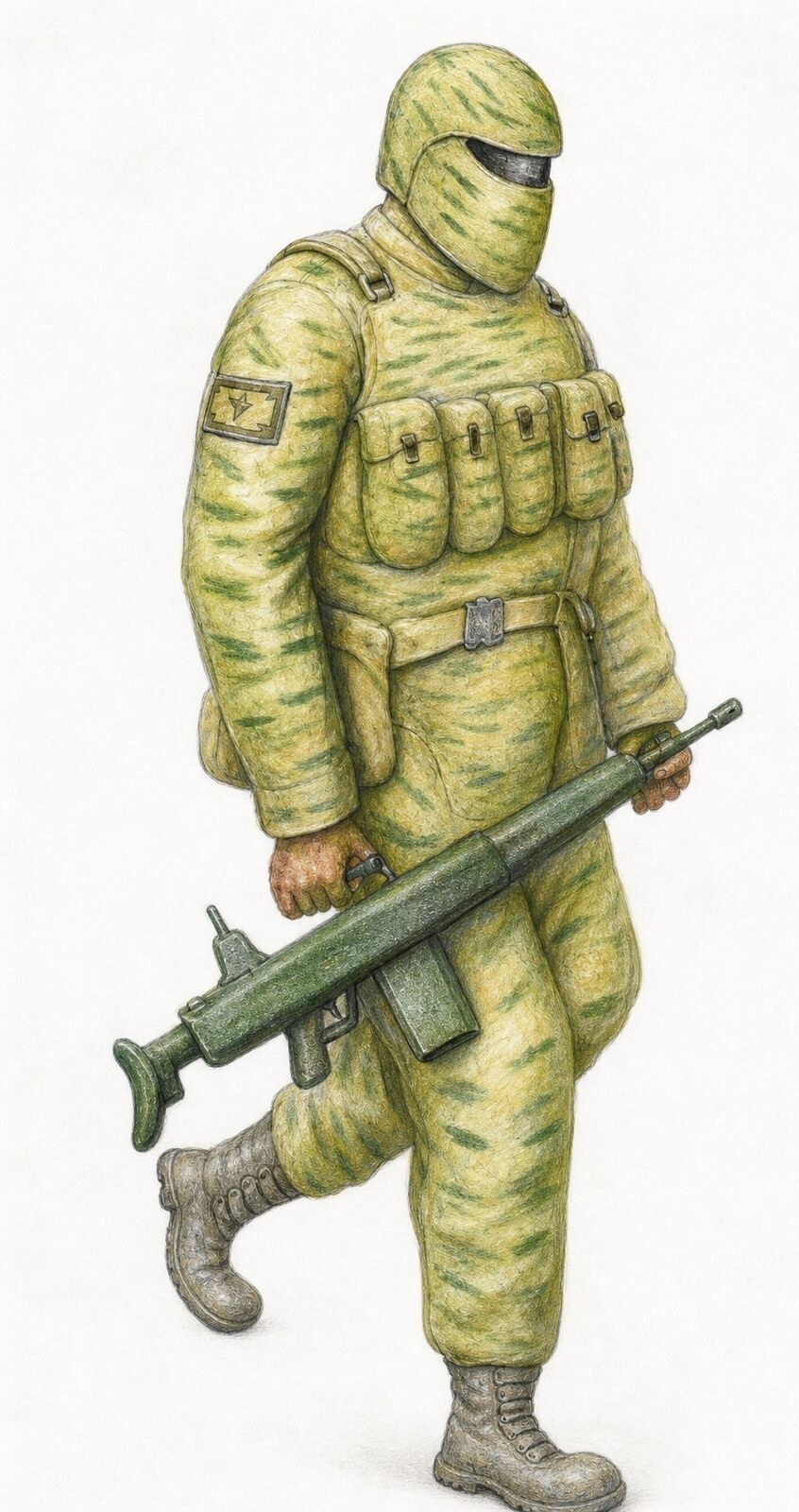
The Empire of the Golden Suns — a large and still formidable power, even if technologically behind its neighbors; it embodies the splendor and inertia of the old imperial tradition. The empire is governed by three races: the emperor is elected in turn from humans, lion-like Baarni, and humanoid Binkrissy.

The Horde — a human state obsessed with the purity of the human race. A rigid hierarchy in which outsiders have almost no path to the top. For many years it tried to subjugate the galaxy but was defeated by the minor races; now the Horde is focused on colonizing other galaxies and takes little interest in what happens inside this one. Their "Distant Shores 2" is the most ambitious project of colonizing other galaxies in history.

The Star Wanderers — began as an ideology in another galaxy; they sought to unite all races into a single society under the Supreme Council and to build a society of universal well-being and equality. But it all fell apart after a civil war, where supporters of maximal technological development and supporters of biotechnology and life in harmony with nature clashed in a terrible war. Now their society is trying to recover.

The Ancients — cruel bioconstructs from beyond the galaxy, a "dead hand" weapon created by their masters to avenge a lost war. They built a unique society that sees meaning only in war and destruction.

The Galactic Union of Races (GUR) — a conglomerate of many peoples gathered into a single supra-racial state. A society where its best members can become immortal by transferring their consciousness into a network of interconnected constructs.

These are only fleeting portraits — every power has its own history, flags, and troops. You can read more about each in the "States" section.
Besides drawings and texts about races, states, and historical events, I also released a short visual novel of a few hours, which came out on Steam. A year ago it became a kind of important milestone for me, because it was the first relatively complete and public embodiment of my universe.
Like many visual novels, it didn't win much popularity. Naturally, the development costs weren't recouped, but the costs themselves were relatively small: essentially they were the expenses for an editor and a translator, while everything else I did myself. The novel was made over a few months in my free time, and on the whole I'm happy with the result — for someone who had never developed games before, it was a genuinely interesting experience.

If you've become curious — here's where to look. I recently deployed my site, which I'll keep developing. Also, subscribe to my still very small Telegram channel — I'll post there about all the updates. Thanks for reading to the end!