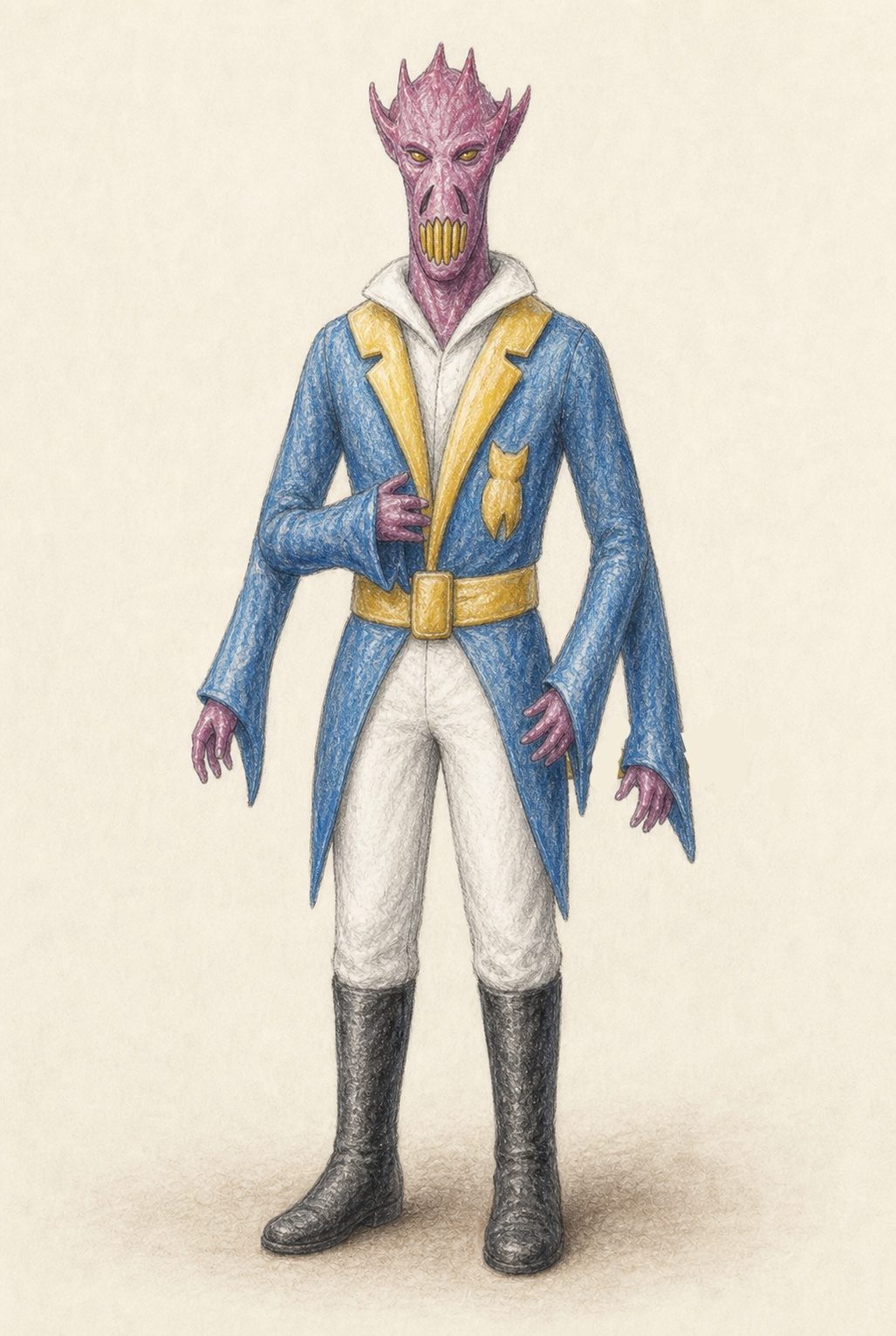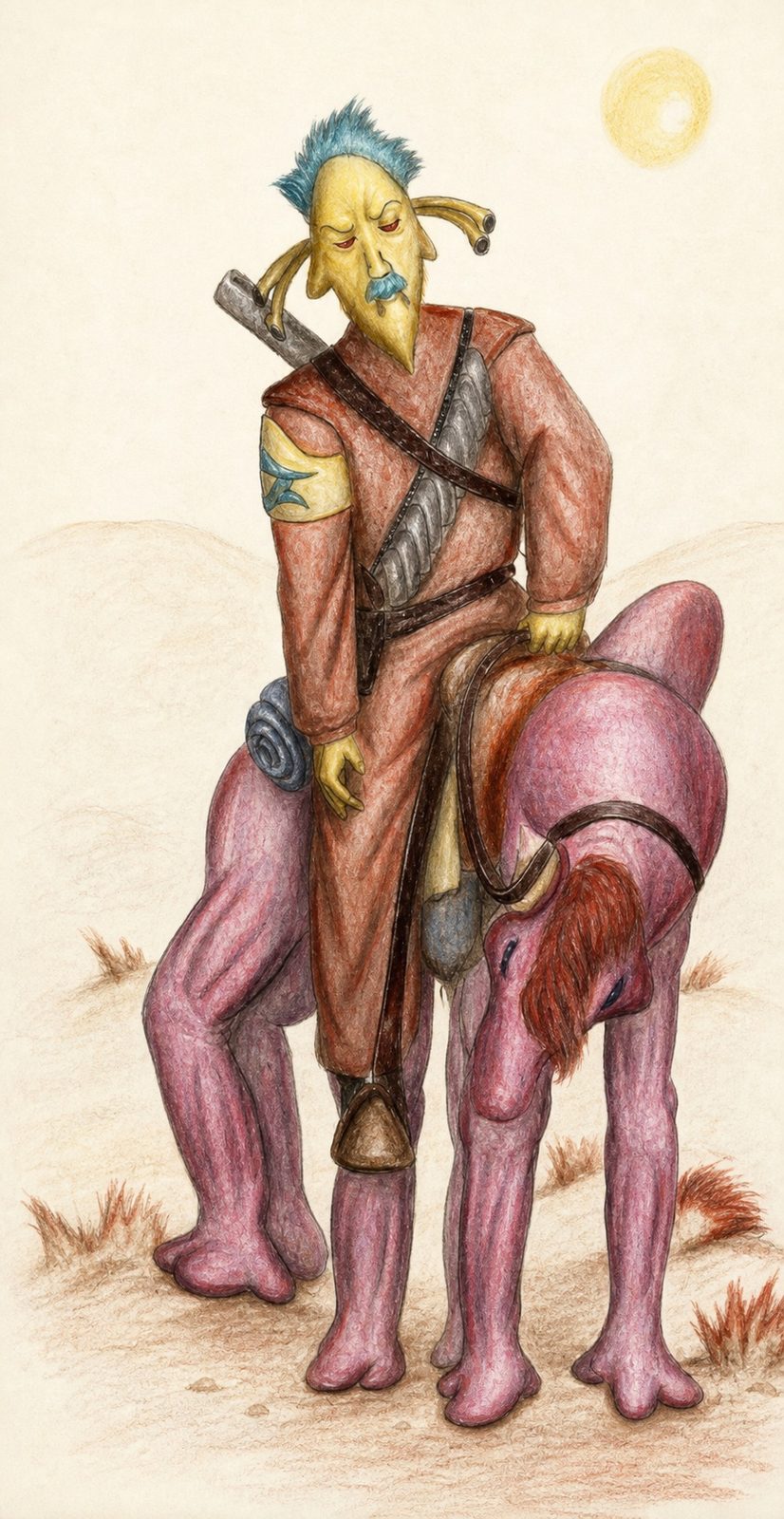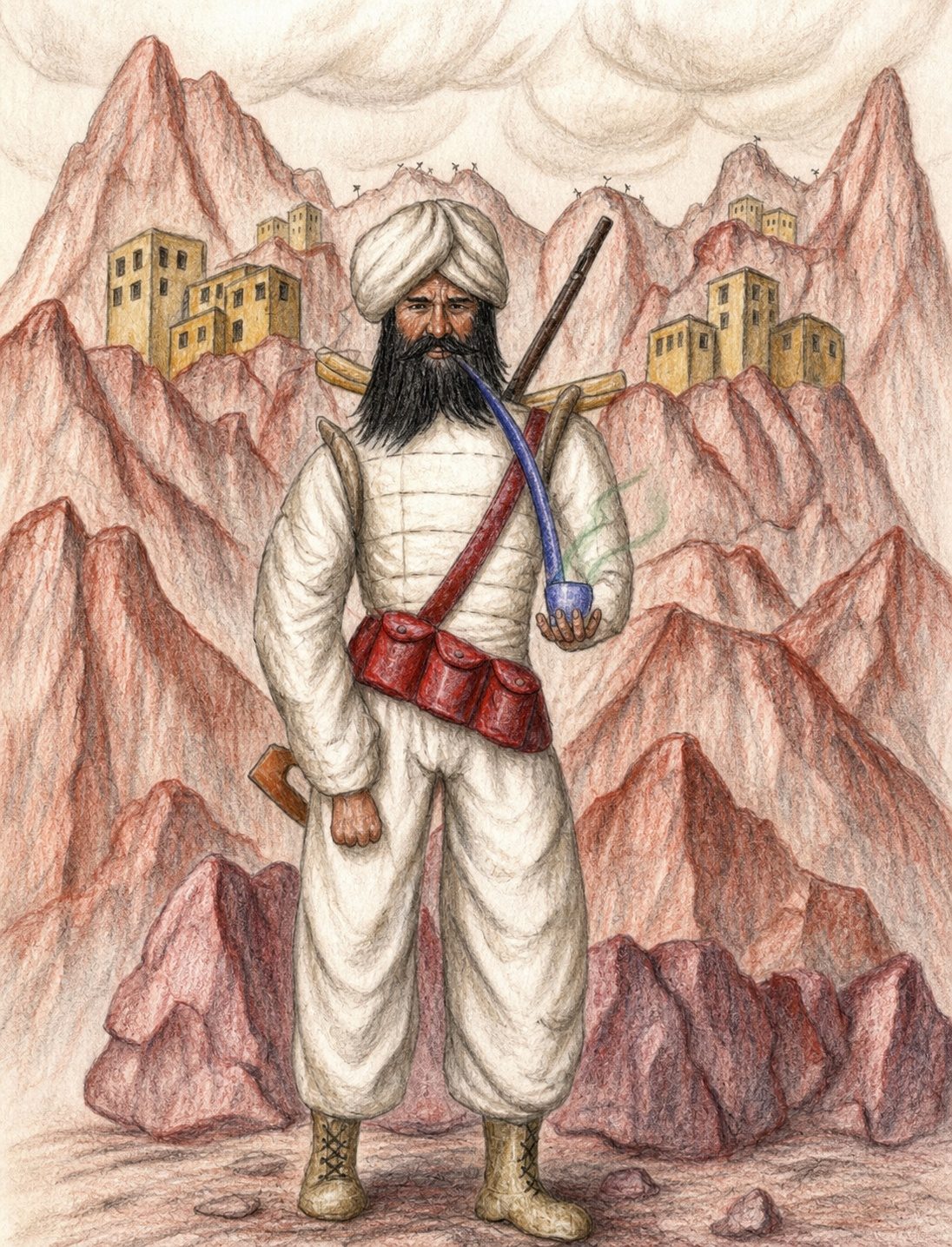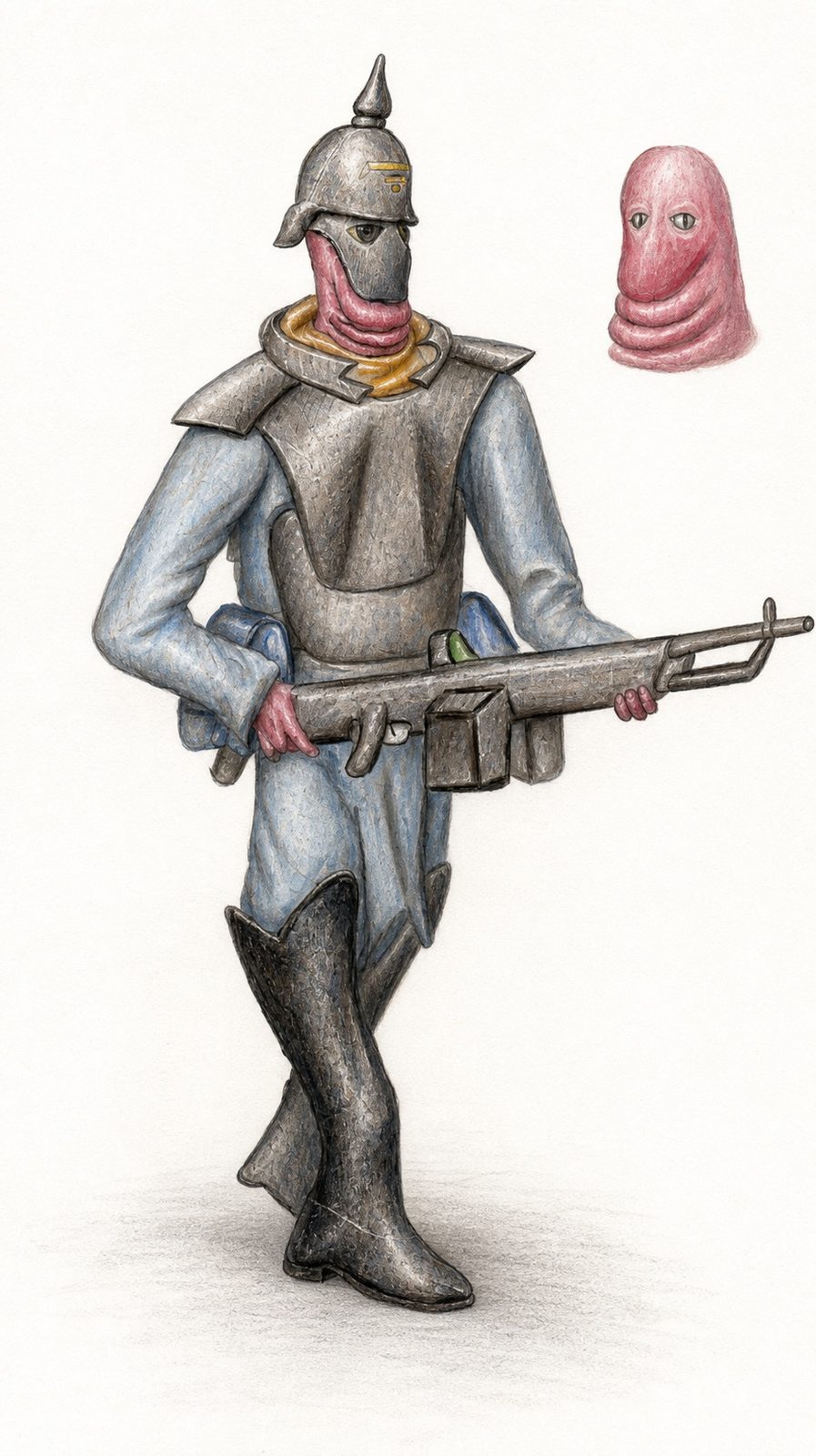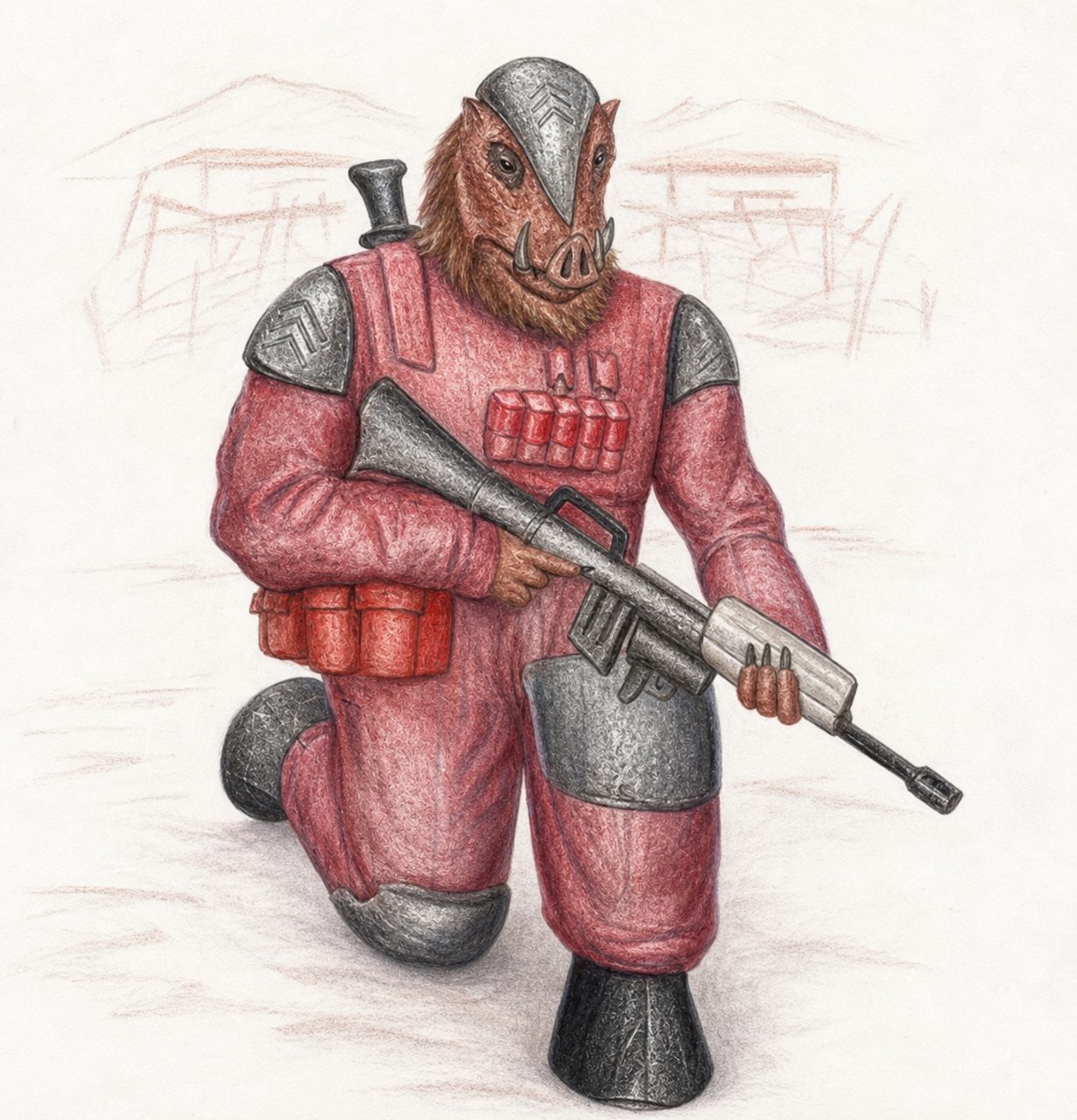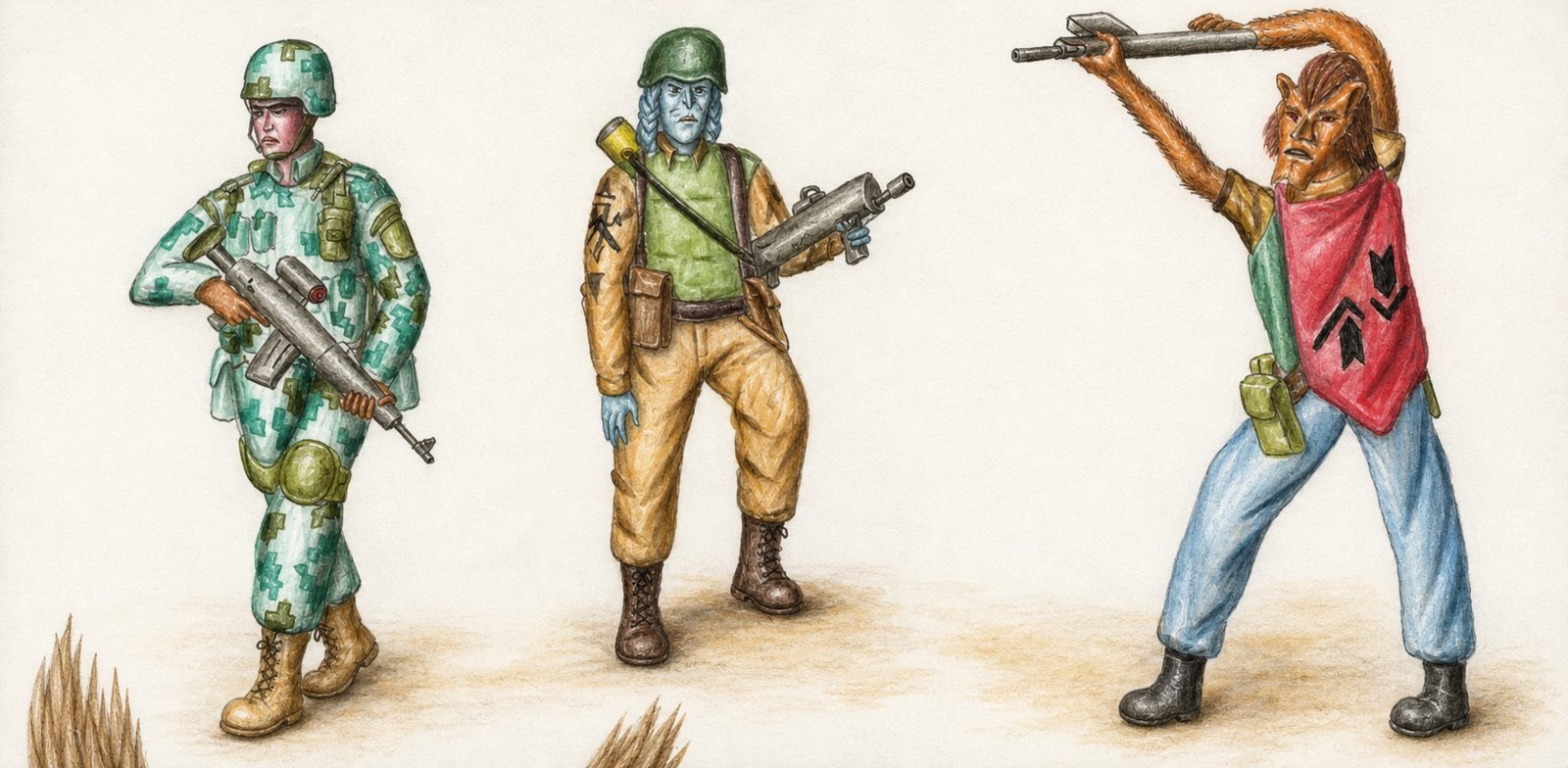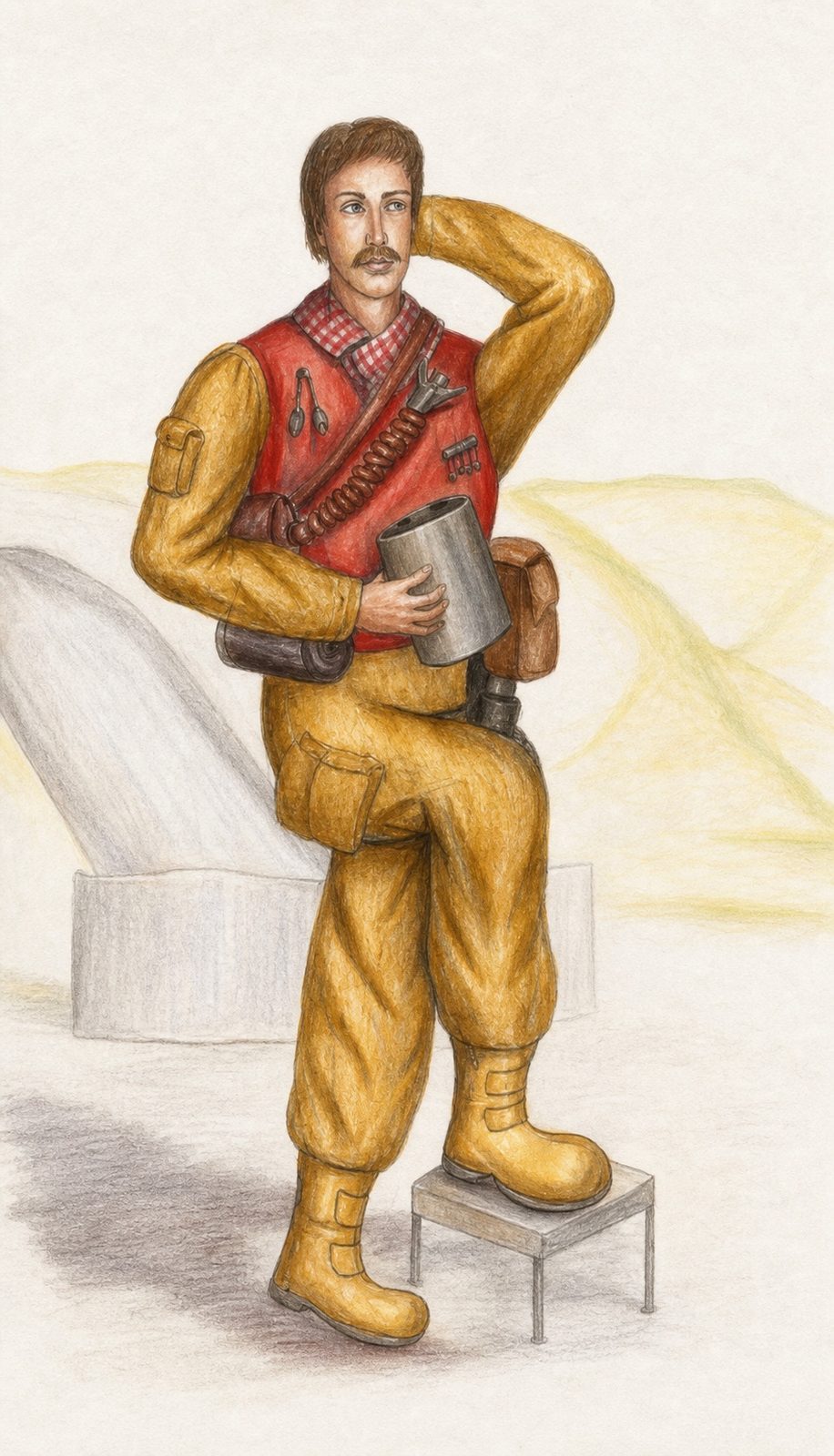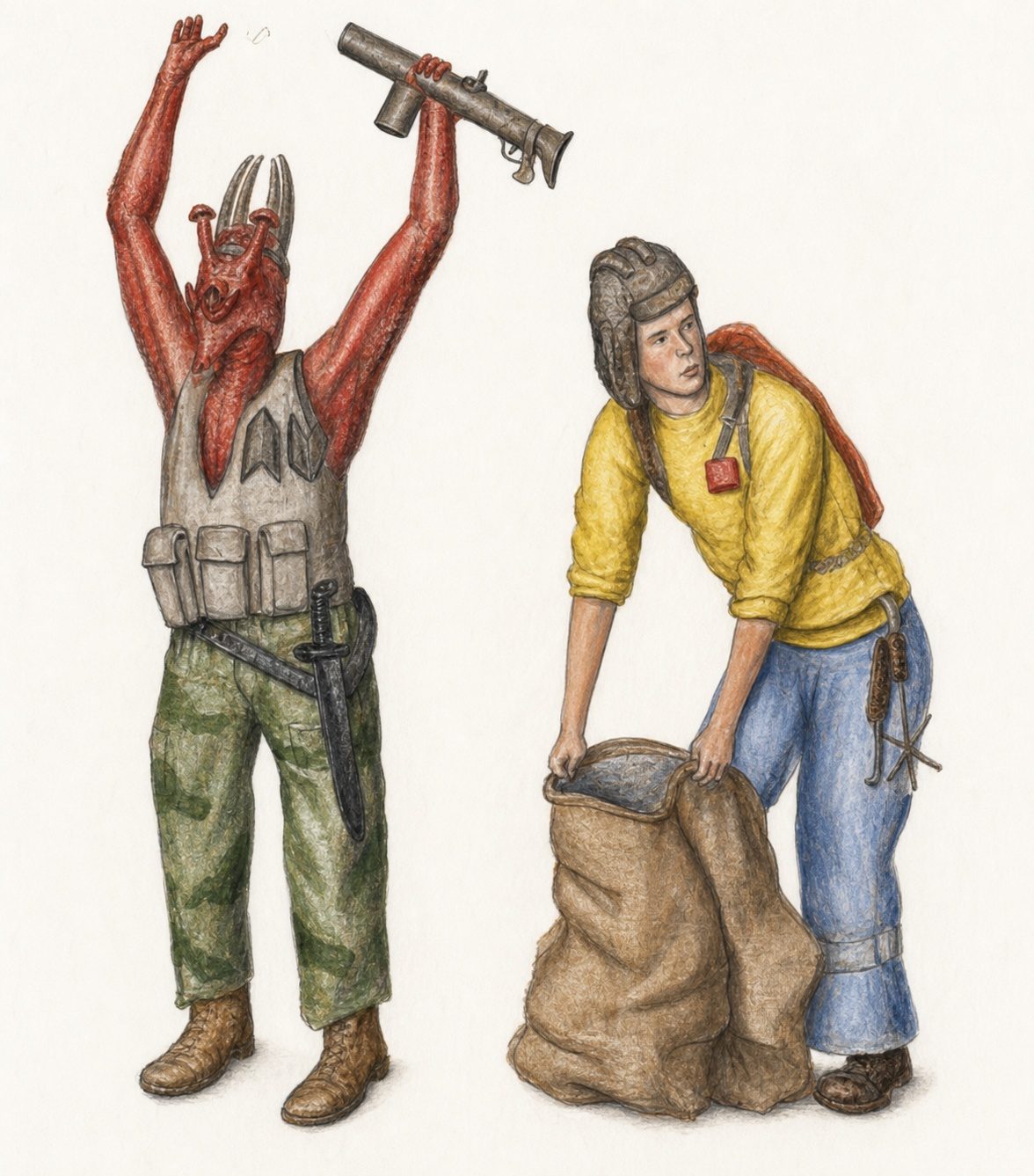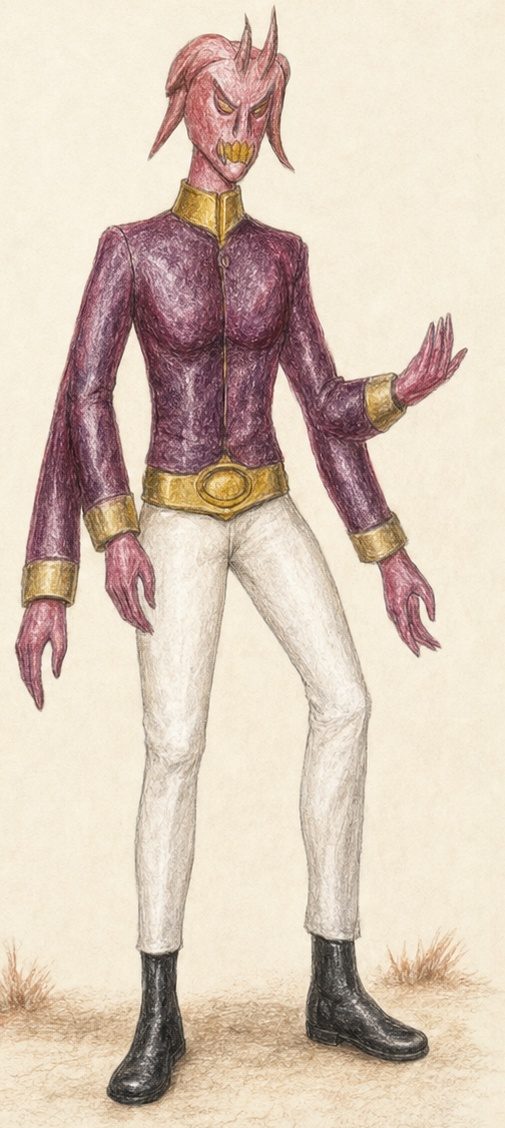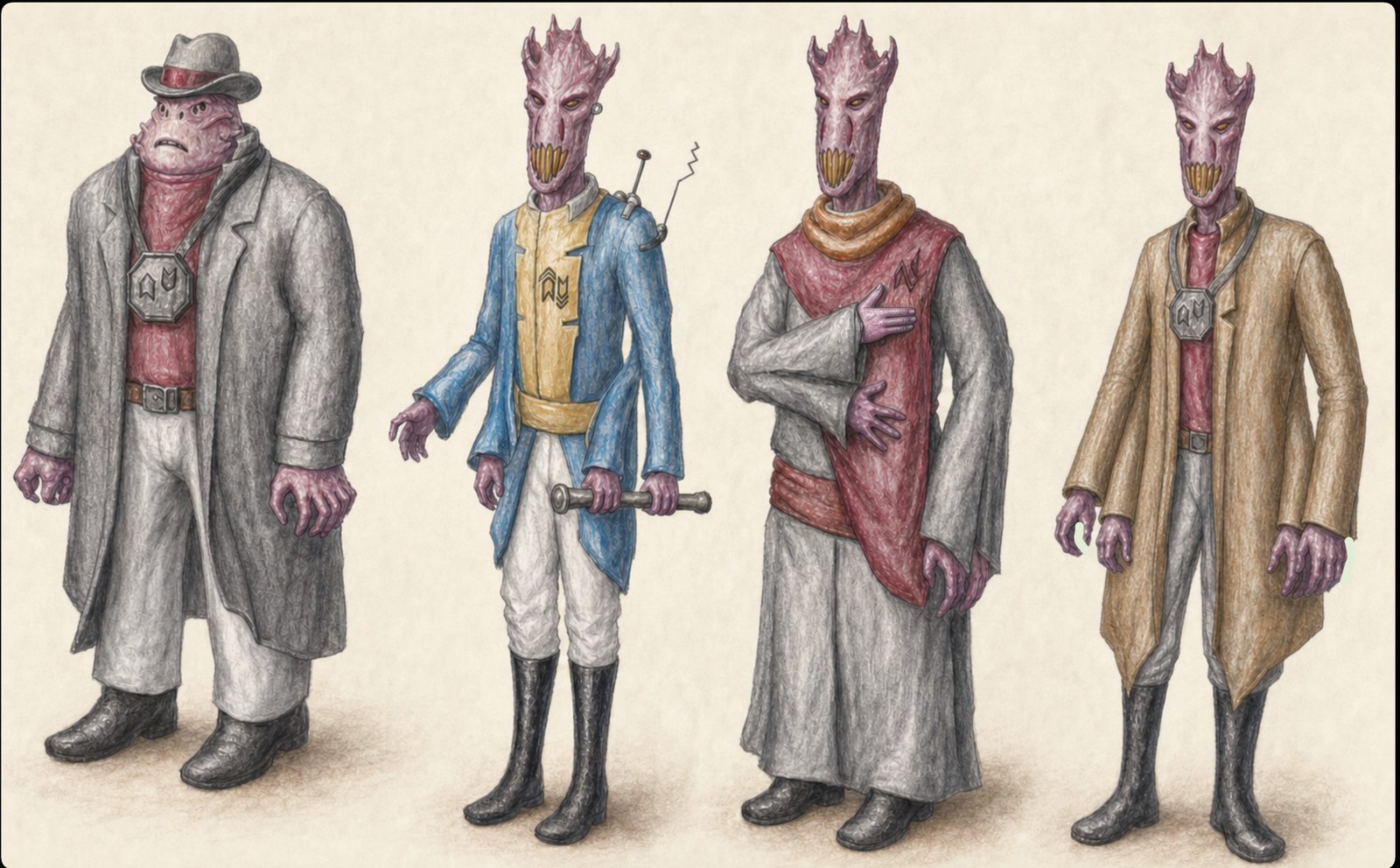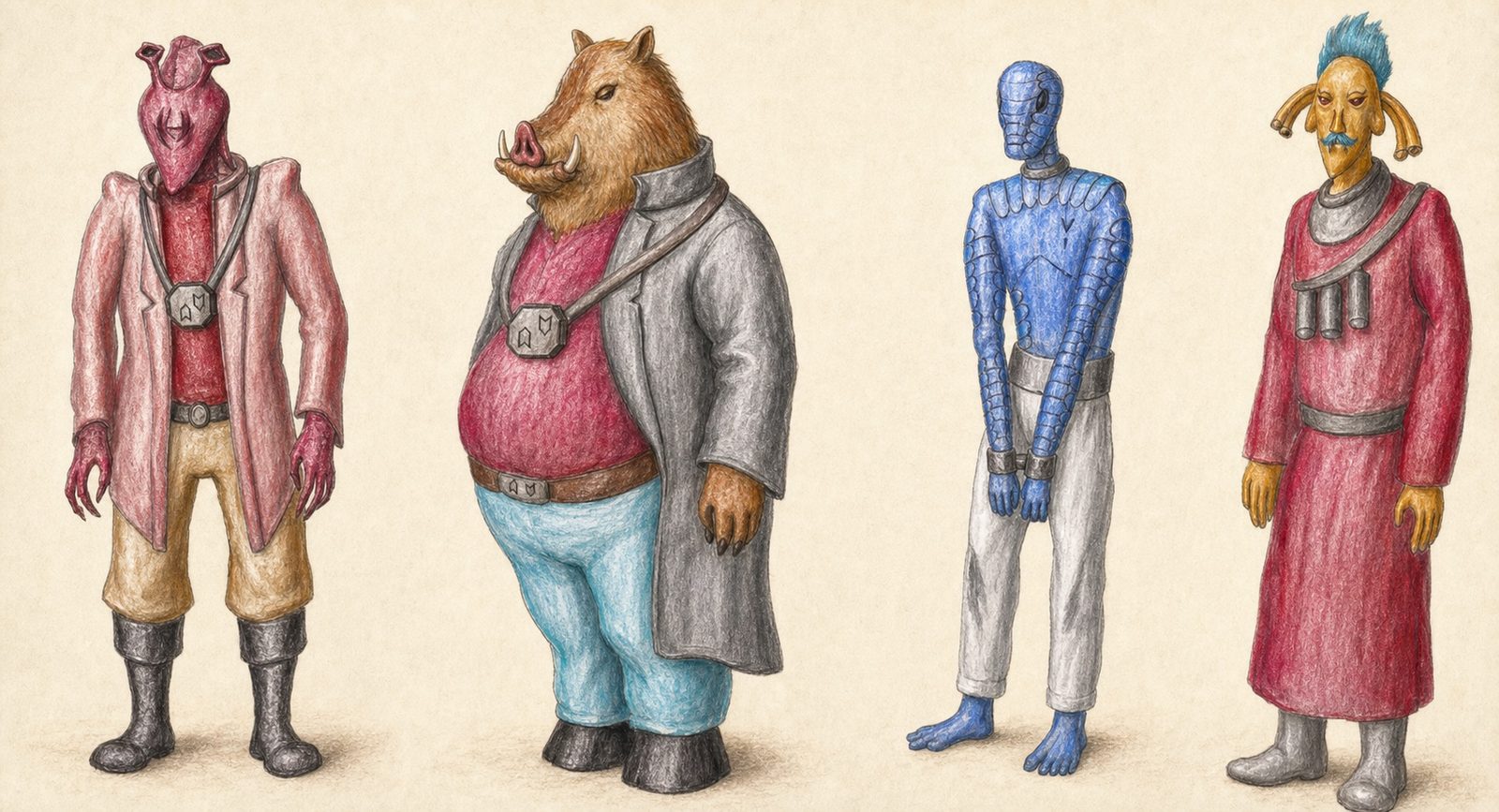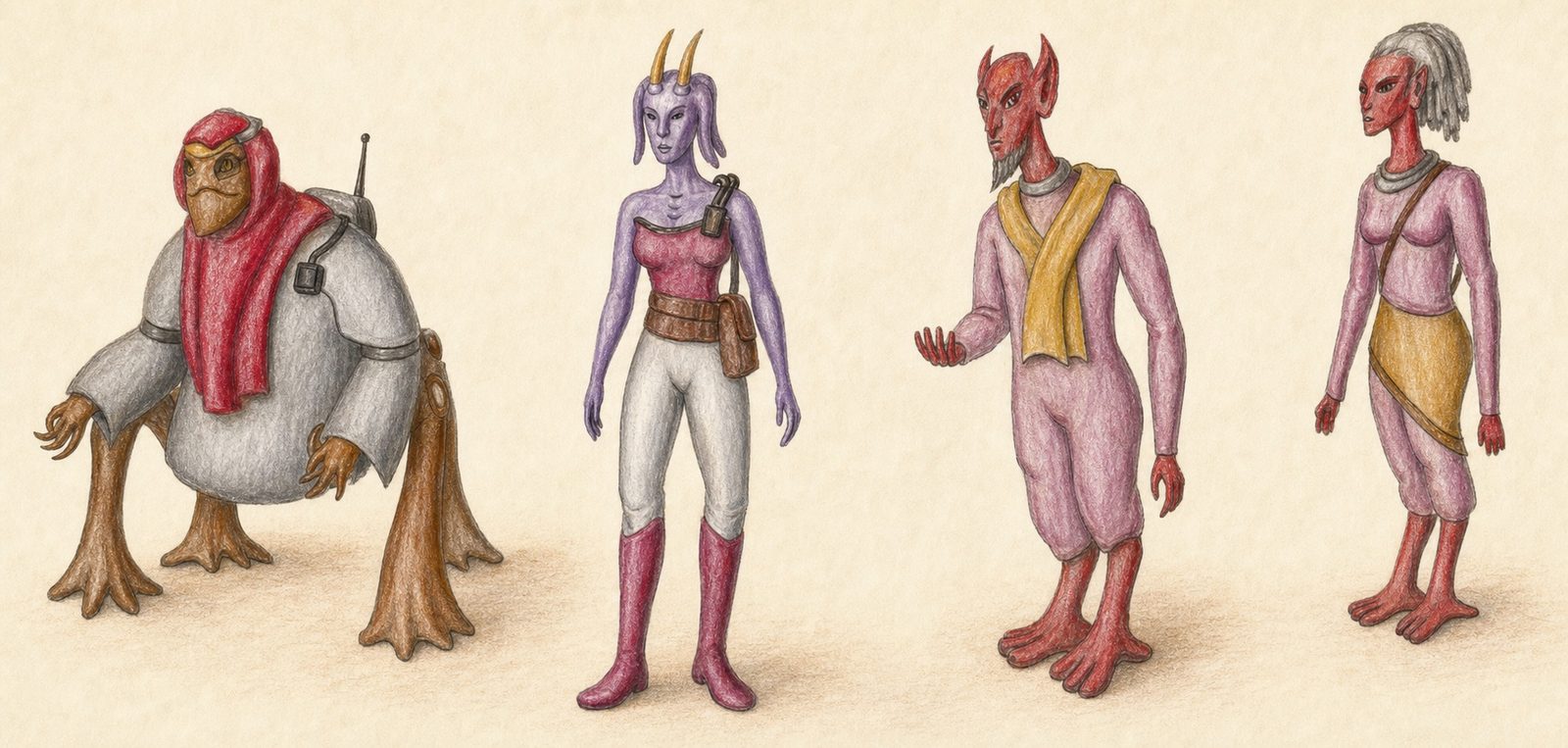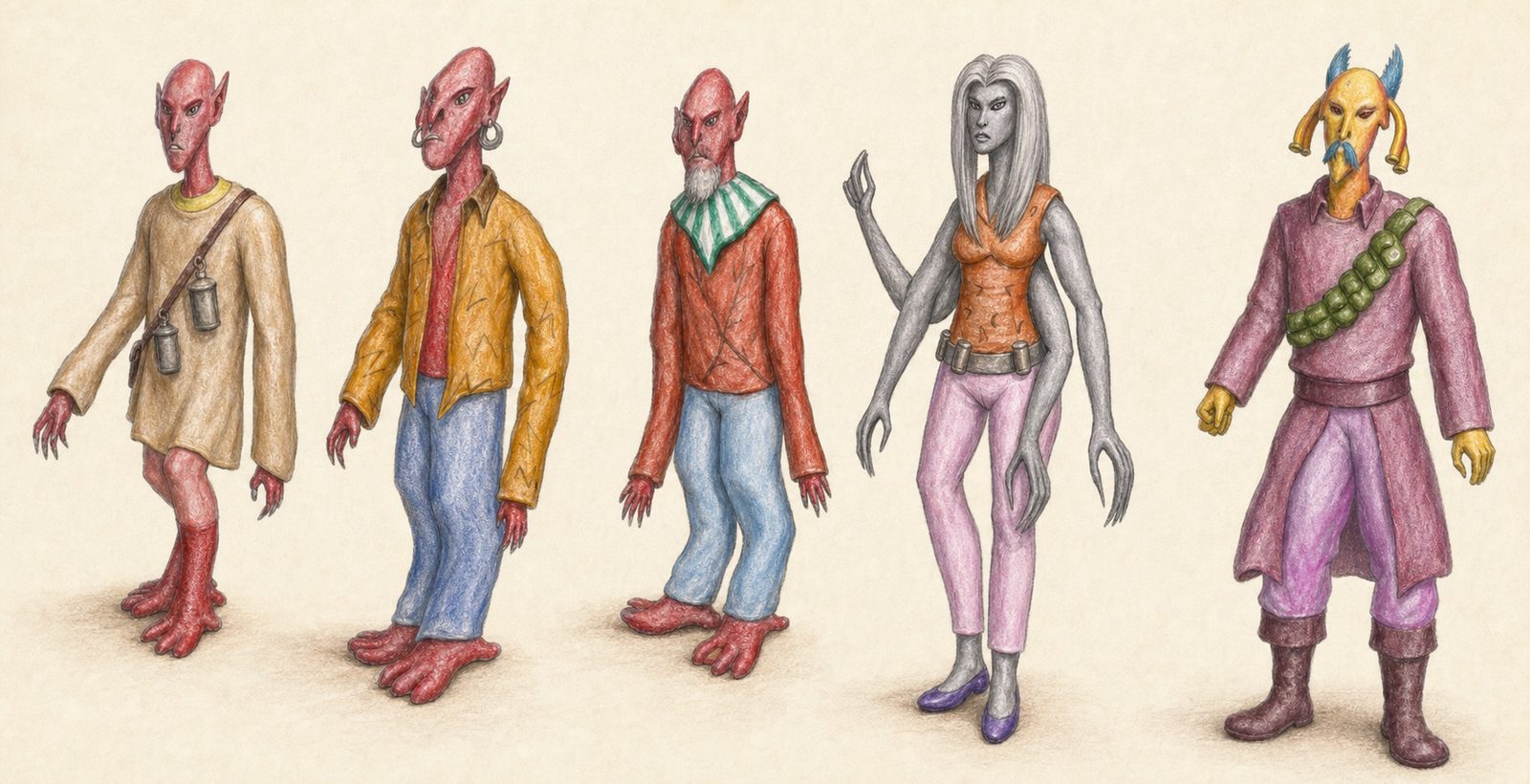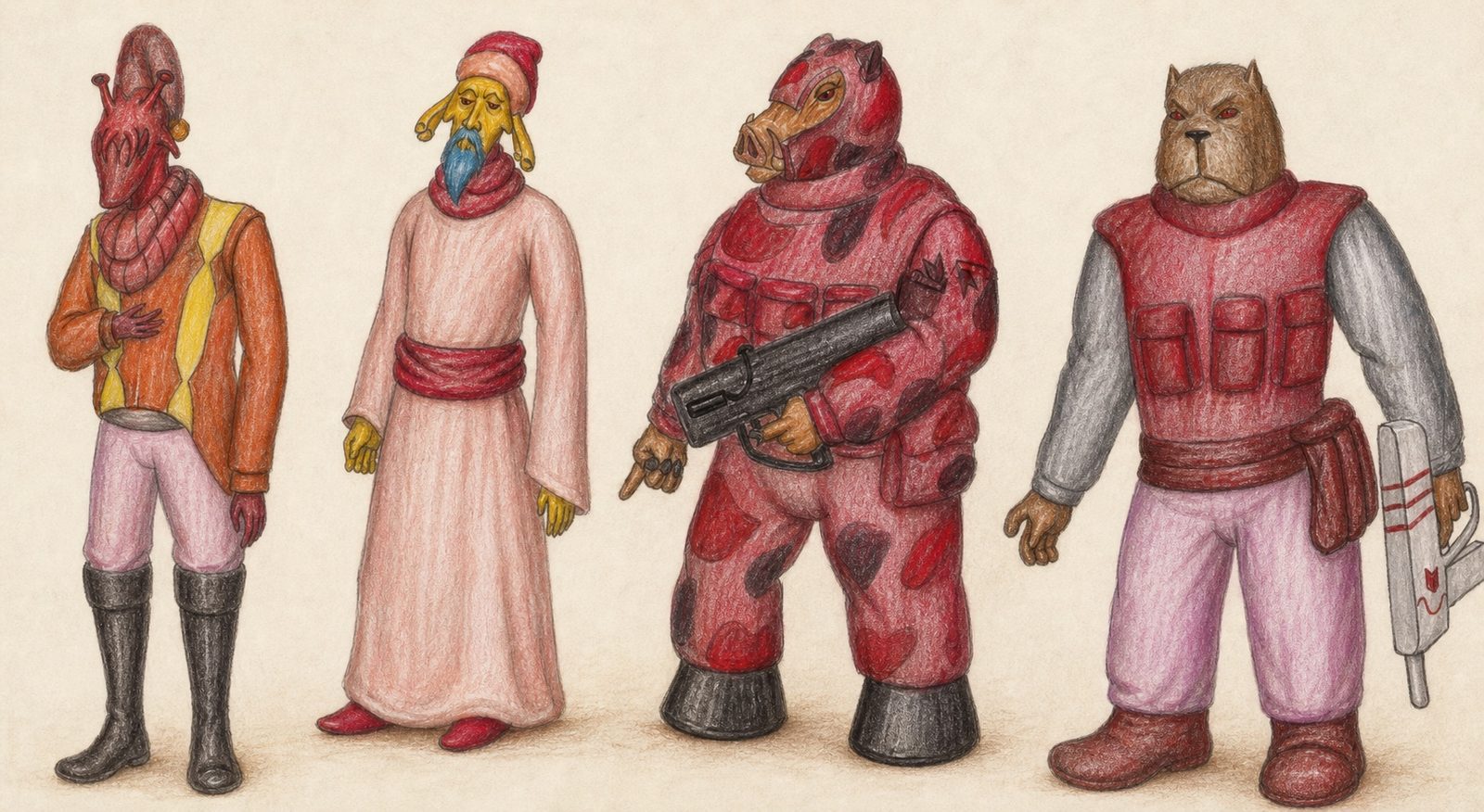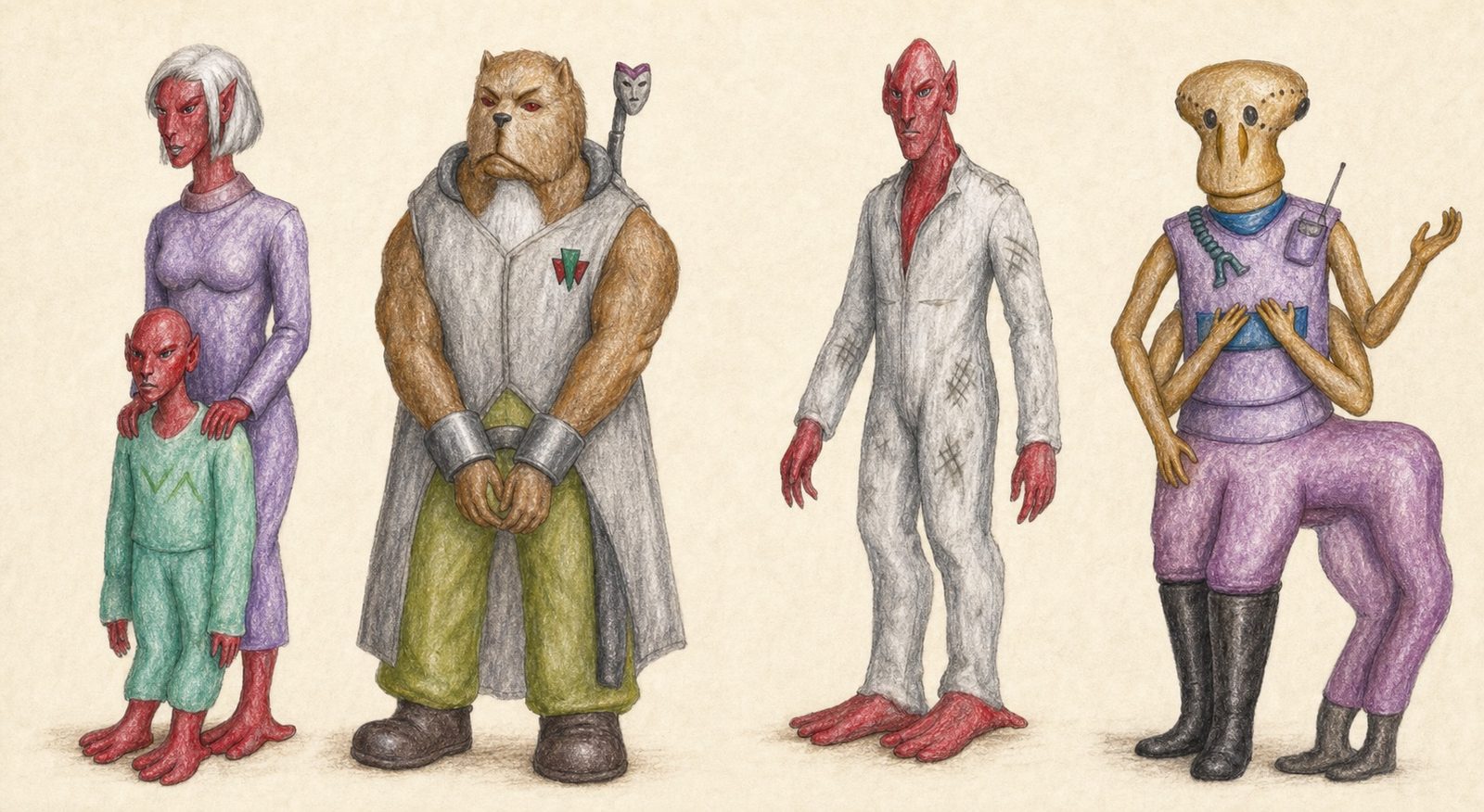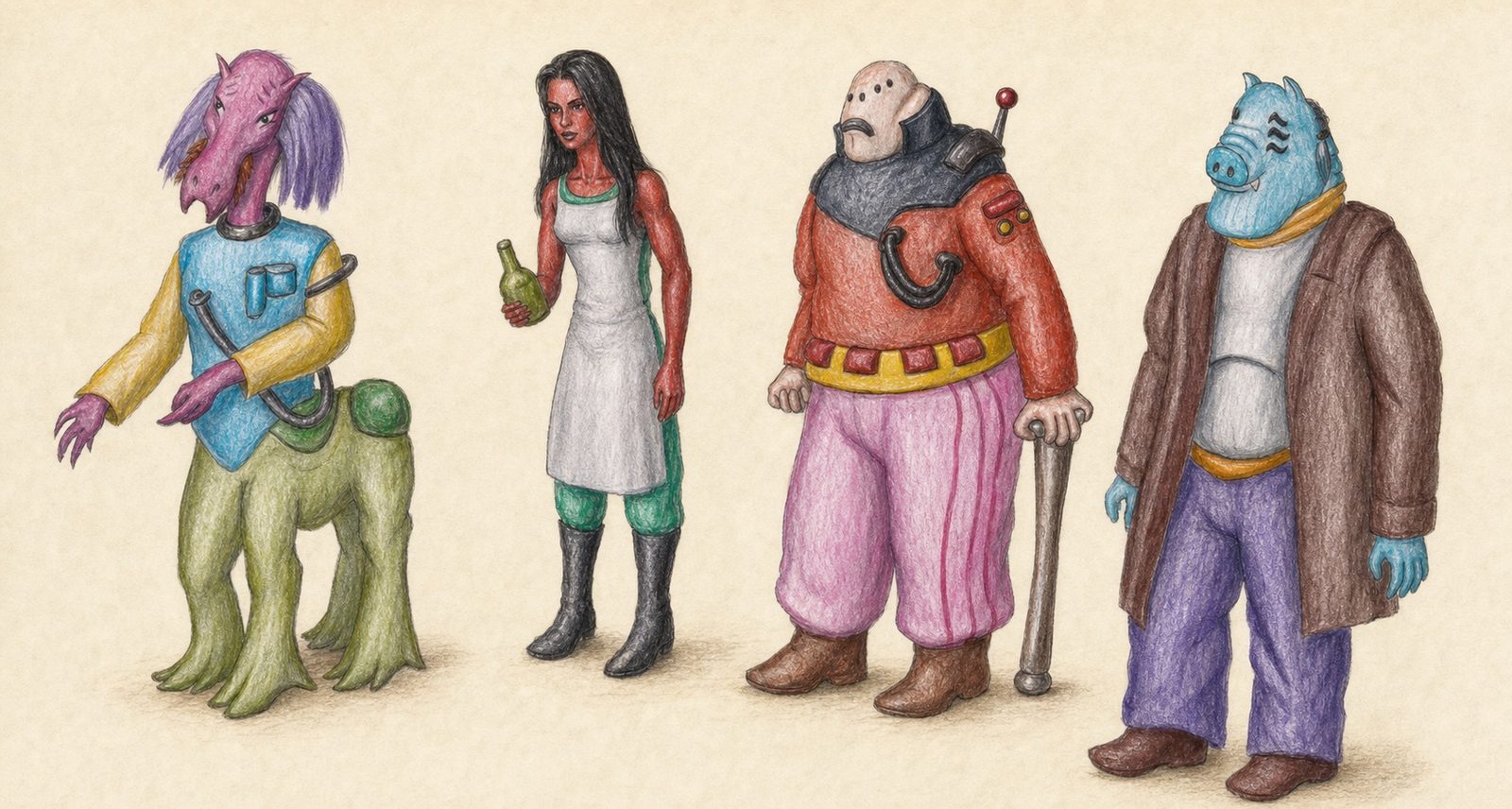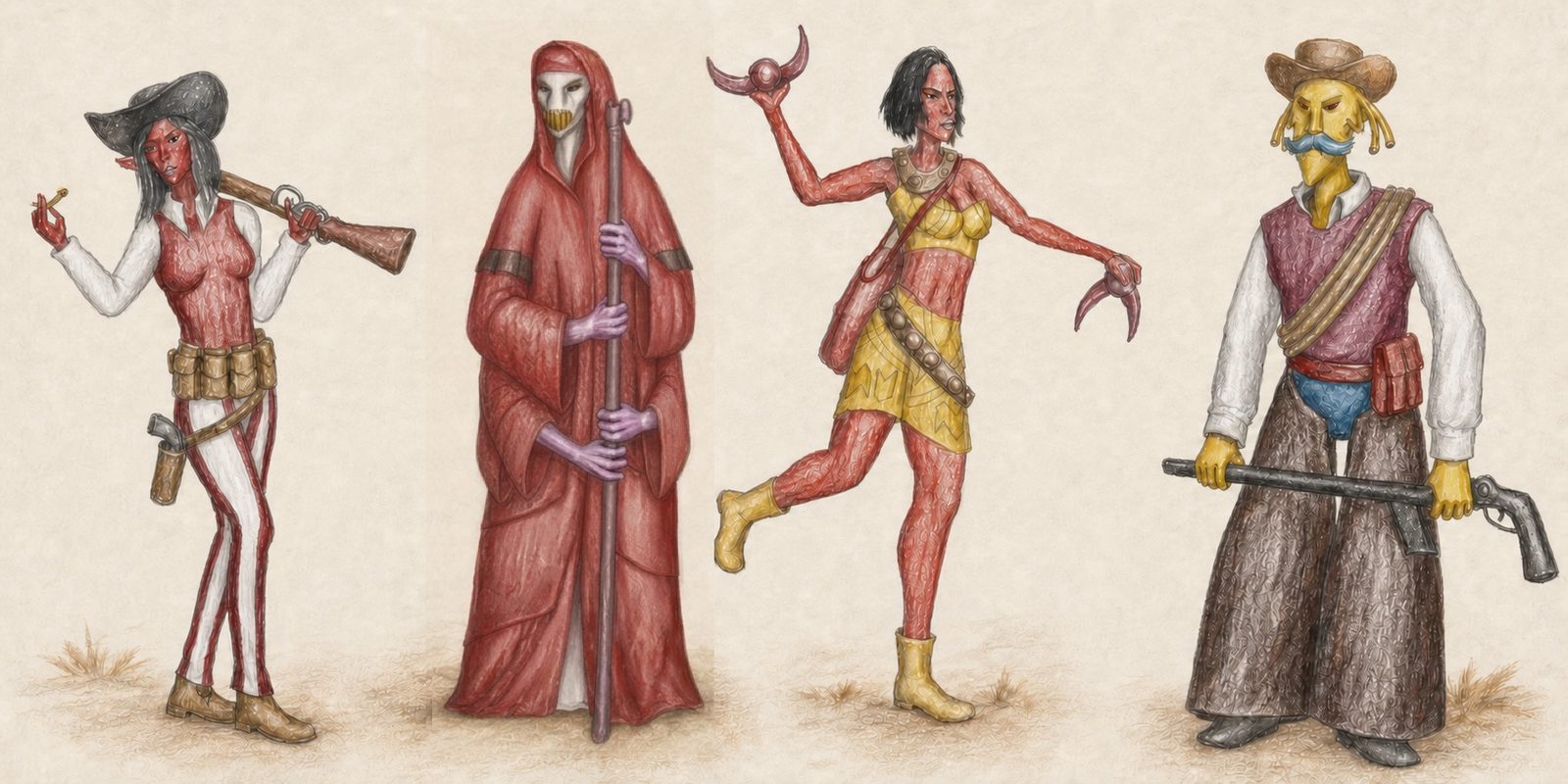
The Surditary are a race of very ancient beings from the south of the galaxy. Unlike many other ancient races, such as the Drankery, they have not lost their old grip and have retained substantial territories under their control. The expansion of their lands proceeded gradually and at a fairly slow pace until their encounter with the Ypry race. The Ypry — savage warriors — turned out to be highly susceptible to the pheromones the Surditary secrete. Under the influence of these pheromones they would fall into a kind of narcotic trance. Dependence on the pheromones grew so strong that, one after another, Ypry rulers entered into contracts of slave service in exchange for supplies of pheromones. From that point on, expansion proceeded more quickly, resting more on brute force than on voluntary cooperation.
For many years the Surditary ruled over so-called lesser races, remaining gods to those races rather than mere rulers. They were, however, extremely cruel gods: for open rebellion and disobedience, entire races were ruthlessly exterminated. The Ypry became the country's military elite, though their total dependence on consuming pheromone essence persisted.
The cult of the rulers was imposed across the entire territory with the utmost severity. Failing to show proper reverence toward their images was punishable by death. The Surditary were not especially numerous — by various estimates they numbered between 1 and 3 million individuals — and rested their power entirely on the Ypry. The Surditary lifespan ran from 500 to 600 years. They reproduced only once in a lifetime, producing up to five offspring. There were plenty of different factions within the dynasty, but all of them answered to its oldest member, Shyytar I.
Although the dynasty did not command vast territories, it had a very poor reputation on account of its belligerence. The Surditary never forgave even imagined slights and always acted with the utmost cruelty.
Shyytar's power was practically absolute. Only a strictly limited number of visitors were granted an audience with him. Local rulers possessed a degree of autonomy, though veneration of the eldest Shyytar was a critically important part of their lives.
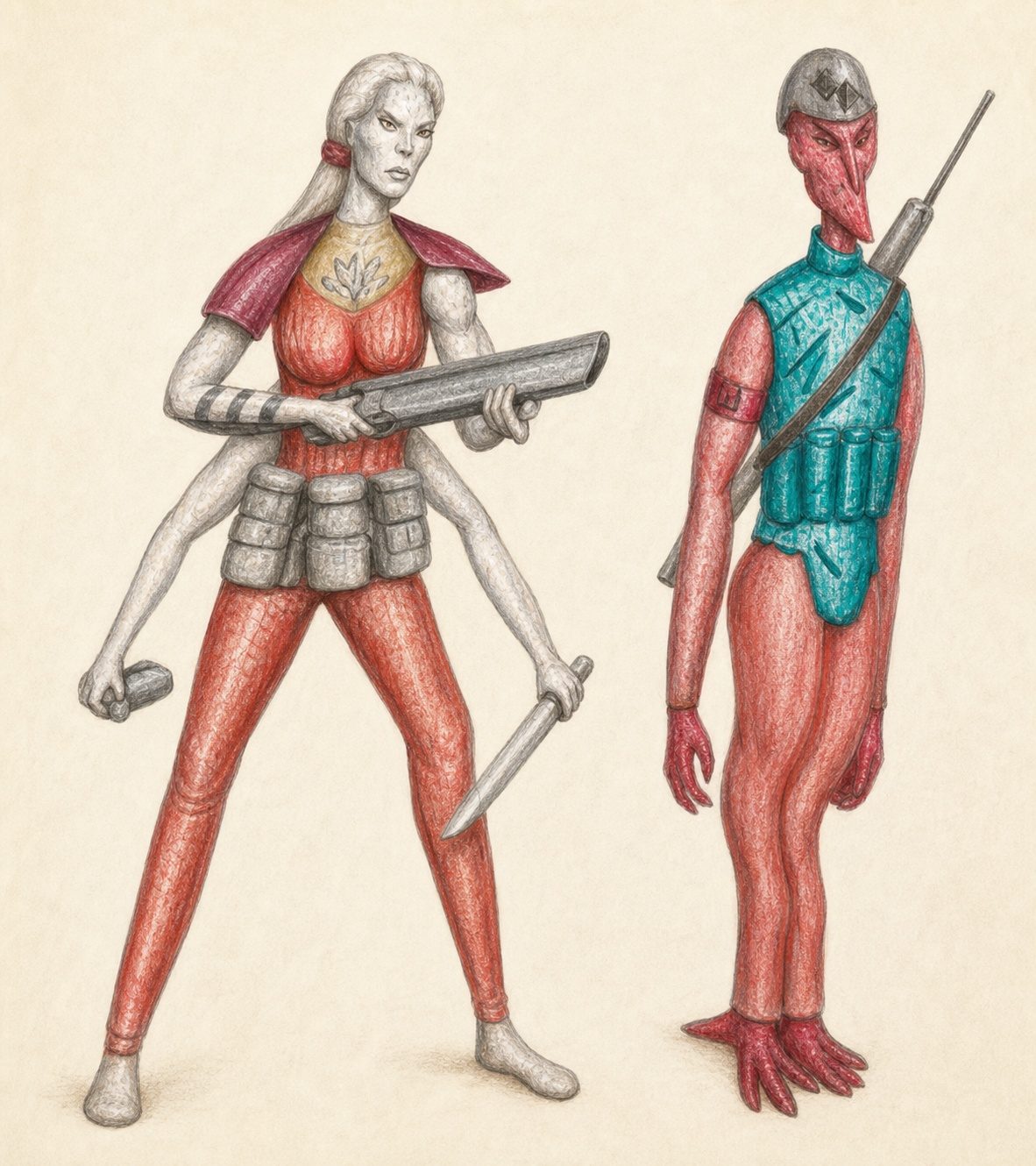
The Surditary rely on races loyal to them: some are slave races, others vassal races. The already-mentioned Ypry make up the country's military elite.
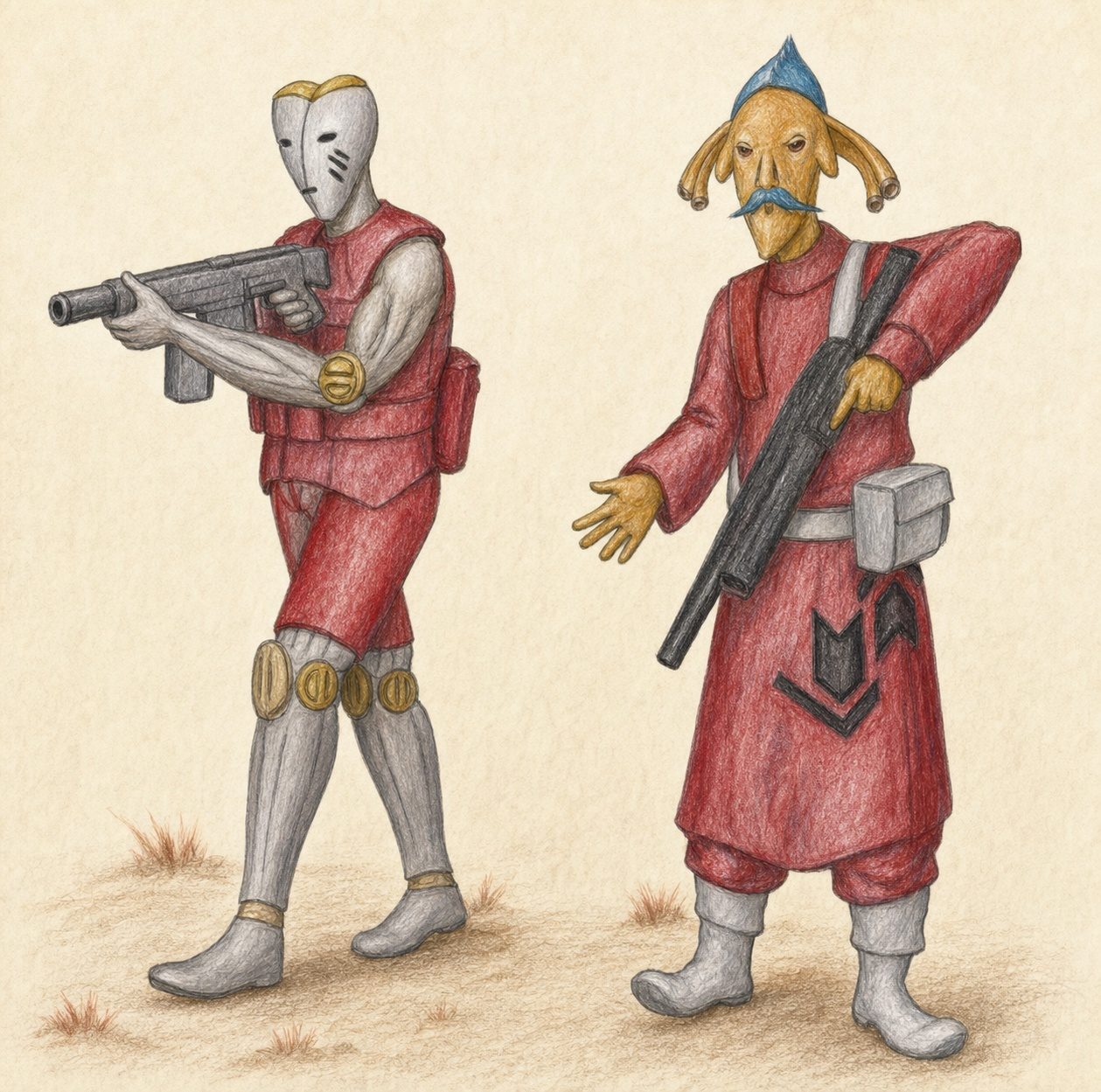
Massed ranks of Reytgery — purchased from the Reytger Vassal Empire — serve the Surditary, along with no small number of humans and Partaky.
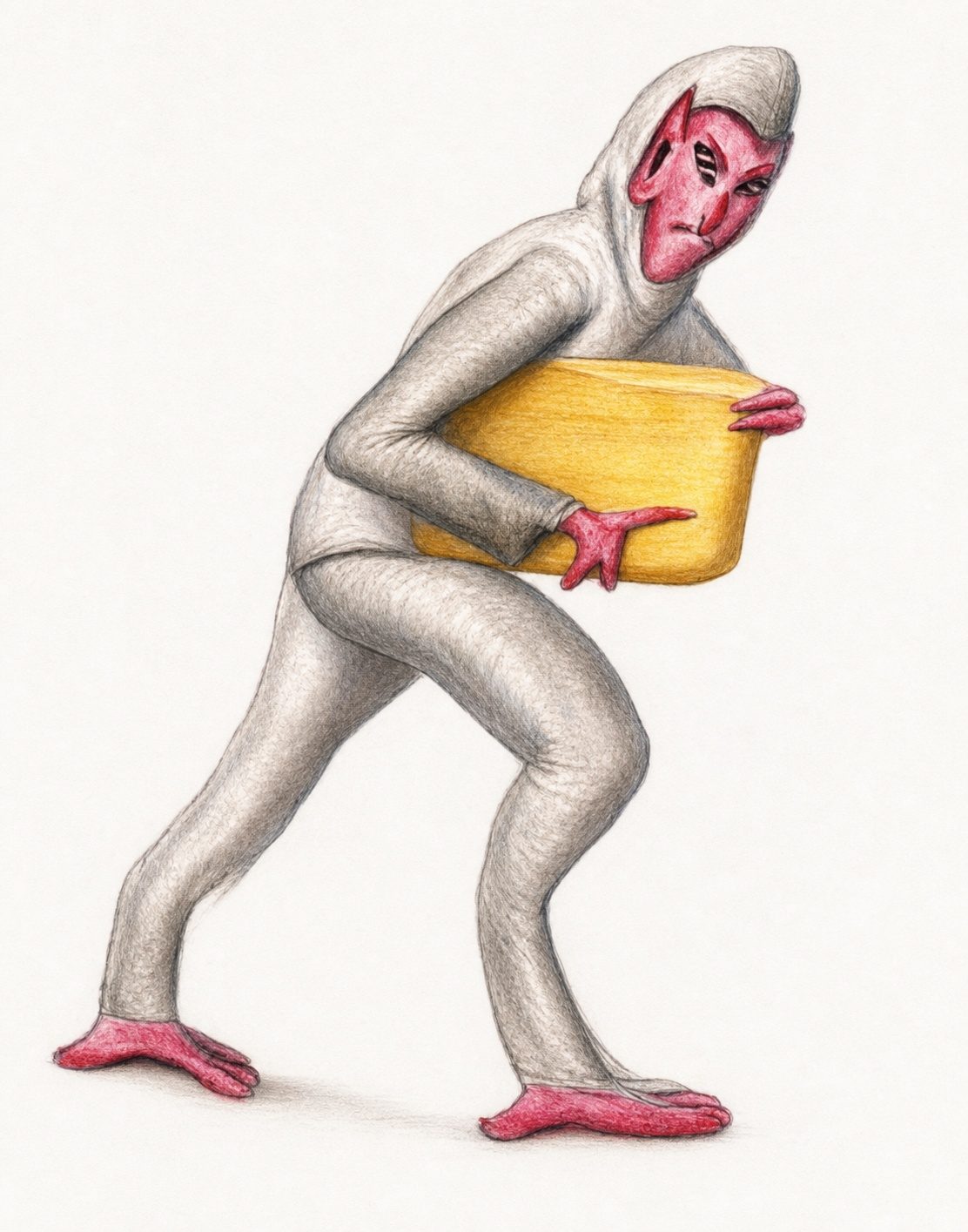
Besides the Ypry, an important source of recruits are the Duyzitane — a numerous race living on hot planets. The Duyzitane are frequent workers in reactor compartments and the stoke-holds of steam engines, wherever this archaic machinery is still in use. Many of them serve in the Surditary army, forming infantry somewhat better than the Reytgery, though inferior to the Ypry. The extensive cavalry is made up of the Mirgiry — another race bound to the Surditary by a vassal treaty. The Puretori and the Alyutori are likewise numerous: both frequently become the mistresses of local satraps and serve as a kind of “currency” among the dynasty's upper strata.
Order within the dynasty is maintained by the Sheriffs, who hold the absolute right to kill or pardon members of the Surditary. The Sheriffs are cruel but fair. The most terrible crime is considered disrespect toward the Shyytar; the second is rebellion and treason. The Sheriffs are representatives of the dynasty's authority; locally there are often police forces or guard militias whose task is to assist the Sheriffs in every way. Judicial functions are usually carried out by the Sheriff himself, and only in rare cases, when the suspect is of very high rank, is a Surditary court convened, where either the Surditary themselves or their representatives sit. There are four standard sentences — a fine, hard labor, slavery, and death. Executions in Surditary society are held before large crowds and are a popular spectacle.
Industry rests on the mass use of slave labor. Ecology, meanwhile, concerns absolutely no one. Slaves are forced to live in filthy slums attached to factories that discharge vast quantities of noxious gases. Food is usually scanty, and the working day runs 14 to 15 hours.
Life in the cities is, on the whole, not so different from life anywhere else — some even hold that the dynasties offer better conditions for doing business than, say, the Horde, thanks to the ability to use cheap labor and disregard ecology and labor protections.
Gladiatorial combat is very popular in the dynasty. It is more brutal than in the Ikarii, and often ends in the death of one of the fighters.
Several gradations are usually distinguished: Surditary planets, satrapies, vassal worlds, and allied worlds.
Surditary planets are, directly, the most developed and wealthy systems, as a rule of strategic importance. Satrapies are planets governed either by the Surditary themselves or by their governors. Vassal systems are systems belonging to various races close to the Surditary, such as the Mirgiry or the Baibuzy; they are obligated to supply various resources — these may be fighters, weapons, slaves, or something else. These can also be undeveloped planets subdued by military force and now obligated to supply resources; such planets are ruled by local rulers under the supervision of Surditary governors. Allied worlds, meanwhile, are usually tied to the dynasty through a system of mutually beneficial relations.
The Surditary are highly practical in governance — they are usually utterly indifferent to unprofitable territories and planets. The sole purpose of any system's existence is to make money for its master, so satraps may do whatever they like within their controlled territory. Rampant crime frequently accompanies Surditary rule. If a system is unprofitable, it is used only for recruiting cannon fodder for the Surditary's endless wars; otherwise it is left entirely to its own devices, or to some undistinguished satrap who has fallen out of favor with his master.
The Puretori reproduce quite quickly — a single female typically bears no fewer than six offspring at a time. All of them must be fed, and so Puretori society is very harsh: it is not uncommon for very young Puretori to die in clan skirmishes. The Surditary offered the Puretori an alternative — all “surplus” offspring are sent into Surditary service, and in exchange the Puretori receive a number of planets in ownership, as well as payment for their loyalty. Over time the Puretori acquired more and more planets and grew ever more numerous. Possessing an appearance attractive to a whole range of races, they enjoyed great success. But as their numbers gradually grew, breaking through to the top became ever harder, and Puretori society grew increasingly stratified. Women of the most influential clans came to occupy every approach to the satraps' palaces, elbowing out less fortunate Puretori. Only daughters of the “noble clans” could now become concubines of the satraps. The fate of the rest was less enviable: many Puretori ended up at the bottom of Surditary society, swelling the ranks of brothels, camp followers, or slave overseers.
Head of the dynasty for the past 40 years. He came to power by inheritance. His chief moves in office were strengthening the dynasty's army and preparing for its return to great-power politics. To this end, a transformation of the country's economic life began — foreign investment was actively courted, though there were not too many takers: the Surditary's poor reputation made itself felt all too strongly.
After certain economic successes, Shyytar decided to dismantle the traditional feudal structure of Surditary society. He removed a great many Surditary from their posts, replacing them with representatives of other races personally loyal to him. They were selected not by family standing but by merit — forming a genuine class of “self-made men,” despised by the old aristocracy. After several coup attempts and mass executions, he nonetheless decided to placate the aristocracy by distributing to it planets from among those recently conquered. The number of malcontents diminished somewhat, but still remained significant.
Shyytar was known for cruelty and decisiveness. He is known to have executed his own brothers for taking part in a conspiracy. Likewise, during the “Peresvet executions” he ordered the wholesale extermination of the families of his opponents — 136 Surditary from the so-called “Southern Gang.” For all that, he actively recruited scholars and renowned military commanders into the dynasty's ranks, well aware of how far his dynasty lagged behind the leading powers.
The Surditary differ greatly in their ambitions and spheres of influence. Some of them are close to Shyytar I and make up the group of self-made men.
The self-made men are usually Surditary of no great lineage, many of them young by Surditary standards (under 100 years old). Most had connections in the more developed northern sectors, drew representatives of other races close to themselves, and scorned members of other factions as hidebound. It was the self-made men who became the chief cause of Surditary expansion and its successful conquests.
The Underworld. Closely tied to the Dezory and the Katazy, these Surditary are among the Underworld's well-known representatives. They often live beyond Surditary domains, dwelling on planetoids and moons under their own personal control. Their subordinates make up an important part of the underworld in sectors close to Surditary holdings. Shyytar himself is the first to seek the favor of these influential Surditary, though most of them are quite old-fashioned and do not suit his purposes. They possess invaluable connections and an intelligence network.
The Old Aristocracy — reactionaries, opposition to Shyytar. Despising modern trends, the old Surditary take pride in their lineage and scorn the self-made upstarts. This remains a very influential part of Surditary society, resting on the strength of its dynasties and vast holdings.