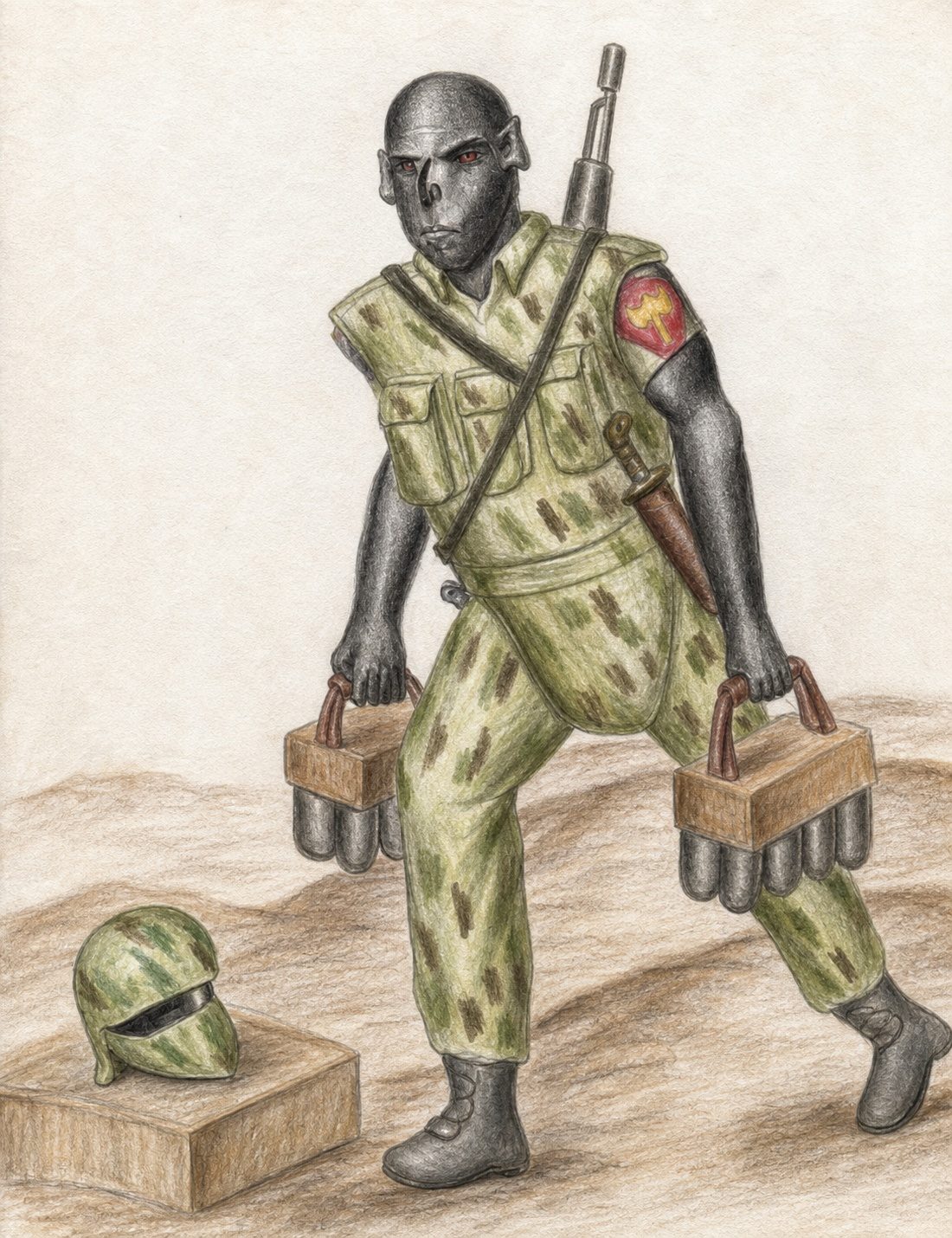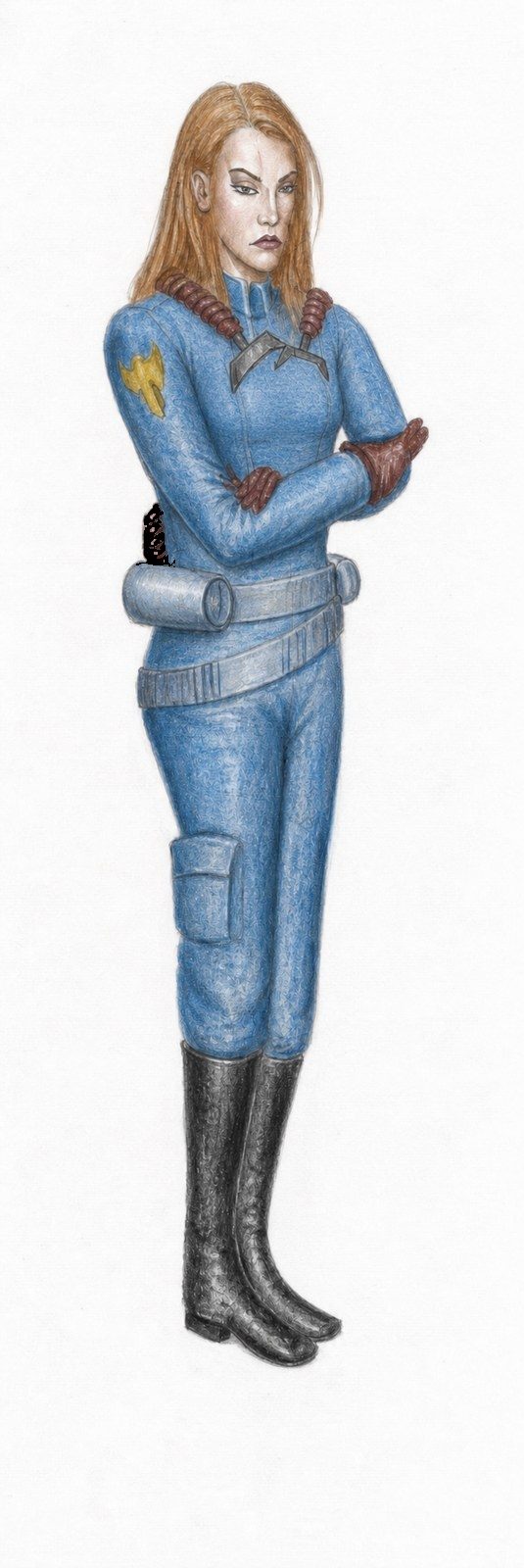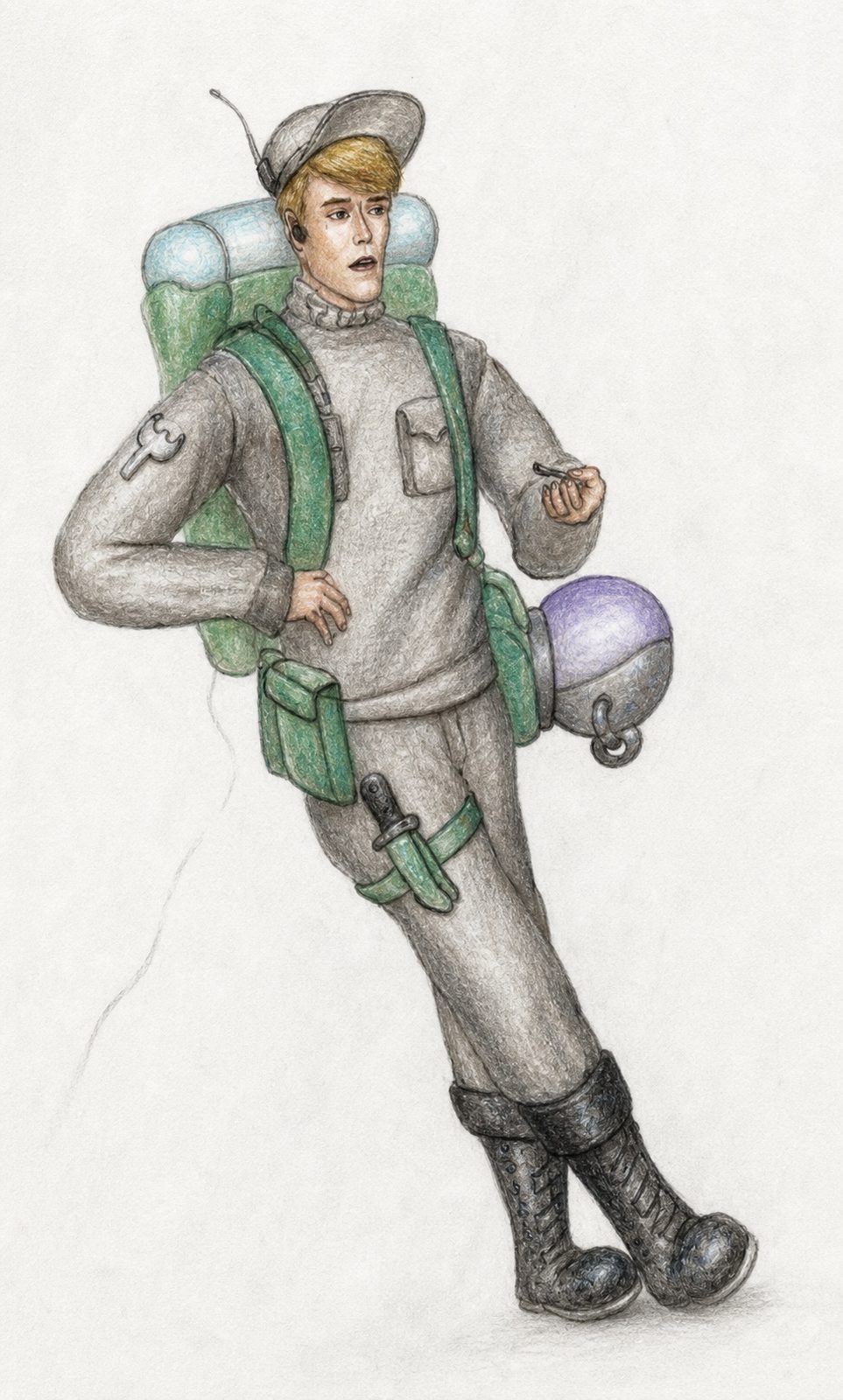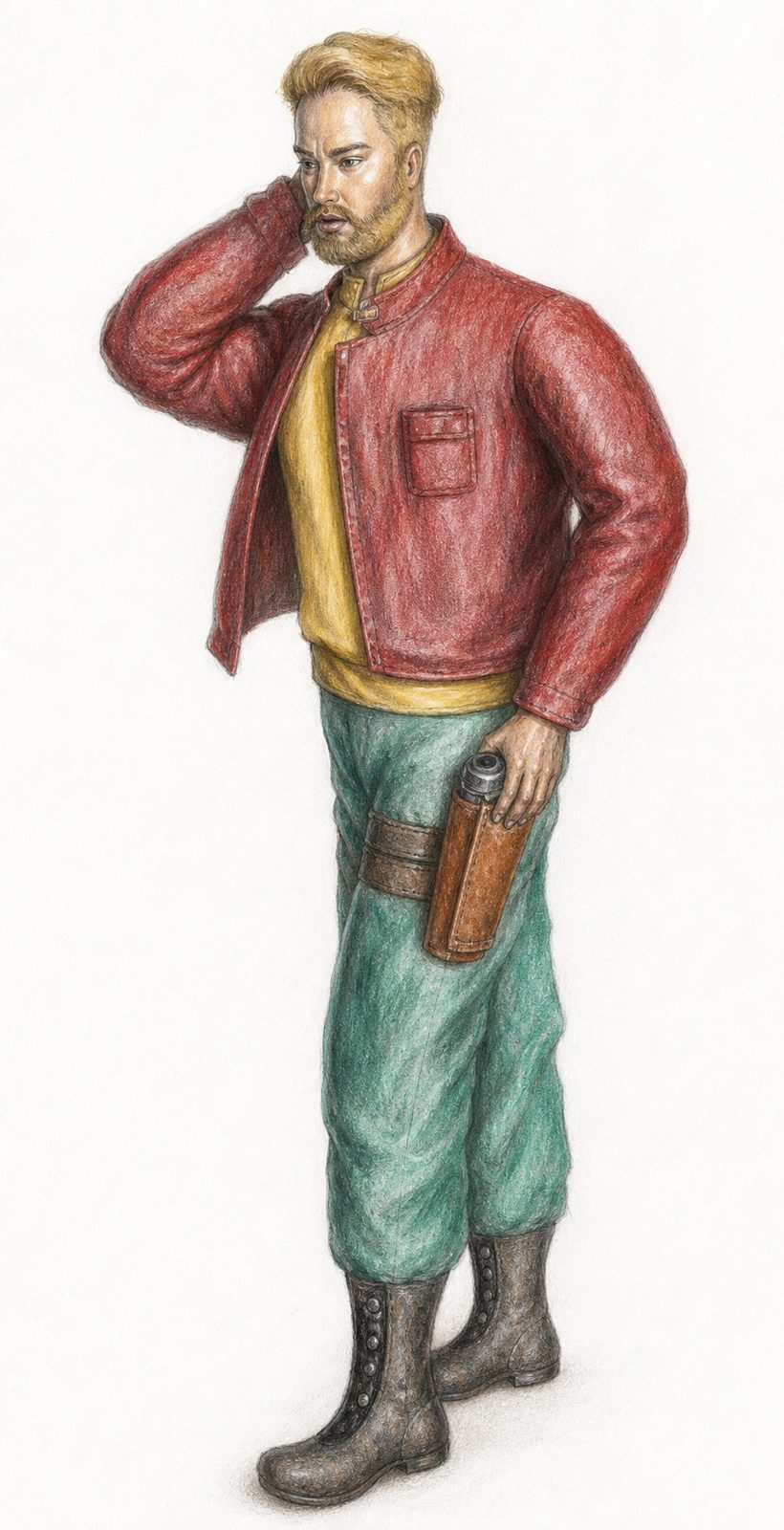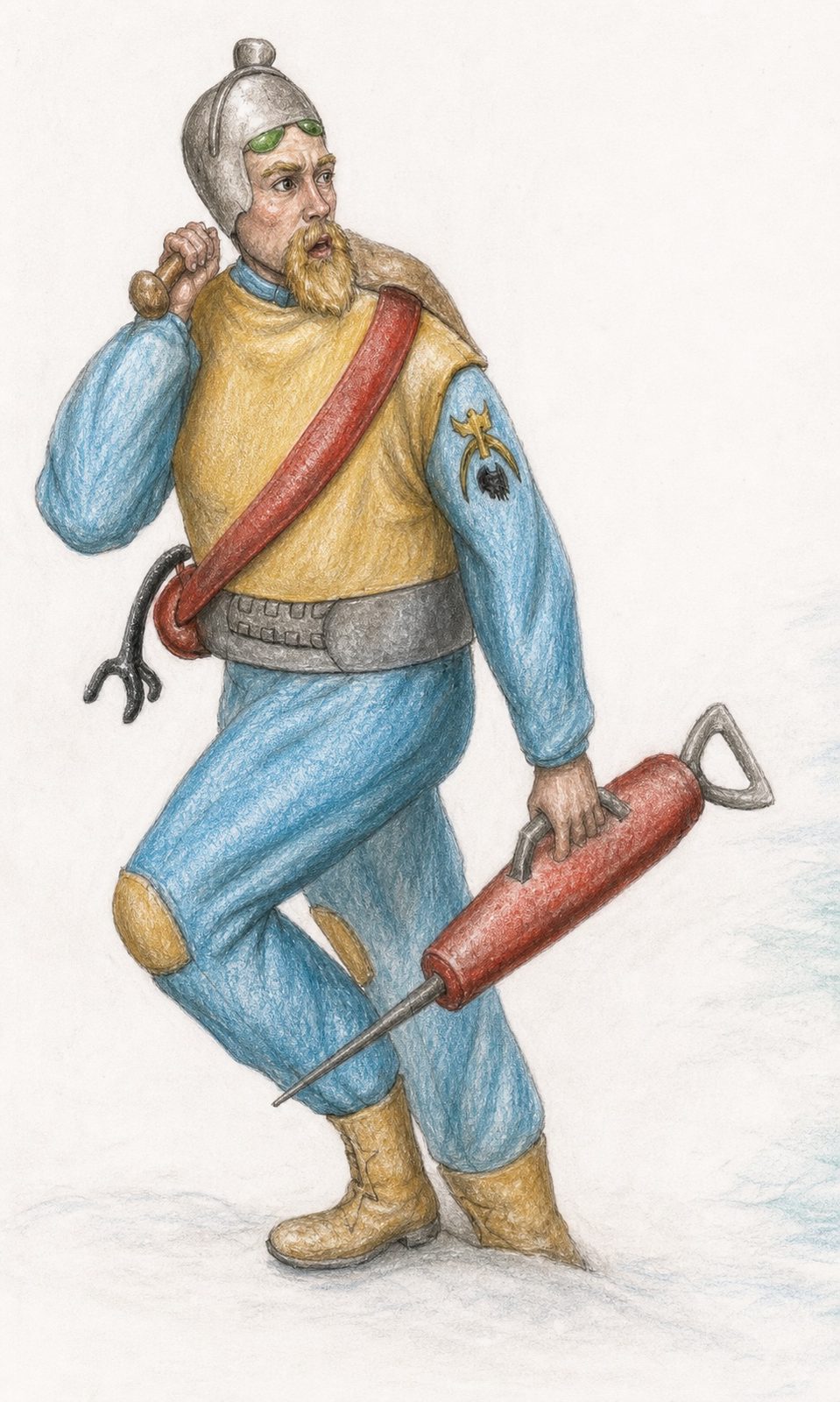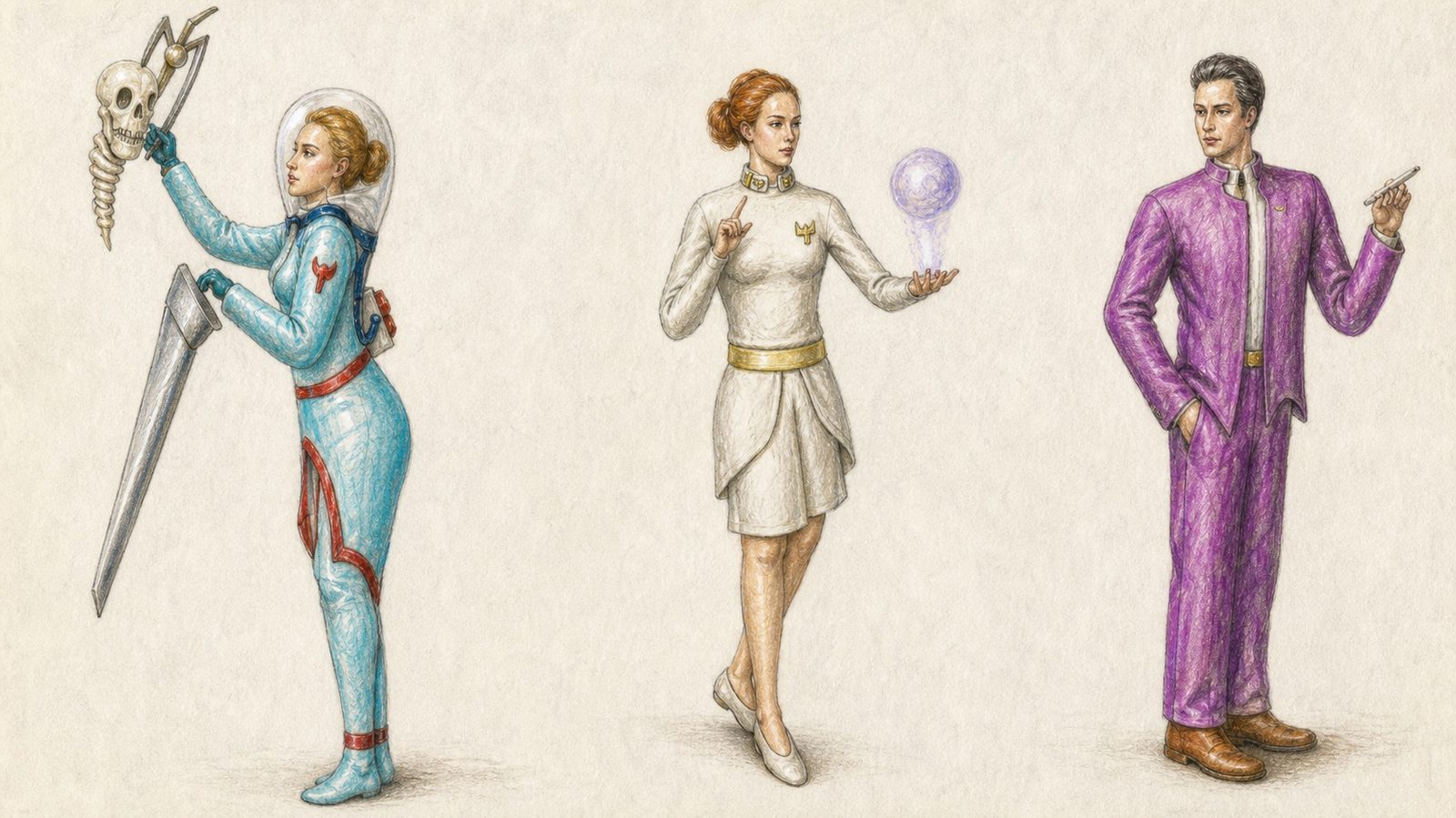
A human state that considers it critically important to preserve the purity of the human race. They are racists, and very few can rise to the highest positions in the hierarchy.
It arose in the star cluster known as the Heart of Horde; its founders were the heirs of old humanity from the era of the Great Empires. The outlying planets were not greatly affected by the war and retained a significant portion of the old technologies.
It is a highly developed state, the strongest in the galaxy in both scientific and military terms.
It is governed by a council of clans; there are two levels of council — the ceremonial one (the 2 founding clans) and the main one (the Council of Twelve, the actual government of Horde). There is also a formal head of state, the Nadzard, but he holds no real power.
A brief description of the twelve clans:
Tasconenny — one of the three oldest clans and now the strongest of them. Aggressive in foreign policy and conservative in domestic policy.
Andy — as of the year 2018, the second-strongest of the clans, also fairly aggressive, but not distinguished by conservatism.
Vaad — one of the founders of Horde, but now a weak clan that plays its part in the Council of Three by maneuvering between Andy and Tasconenny; most Nadzards come from this very clan.
Paktoviy — a clan known for its standing in culture. It is considered the chief "supplier" of cultural figures.
Veld — dreadful conservatives: while at present everything in Horde is subordinated to the goal of maximum social mobility, in Veld hereditary traditions are still strong.
Dubant — the weakest of the Horde clans.
Kordilyer — the most technologically advanced clan, in which private business plays a substantial role.
Bagain — the most liberal of the clans, the only one where non-humans can hold serious government posts.
Alp — the wealthiest of the clans, something of a "bank" for Horde.
Sayan — known as an important participant in the colonization campaigns.
Keyv — the first clan to create the hyperspace communication system, which it still maintains and develops to this day.
Damrey — the clan that created the Lorki, now the most advanced in genetics.
Horde society is quite distinctive.
Let us present here some aspects of how the younger generation is raised. Horde has an institution of the family, but it definitely carries less weight than in other human societies. The family handles direct upbringing only until the child turns 6, after which he begins his path through the seven-stage educational structure. The first stage identifies his inclinations, and the second and third reinforce them. The fourth begins roughly at the onset of puberty, when the graduate settles on his choice of advanced coursework. The fifth and sixth are relatively general, and a student may still change specialization, while the seventh is the most important and difficult of the educational stages. It is worth noting here that the child leaves home at age 6 to study at boarding schools. During the year he has three one-month vacations, which he spends at home with his parents. This system makes the child a kind of "citizen of Horde," loyal not so much to his family or homeworld as to the whole of Horde. This rather harsh system of upbringing is exactly the same whether for the children of a clan's rulers or for the children of an ordinary worker. Everyone studies alongside everyone else; the children of rich or influential parents receive no privileges whatsoever. That said, most clans still retain a hereditary system of rule, whereas Bagain has abandoned it, passing power to the most deserving.
At present the seven-stage education system has been adopted by all the clans; only Veld and Dubant retain certain vestiges of the past, where the offspring of a clan-head's family receive special privileges. Many believe, however, that within a generation or two they too will give up these privileges.
The goal of the education system is to find the most suitable place for every citizen. Under Horde ideology, only a person satisfied with his place can bring benefit to his clan and to Horde. On entering the first stage, children must stop giving their surname — everyone is called by first name only. A surname is meant to mean nothing, and even the teachers do not know for certain whose children they are teaching. Children are assigned to boarding schools according to a complex distribution algorithm, and only the operators of such stations, along with the developers of the algorithms, know the children's surnames. They are often sent to other planets — for example, Nainos And went through the first stage on a semi-agricultural world in the Heart of Horde, far from his parents.
The education system costs the clans' treasuries more than the war machine does. In fact, it is the cornerstone of Horde society. Many citizens of Horde, while acknowledging that it is rather harsh toward children — who are, in effect, torn from their parents at the age of 6 — consider it the chief reason for their state's power and prosperity.
Horde has a developed market economy; its main distinction from other sectors is that, when necessary, entrepreneurs, like any other ordinary citizens, will sacrifice their business interests, their enterprises, or their lives if the current situation demands it. Such rigid devotion to the ideals of Horde sets its citizens apart and is one of the consequences of the education system.
The society is also marked by the highest degree of social mobility — capable people face no barriers to advancement. The Bagain clan, for instance, went so far as to abolish all restrictions on advancement for non-human races.
Private business in Horde:
The structure of Horde society is such that three professions are considered the most prestigious: scientist, researcher, and soldier. The rest remain less sought-after. This does not mean, however, that the drive to start one's own business is absent among the people of Horde. A distinctive feature is that private business here rarely grows to monstrous scale; the one exception, perhaps, is the corporations within the Kordilyer clan. A typical private company in Horde is a business built on the cooperation of a certain number of people. The exception is old companies whose field of activity may span several sectors.
Again, when operating outside Horde, businessmen are well aware that none of their activities should in any way hinder Horde's expansion. A significant share of the output for the army and the research fleets is produced precisely by private companies, though strict standardization measures are observed. Thus, the shipyards at Kiliuros-Prime in Sector E and at Shernive-Selt in the Heart of Horde produce starships that are exact copies of one another, even though the shipyards belong to owners who have never even heard of each other.
Horde has no Colonial Companies — the colonization of new territories is part of the work of the Department of Exploration and Colonization.
The network in Horde is maintained by a conglomerate of millions of companies on every individual planet.
After completing his education in the seven-stage structure, a Hordesman sets off to serve the interests of his race somewhere far beyond his home worlds. In the course of his service he may change his place of residence dozens of times. The extremely high degree of social mobility promotes the movement of human masses across the galaxy and beyond its borders.
The downside of such mobility is that people are not interested in starting families, preferring relationships that entail little commitment. The average Hordesman starts a family at around age 35, after which a child soon follows. This child, after six years of upbringing within the family, enters the education system, which in effect takes over all responsibility for preparing him for adult life. For this reason, once a child turns 6, families often scatter to different places, depending on their career preferences. After such a separation, the marriage is rarely dissolved; formally, the couple remain together, though in practice they may never meet again. This tendency is especially pronounced in advanced clans such as Bagain or Tasconenny.
Casual sex is not approved of in Horde, nor is there any promotion of sexuality — it is not easy to find strip clubs or brothels here. At the same time, relationships lasting less than a year are typical. To stimulate the birth rate, the Bagain clan ran a number of programs such as "joint career," in which married couples were given certain advantages when working together.
In general, families with a large number of children are more characteristic of the farming regions.
Horde is a territory with no single religion; moreover, surveys reveal that the overwhelming majority of the people of Horde are atheists. Displaying religiosity, while neither forbidden nor condemned, is nonetheless considered a sign of bad taste. Thus, on the irreligious fleet or in Horde's army there are no mobile churches or parishes of any kind, so characteristic of the armies of a number of other states and races. The only exceptions are the ships of various auxiliary forces: for instance, Sonfar ships always carry shrines to their supreme god, Annkt, while Puretorian ships likewise carry shrines of the cult of the angels of fire.
As for the main churches on Horde's territory, the leading one is the Church of the Two-in-One God, which has the largest number of worshippers and the greatest number of parishes. Religion, however, is officially separate from the state and survives solely on the voluntary donations of its worshippers, without receiving a single crumb from the state budget.
Making sense of the structure of the Horde state is fairly difficult, so let us briefly describe the structure of an ordinary clan:
The formal supreme ruler of Horde is the Nadzard, elected by the Council of Three, which convenes on especially important matters in the Heart of Horde; the Council of Three includes the heads of the oldest clans — Andy, Tasconenny, and Vaad. Traditionally, the Nadzard comes from a representative of the least influential clan, Vaad.
Next in the hierarchy after the Nadzard stands the head of the clan; this position is effectively held for life, with the previous ruler choosing the most deserving of his sons, or someone from his inner circle. In Horde's early years, the head of a clan wielded practically unlimited powers and absolute authority, but the rapid growth of Horde changed the situation somewhat: now the head of a clan determines only its foreign policy and the process of "Horde assimilation," while the heads of planets and regions hold enormous power. The heads of recently assimilated regions are, as a rule, appointed by the head of the clan, whereas in the "old regions" this position is elective. A region has the right to elect its own head independently 10 years after joining Horde, though this term is often either shortened or, conversely, extended.
There exist supra-regional, clan-wide structures — such as financial institutions, the army, and the civilian and military fleets; these institutions are formally subordinate to the head of the clan, but in reality they possess a certain degree of independence and influence over decision-making with respect to the clan head. In some clans there is a kind of parliament in which representatives of the regions sit, and the head of the clan is generally obliged to take this parliament into account.
The Department is one of the so-called "supra-clan" structures, meaning that it is not actually subordinate to any single clan, but answers to the Nadzard — the nominal ruler of Horde. This structure holds enormous authority throughout Horde's territory. Horde's authorities are obliged to assist DETS's operations in every way, should the Department request such assistance. DETS's main work is combating "indirect and exceptional threats"; for decades the main focus remained the struggle against the Wanderers. DETS is divided into a number of sub-departments. Each sub-department handles its own matters: the SW Sub-department deals with combating the Wanderers, the "Drankerian" sub-department combats the Drankery, the Kataz sub-department combats the Kataz, the Anti-Cultist sub-department combats dangerous and destructive cults, and so on. The basic unit of the sub-departments is the "operative cell" — a group consisting of an operative agent and a number of subordinates, acting with a large degree of independence. While their actions are strictly regulated within Horde's territory, outside it they enjoy considerable freedom. This is because operative cells often act far removed from Horde's main forces and have no direct contact with their superiors.
DETS attracts people of a fairly rebellious mindset, who find it hard to get along within the clans' armies or to follow a clan's chain of command. At the same time, getting into the Department is quite difficult: candidates must pass through several rounds of selection focused on their intellectual and psychological profile. Physical fitness is of no importance whatsoever: DETS instructors prefer people without any particular physical training, since DETS's training system is highly specific, and it is always harder for them to break down a pre-existing system.
The Great Campaigns of Horde marked the height of its power, making it the dominant force across half the galaxy. The Wanderers were routed, dozens of sectors fell within Horde's sphere of influence, and several came under its direct rule. However, the campaigns themselves, together with the Horde assimilation of the captured sectors and of the Intersector Confederation, required enormous financial outlays.
The gigantic expenditures on these projects seriously affected the clans' economies, which determined their policy for several years to come — a temporary halt to large-scale expansion and general cooperation. Old rivals such as Andy and Tasconenny began acting in concert, since they catastrophically lacked the funds to achieve their goals. The budget deficits of Tasconenny and Kordilyer reached alarming proportions — they were forced to take enormous loans from other clans, especially the Alp clan. Andy also suffered serious problems in the financial sphere, although close ties with the Ikarii and control over the transit routes in Sector A somewhat eased the situation.
It was all the more unfortunate that these problems arose for Horde just before the appearance of an enemy far more dangerous than the Wanderers.
The Great Campaigns of 10013–10014 and the seizure of several sectors led to a sharp increase in debt for all the clans.
Andy, having spent heavily during the wars for dominance, was forced to take on new debts.
Tasconenny likewise found itself in a difficult position — the campaigns, and then the creation of the Intersector Confederation, led to a substantial deficit; the IC was a loss-making project, but Tasconenny considered its development a matter of honor.
In fact, the only Horde clan whose financial well-being was untouched by the campaigns was the Alp clan.
If we break down the structure of Horde's debt, we get the following picture.
The principal creditors were the so-called internal companies — Horde's private business actively lent to the clan institutions and held about 48% of the clans' debt. Second in importance was the wealthiest clan, Alp. The financing of the campaigns was largely its doing — about 32% of the debt belonged to it. Such an important role as creditor also greatly increased this clan's standing. Third among the creditors were the Ikarii — they controlled 11% of the debt, though their share of Andy's debt was far more substantial, around 40%. It added a particular piquancy to the situation that the Ikarii themselves, after the invasion of the Ancients and the Gaykasy's dumping on the slave market, had begun to experience financial difficulties.
The remaining 9% fell to various corporations and countries close to Horde or sympathetic to it.
In the three years after the Great Campaigns, Horde managed to noticeably reduce its debt burden — whereas it had once stood at around 140% of GDP, by the start of 10018 it was no more than 29%. This was achieved by significantly cutting spending on large-scale foreign military campaigns. Horde's financiers also managed to substantially improve their clans' position through skillful action in trade and banking. This reduction in debt burden led the Council of Twelve to consider the possibility of Horde's returning to active participation in galactic politics.
The bloody wars in the south of the galaxy made Horde once again consider possible ways of extending its influence beyond the GF galaxy. The Department of Exploration and Colonization presented the program "Far Shores-2." It was incredibly ambitious and consisted of the following: the creation of 25 intergalactic fleets, which were to set out to colonize the 25 galaxies nearest to our own. Each fleet included both military and colonization forces. In addition to the colonists, the ships carried "genetic bombs" — containers of fertilized egg cells. Once a colony was founded, a process of "growing" children was to begin — children who would be raised and prepared by the first-wave colonists. These children would then become the second generation of colonists. Each fleet carried 400 million first-wave colonists and 1.2 billion fertilized egg cells. Thus, within 9 months of a colony's founding, the galaxy would already have 1.6 billion settlers. The colony's army was to be made up of the Lorki, who were likewise transported as embryos and were to be raised on site. Considerable attention was also paid to the robotization of defense.
It is not hard to imagine the costs of this project, but few doubted the need for something of the kind — the Ancients' attack and their victories made many wonder what would happen if some similar force were to invade the galaxy. The plan was therefore adopted with only minor amendments. A call for volunteers began across all of Horde's territory, and so many came forward that fairly strict selection criteria had to be introduced.
Each of the intergalactic vessels' flights would take from 1 to 10 years, so the ships were to employ the most advanced hibernation and stasis technologies available. The crew was to work in shifts, changing once a month. The shift schedule was arranged so that total waking time over the whole flight would not exceed a year.
All the clans were required to allocate up to 3% of their budgets to the program. Enthusiasm for this program within Horde society was immense — competition for places in the colonist crews reached as high as 100 applicants per spot. The Hordesmen' original plans were expanded. A number of the fleets were increased tenfold or more, especially for the nearest galaxies. Hoping to accelerate the project and increase its chances of success, the Hordesmen entered into close cooperation with the Originals faction of the Infinite Alliance. The two states even carried out a symbolic division of the nearest galaxy into two halves. The IA passed on certain details of extragalactic routes, which made it possible to significantly reduce the projected arrival time of the colonists.
The first colonies were founded as early as 10021, and settlement began simultaneously in two galaxies — OSh and TsR. Over the course of 10021–10022, several hundred new colonies were founded in each of the galaxies, and so far none of the expeditions has encountered any intelligent life forms.
The organization of Horde society in its new home differed from its organization back in the home galaxy. The clan structure was abolished. All the new colonies were subordinated to the DEC's administration. Preferences for the main Horde families were likewise abolished. This circumstance was meant to give ambitious Hordesmen additional motivation to take part in the colonization. The local economy became a barter economy. The colonies were given relative autonomy in order to stimulate their development. Colonists received food rations and medical care, while communication was established between the colonies themselves. Along with everything needed to build the colonies came equipment for building starships. The "workhorse" of the Horde colonies became the multipurpose starship "Strizh-9," used to deliver cargo and personnel from the surface of planets and asteroids.
The overwhelming majority of the colonies were small settlements. Their population rarely exceeded a thousand people. The first wave's purpose was to create a base for further colonization. Far Shores quickly turned from a one-off project into an entire system. New colonization ships were built throughout Horde's territory, whose main task was to deliver additional colonists.
Alp is a relatively young Horde clan; it was created by the clans Andy, Vaad, and Tasconenny for one single purpose — to handle matters of interaction among these clans. Over time, Alp gained full independence, though even now the three founding clans hold noticeable power over it. For centuries, the clan busied itself with accumulating the wealth of the Horde sphere in order to become an independent entity. At present, Alp is the wealthiest of Horde's clans. All of its holdings lie within the northern Horde sectors. It does not pursue an aggressive foreign policy the way Andy or Tasconenny do; instead, it relies on its enormous financial reserves. Indeed, both Great Campaigns were financed to a considerable extent by Alp, and even Tasconenny's Intersector Confederation would have been impossible without Alp's reserves. The clan's structure resembles a giant corporation more than anything else — it is run by a General Administrator, who is effectively the head of the clan. Every General Administrator has built his career through the Great Bank of Alp, starting from the very bottom. Like many other clans, Alp is obsessed with the idea of the highest possible social mobility. This means that with the right skills, one can rise quite high. Labor is the chief value in the life of the clan's members. Although the GBA is the clan's central structure, hundreds of thousands of companies are associated with the bank, holding various assets on the clan's planets.
Even the local civil-service apparatus in the organs of government has experience working within Alp's commercial structures. The clan also holds noticeable assets in territories controlled by other clans. The GBA has branches and regional banks in the territories of every Horde clan.
Capital — Alp (Heart of Horde)
The Sayan clan holds itself somewhat apart from the other Horde clans. Most clans believe that a certain level of development must be reached before a civilization can be included in the Horde sphere. Sayan is different — they believe that even not particularly developed civilizations can be brought into the Horde sphere, if skillfully nudged along. Sayan actively operates in uncivilized and low-civilization sectors. There they act according to principles that have long been well known. An entire directorate of the Sayan clan deals with tehags. For this purpose it creates portable devices and implants little inferior to the comparable devices of the Star Wanderers. All of Sayan's tehags answer to the Tehag Directorate. The Directorate has considerable influence over the clan's administrators. For nine years the head of the clan was Baraya Sayan, himself a former tehag. Now the head is Oris Sayan, who previously belonged to the clan's scientific circles.
Formally, the head of the Sayan clan holds unlimited power, but in practice he is heavily dependent on various directorates — the Tehag, Scientific, Fleet, Financial, Military, and Technological directorates. The Inner Council, as they are unofficially called, is what actually handles the country's problems.
Traditionally, a significant proportion of the clan's members work at the DEC.
Sayan carries no significant weight in the Council of Twelve, so its client states rarely achieve anything more than the status of an allied state. It has traditionally close relations with the clans Vaad and Dubant; however, during the Second Great Campaign its importance grew — agents of the Tehag Directorate, working in remote sectors, played a major role in establishing the supply lines for the troops in the southeast of the galaxy.
Capital — Sayan (Heart of Horde)
Horde represented a fairly heterogeneous state formation. The vastness of the territories occupied by this power, together with differences in outlook among the various clans, gave rise to a range of local peculiarities. But on the whole, one can identify a number of arts especially prized in Horde. Probably the most popular was holo-cinema, which touched on the most varied spheres of life and was produced mainly in the "Heart of Horde" at a number of well-known studios. Among high society, the Horde Ballet was popular — a classical dance form in which dancers from Horde achieved absolute supremacy. Famous ballerinas were known across the whole galaxy and were adored by millions. The Horde Ballet won over many connoisseurs of dance beyond the Horde sphere and served as one of the instruments of "soft power."
Another distinctive feature had to do with sport — professional sport was not popular; local competitions were held regularly, but they did not draw millions of spectators, remaining limited to a narrow circle of fans.
Although physical development was given considerable time during the seven-stage education, the Hordesmen themselves regarded professional sport as a pointless and foolish pursuit, bringing neither material nor aesthetic pleasure. Sport in Horde remained 99% amateur. The exception, perhaps, was the various pilot competitions, though spectator interest was focused more on technological novelties than on particular individuals.
Every Horde clan has its own peculiarities, but overall the structure of governance remains the same. At the head of a clan stands the head of the clan — in some cases elected, in others inheriting power. The head's authority is not absolute, though it is very considerable. The rise of a mediocrity to the top is impossible, since ultimately a candidacy must be approved by the supra-clan institutions and by the Nadzard (usually a mere formality). Territories under direct rule are commanded by Supreme Sector Administrators — as a rule appointed by the head of the clan, but in some "old" Horde possessions they are elected by the citizens. The further down the hierarchy one goes, the more democracy there is — the heads of regions and planets are, in most cases, elective positions. In the Bagain clan, self-governance is nearly total; only rare territories are administered by governors appointed from above. Clans such as Dubant and Veld, by contrast, still adhere to archaic, hierarchical systems of governance.
In keeping with Horde's structure of maximum social mobility, members of the ruling clan by no means always hold prominent posts. Thus, in the Andy clan, almost all of Nainos And's relatives (his brother, cousins, and uncle) went into the supra-clan institutions, taking no part whatsoever in the governance of the clan.