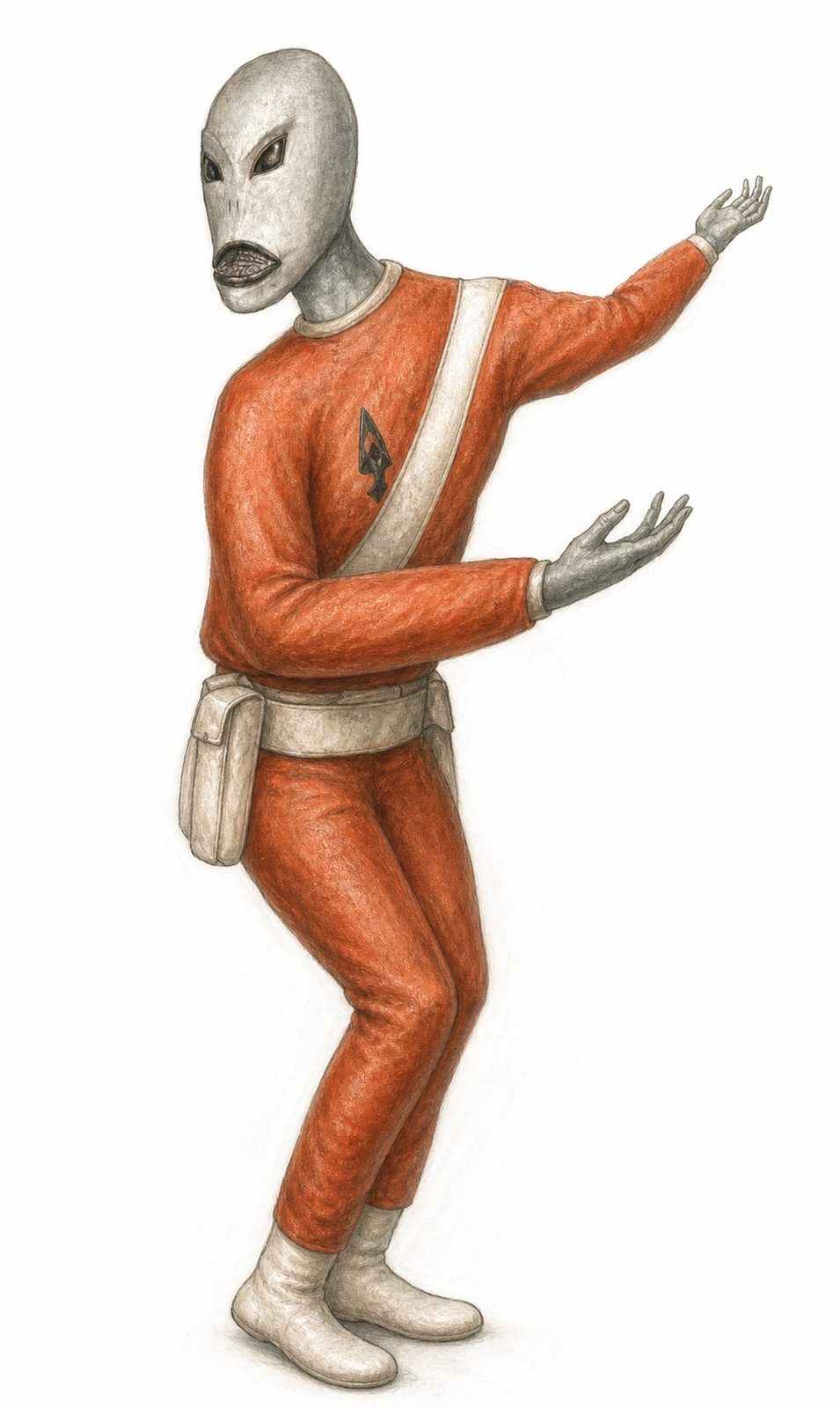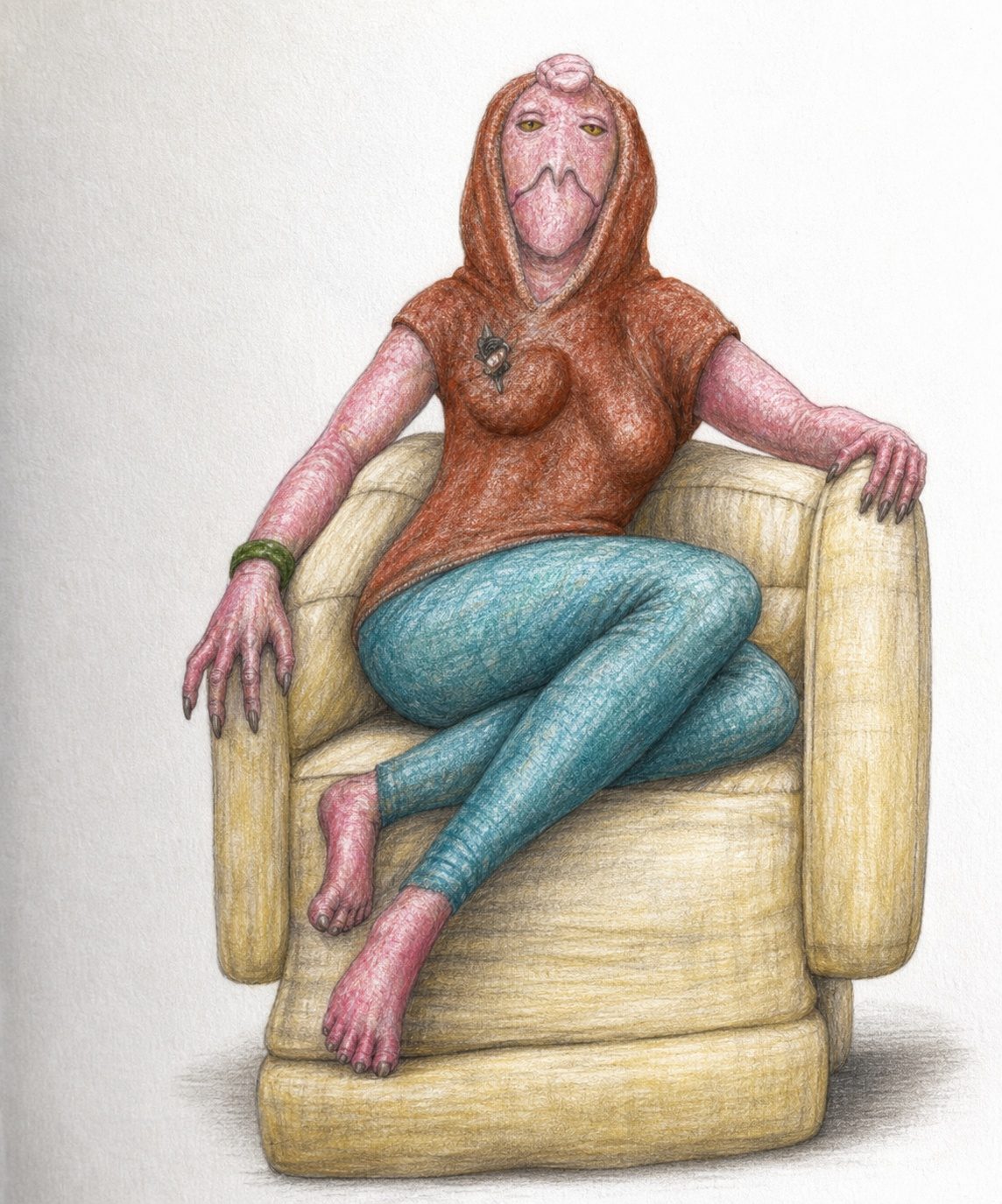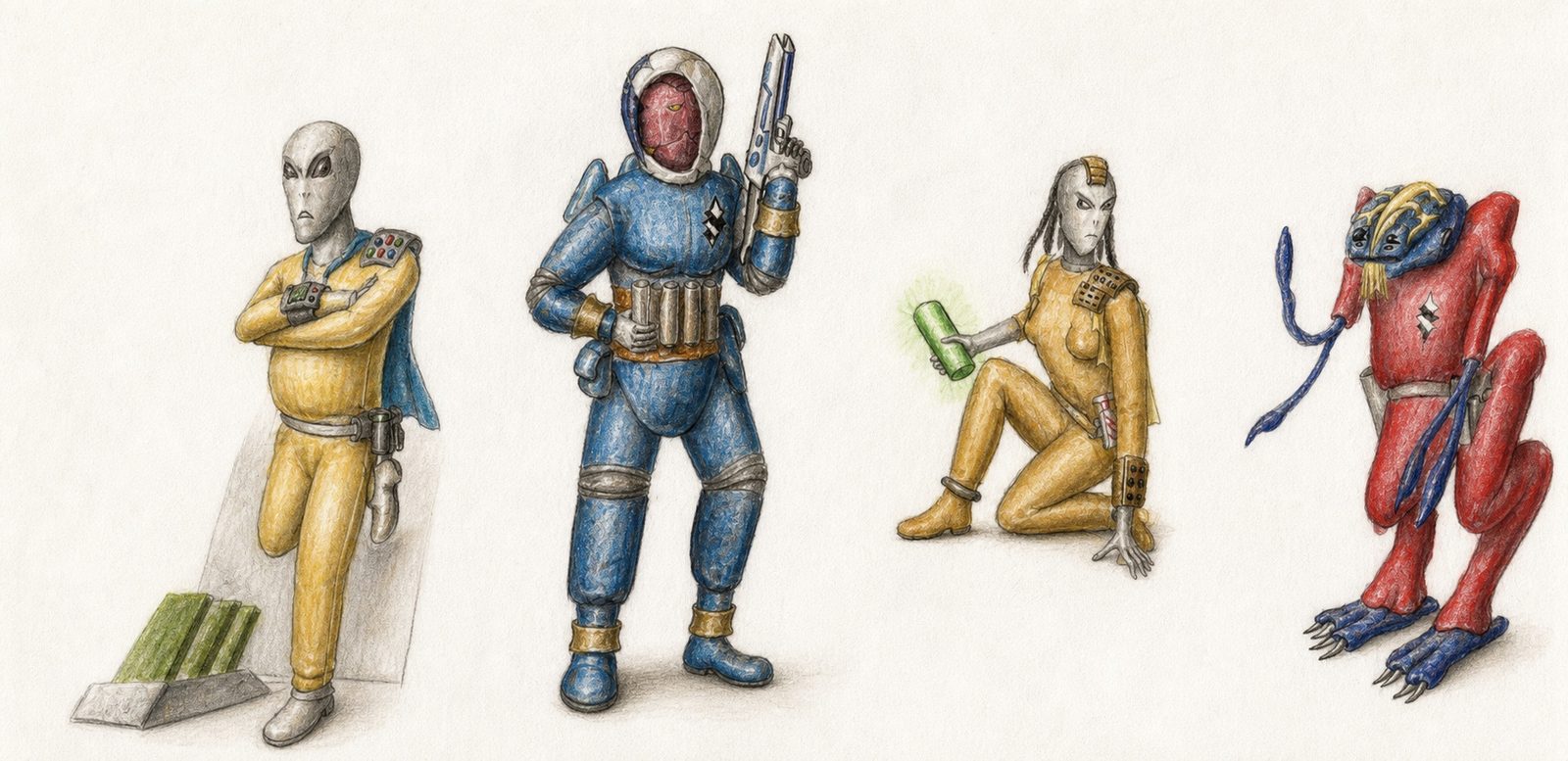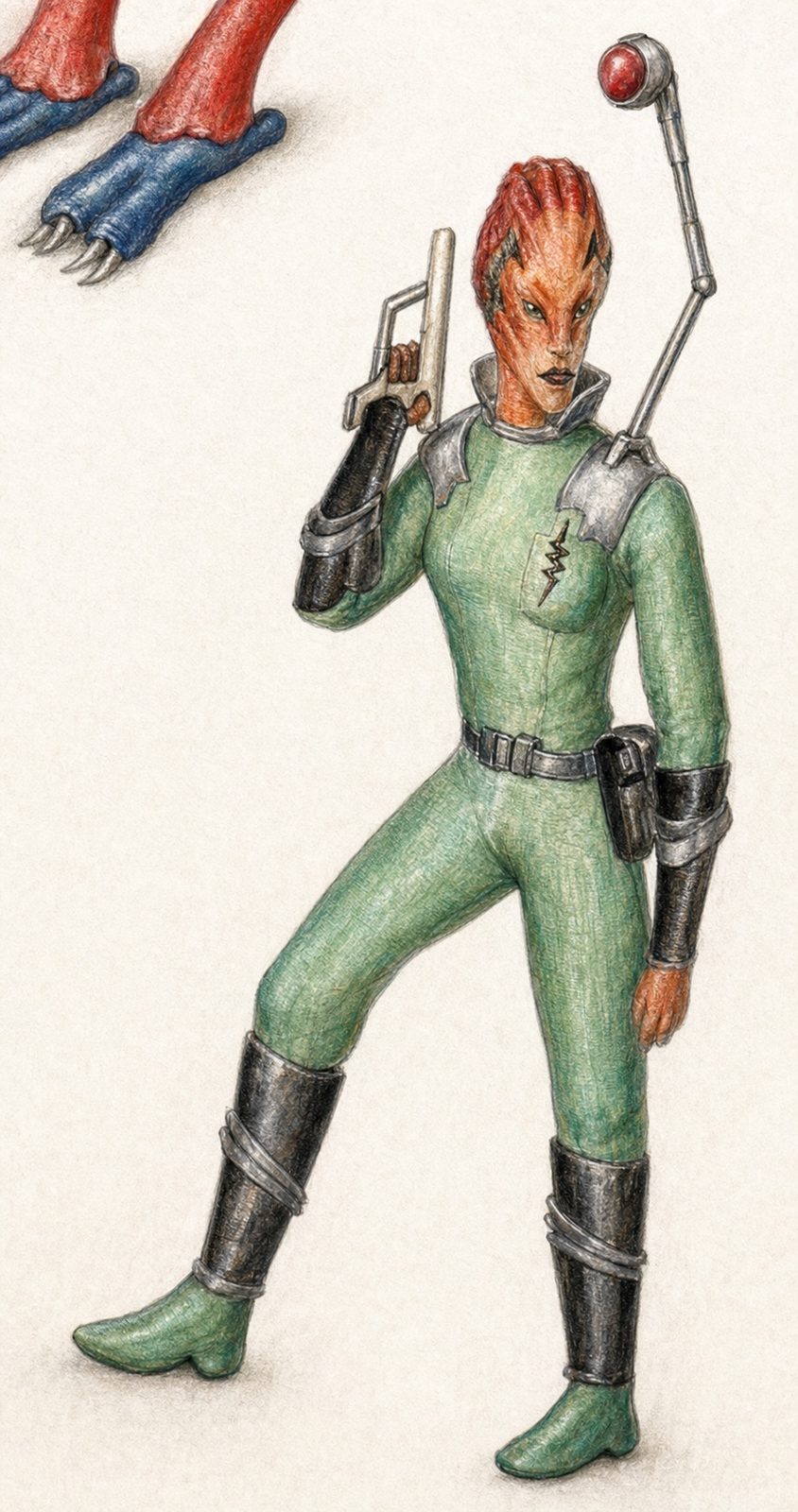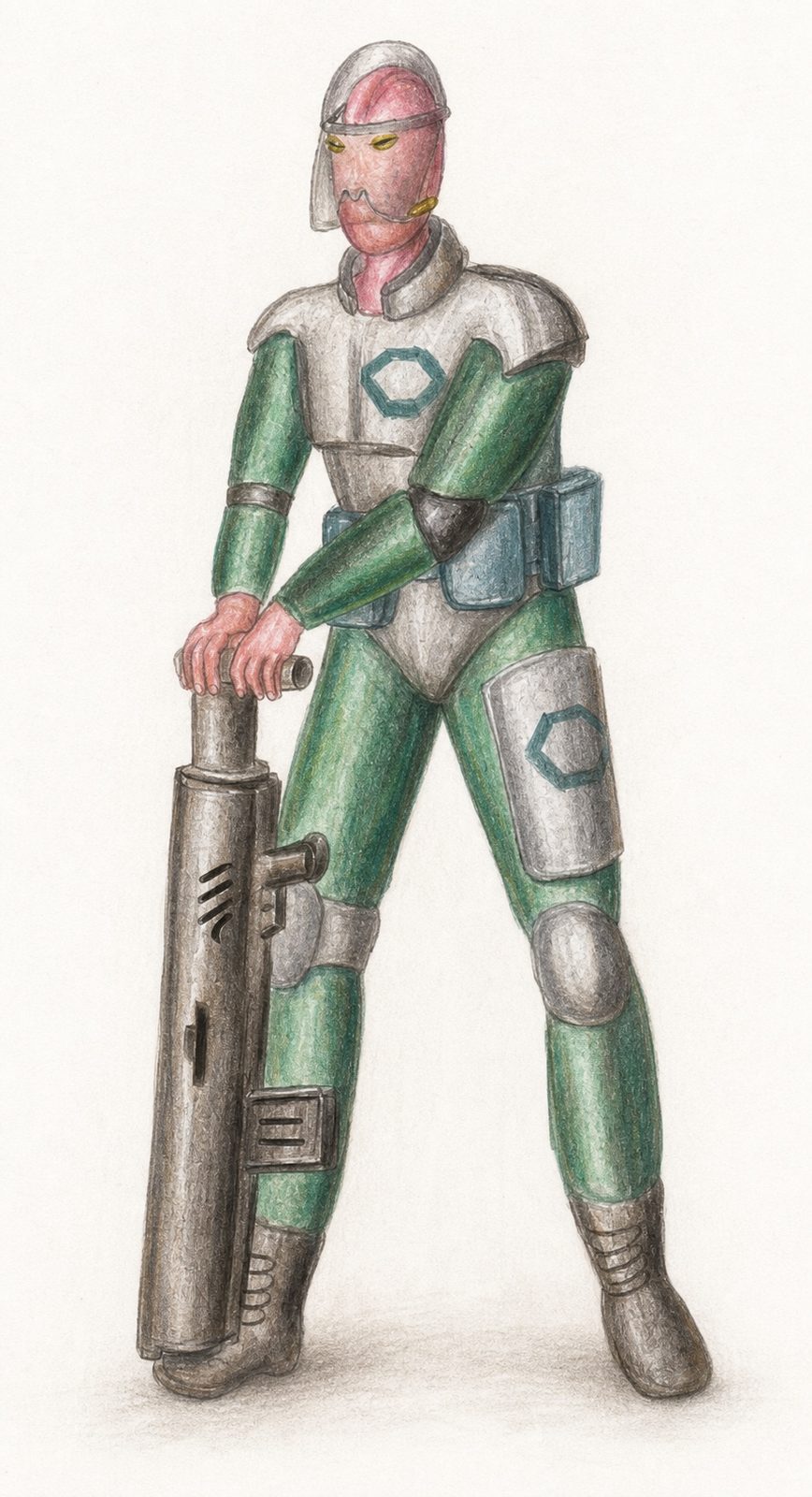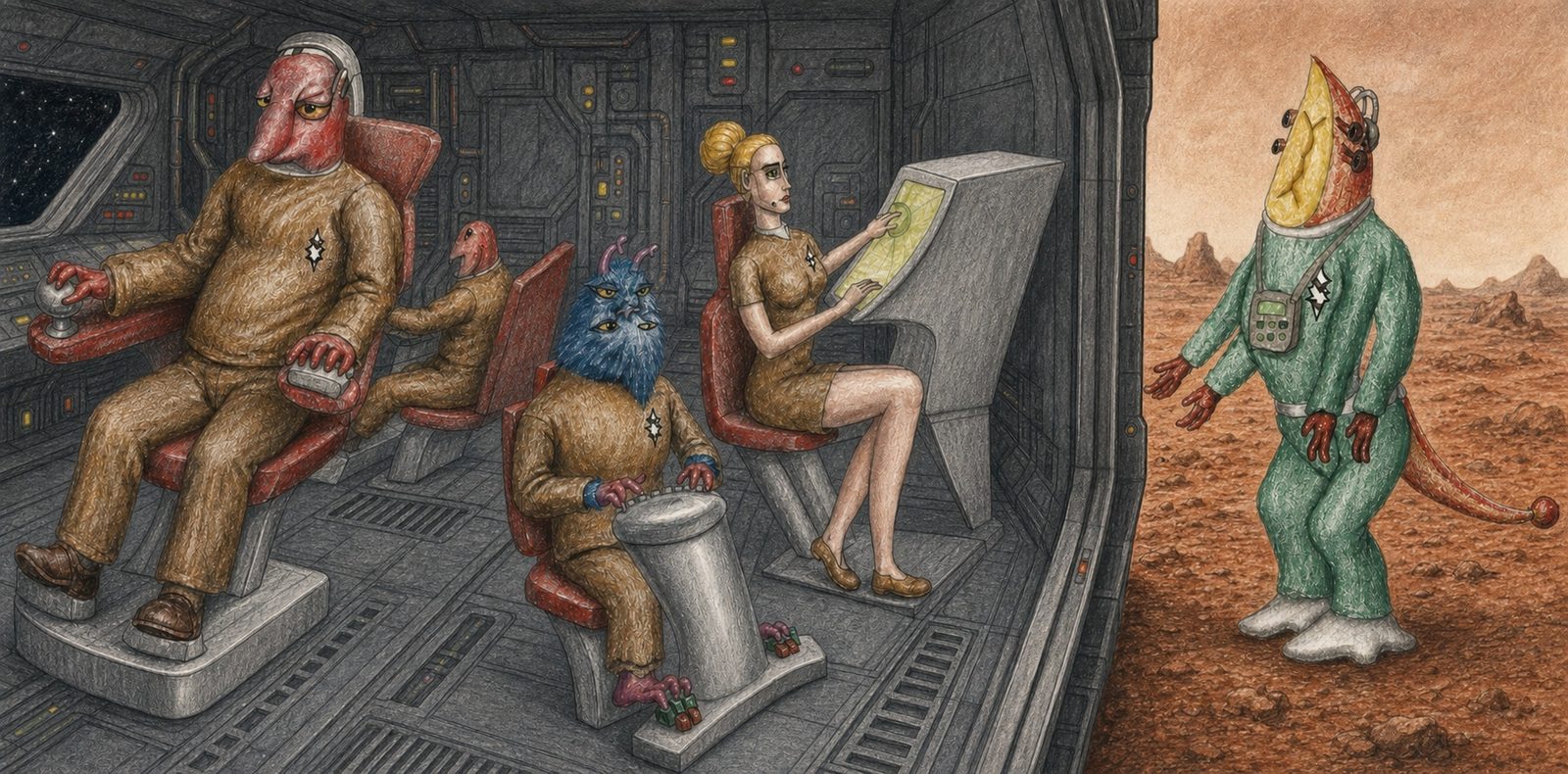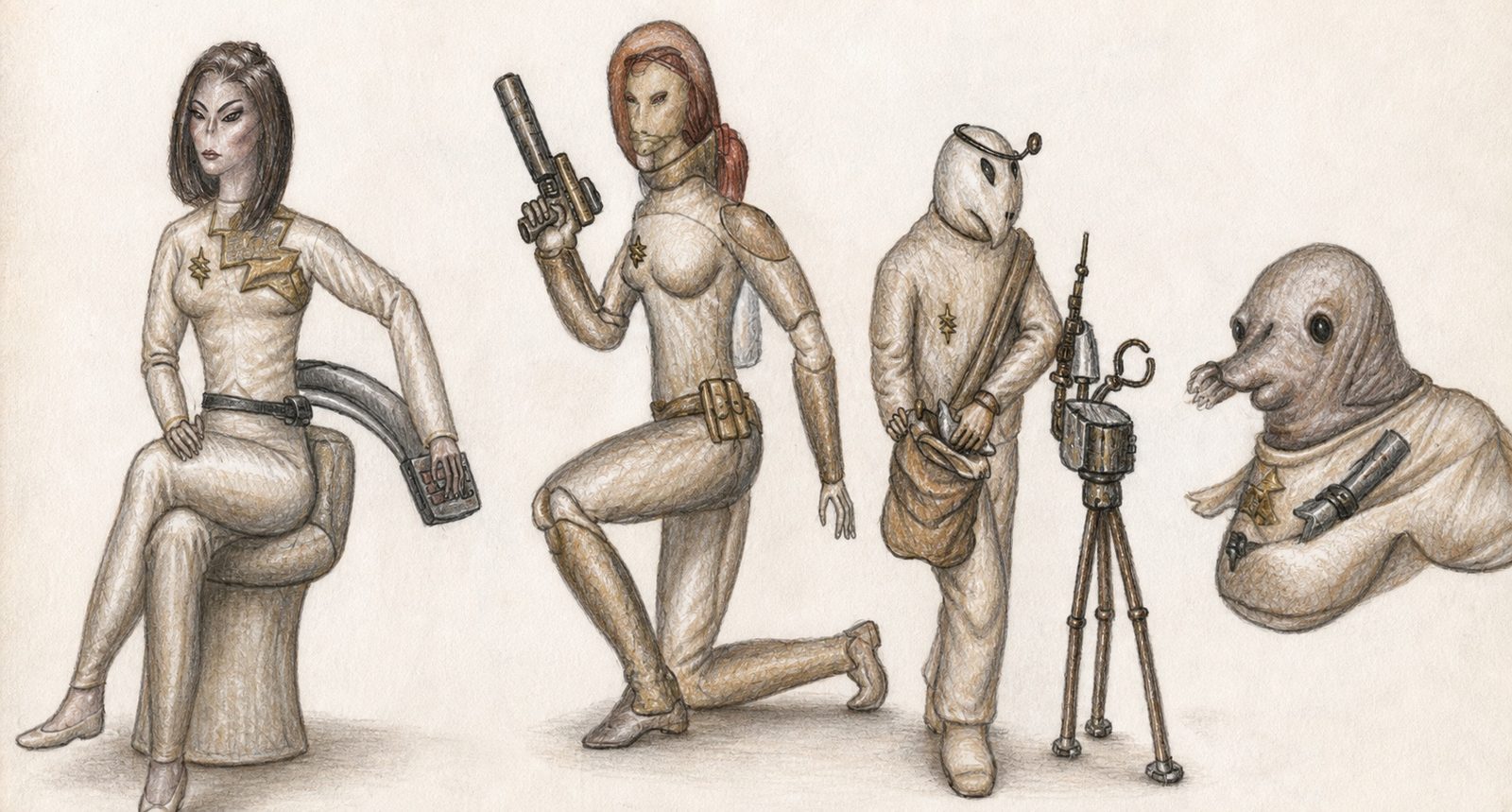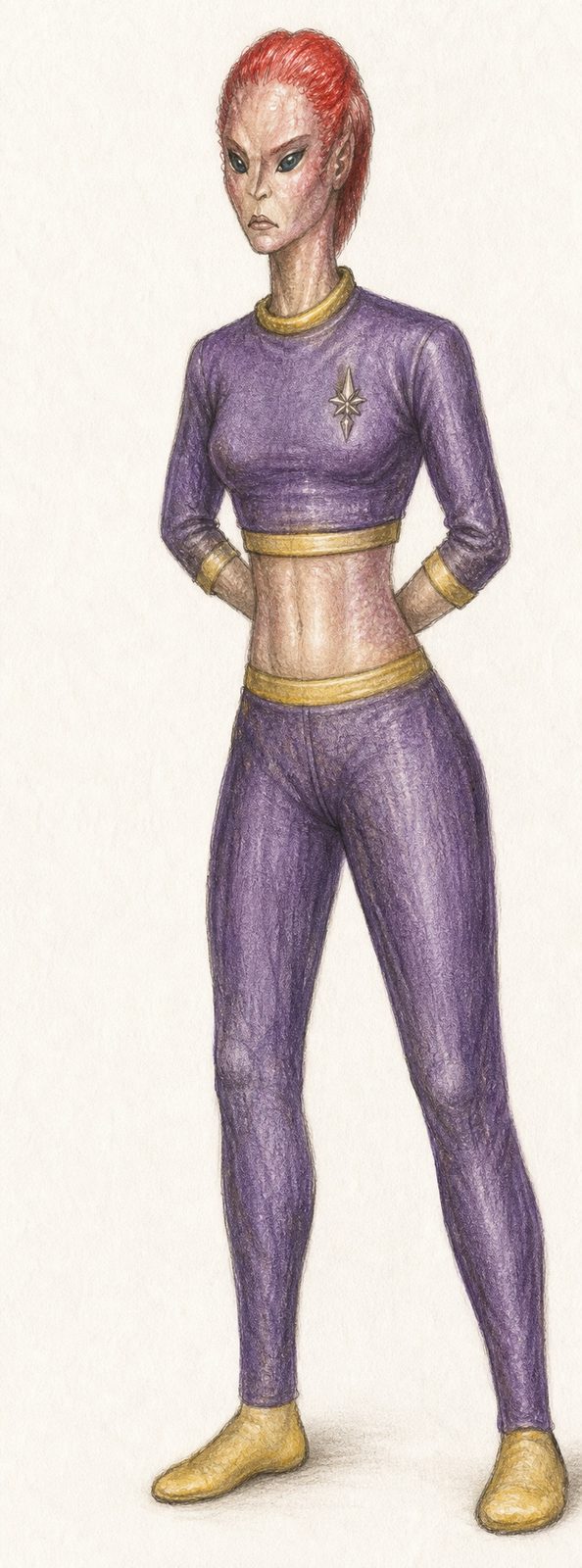
The Wanderers arose as an ideology in the galaxy M-14; their chief goal was to unite the galaxy's races into a single structure — the society of the Wanderers, headed by the Supreme Council. Over the course of several centuries they succeeded in doing so, and they attempted to repeat this achievement in other galaxies.
It is assumed that they arrived in the galaxy sometime between 9850 and 9900. The purpose of their arrival is not entirely clear. The Hordesmen believe that their main goal is the complete colonization of the galaxy. Besides these races, the union also includes numerous "slave races," per Horde's classification. They hold no real power, but they enjoy the benefits of an advanced society and are, naturally, not slaves of any kind.
In a number of galaxies, including our own, they managed to achieve substantial success. But everything collapsed with the outbreak of civil war within their society, tied to the conflict between the Simbionty and the Tehnokraty. The war between the Simbionty and the Tehnokraty exhausted the Wanderers. It is believed that the long-standing conflict (an old rivalry between these two branches) came out into the open because of disagreements in the galaxy M-17. At the same time, representatives of the "non-aligned (main) branch" also split. Some supported both sides, and others remained neutral.
Neither side could gain the upper hand for two years. Everything changed sometime around the start of 10014. The conflict was affected by a certain third force — believed to be another race from the galaxy M-20 (the Ancients). It was so powerful that enormous forces had to be withdrawn from various regions. The south of the galaxy was emptied not only because of the bloody battles, the Great Campaigns of Horde, and "robotization," but also because large forces were pulled away to this war. The third force was the Ancients, who struck both weakened sides and completely destroyed SW society in the galaxy M-14. The Ancients had for a time been allies of the Simbiont, but later betrayed it upon seeing a chance to destroy both sides.
The fall of the Supreme Council seriously affected the second tier of the hierarchy — the Galactic Councils; in this galaxy, too, it perished during the civil war. The society's revival came about thanks to Vildaruz, who became the military leader of the Wanderers' Main Branch in the galaxy. He founded the state known as the Pargan Accord, which, through a series of wars, managed to unite under its banner a number of archons (breakaway warlords) and IIGs (Indirect Influence Groups — secret SW organizations that, before the civil war, promoted the ideas of the Wanderers and controlled the Consortiums composed of influential members of sector societies). Vildaruz created the New Galactic Council, which claimed supremacy over all the Wanderers remaining in the galaxy. Similar trends occurred in other galaxies where the Wanderers had managed to establish a foothold.
Not all archons and IIGs submitted to Vildaruz; a number retained their independence and acted against the Accord. An example of a Consortium member who achieved great success was Bruntuar Derkas of Sector K. This former member of the Sector K Consortium managed to destroy the other Consortium members, withstand the invading archon Griok, and become the most influential figure in the sector. Another example is Teknova, of the Forbidden Zone of La-Frans — the Randzheybet star cluster. This organization managed to achieve considerable success within the state and, even after the purges and the war, continued to play a substantial role in the Forbidden Zone.
The SW carry out infiltration into many states. For some races (for example, the human race), "shadow control" is used, whereby members of the race itself have no idea that they are under the control of the Wanderers. Most often, a country falls under their control when it suffers defeats on the front, or finds itself in a hopeless crisis. Here, in exchange for substantial assistance, the Wanderers take control of part of the government's institutions. In fact, things of this kind were observed in Sector A. According to some accounts, this was precisely the main cause of the wars for dominance. This struggle, which from the outside looked like a fight between the terrible Horde and small independent states, was in fact part of the struggle between Horde and the SW for control over Sector A.
For covert operations within the galaxy's sectors, agents known as Chameleons are used — creatures specially bred in laboratories, capable of taking on the appearance of any known humanoid, and possessing a fantastic capacity for regeneration. Reports found deep within DETS's archives speak of encounters with these agents. At the same time, identifying a Chameleon is not difficult — the simplest scanner will reveal that the thing in front of you is not human. Thus, to counter Chameleons, disinfection chambers on Horde ships are always fitted with special scanners designed precisely to expose Chameleons.
Little is also known about the so-called "non-aligned," a group of Wanderers who apparently freed themselves from the influence of the Tsi and constitute a kind of conglomeration of slave races. There is confirmed information that the non-aligned have their own "Chameleons." The non-aligned wage an extremely active struggle against the pure Wanderers, while cooperating with the Ancients and certain other races that oppose the Wanderers. At the same time, the number of the non-aligned is small relative to the total number of the Wanderers. The absence of any representatives of the Tsi race among the non-aligned's members also places substantial limits on their strength — many of the most powerful ships can only be operated directly by the Tsi, and because of this the non-aligned prefer to enter into conflict with the Wanderers only when they are 100% certain of victory.
The Hordesmen believe that the SW apply a "brainwashing" technology to the slave races, though no confirmation of this has been found so far.
IIGs are organizations within sectors or sector alliances that, before the civil war, promoted the ideas of the Wanderers. An IIG is a handful of Wanderers who formed a "Consortium." Consortiums almost always consisted of influential citizens of the sector — industrialists, military officers, and politicians, sometimes athletes and actors. The purpose of forming a Consortium was to promote the ideas of the Wanderers and to bring about a gradual, voluntary entry into SW society. Some Consortium members saw their membership as a chance to raise their political or financial capital. Others were captivated by the society of the Wanderers, who had built societies of universal prosperity, and dreamed of bringing the same to their own sectors. This was a voluntary union, but leaving it was not easy — every Consortium member swore an oath to always keep its secrets. Breaking that secrecy was punished by death. Such secrecy stemmed from the fact that the Consortium's very existence posed a threat to the sovereignty of the sector's states.
After the civil war, some IIGs perished, while others transitioned to an independent existence, turning simply into secret societies with connections across the galaxy. The IIGs were a very influential force in the galaxy, but they were not a unified force. Almost always they acted independently of one another. Previously, only the Galactic Council stood above the IIGs; now there was no Galactic Council. And the newly created New Galactic Council of Vildaruz's making was recognized by far from all the IIGs. Those that did not recognize it remained independent.
The Space Fleet is without doubt the most important organization of the Wanderers. It is responsible for communication among the various colonies, colonization, defense, and many other matters within SW space. The fleet is governed by a command system attached to various councils. Previously, the supreme command was attached to the Wanderers' Supreme Council; now it is divided into galactic and regional commands. Service in the fleet is the dream of most Wanderer adolescents and traditionally the most prestigious career one could hope for. And the figure of a fleet commander proves to be the most influential member of a council at any level.
Vildaruz became the catalyst for a number of reforms within the Pargan Accord that had far-reaching consequences. The most important reform was the full equalization of rights among the races. It was traditionally held that the 4 races — the Beygi, the Alians, the Tsi, and the Doniki — were mentors to the other races and, all else being equal, occupied a dominant position, but Vildaruz abolished this arrangement. He also created a code of accession — a set of rules that states meeting them could use to join the Pargan Accord. All these measures were aimed at the peaceful expansion of the PA. Several states at once became candidates for admission to the renewed PA. But this provoked serious protests among a number of influential figures within the PA and led to the creation of the Tetrarhiya, which is described below.
The Tetrarhiya was founded by fleet commanders: the Alians woman Tsaigara, the Beyg Develsy, the Tsi Ha-Trau, and the Donik Sati. All of them commanded the expeditionary fleet responsible for colonization and the defense of systems. They were staunch supporters of the old order and did not want anyone other than the 4 principal founding races to enter the Wanderers' governing bodies. The Tetrarhiya was, in effect, a fascist variant of the Star Wanderers, and it made use of all their technologies.
The fleet took no one into its crews except representatives of the titular races. Unlike the Pargan Accord, the Tetrarhiya favored aggressive expansion. It accused Vildaruz of hypocrisy, since the Pargan Accord had itself been created by military means. Another distinction of its ideology was the absence of any division among the various branches of the Wanderers — the Tetrarhiya accepted representatives of the Tehnokraty, the Simbiont, and the main branch alike. Vildaruz and the Tetrarhiya became rivals, and their rivalry frequently spilled over into conflicts and wars.
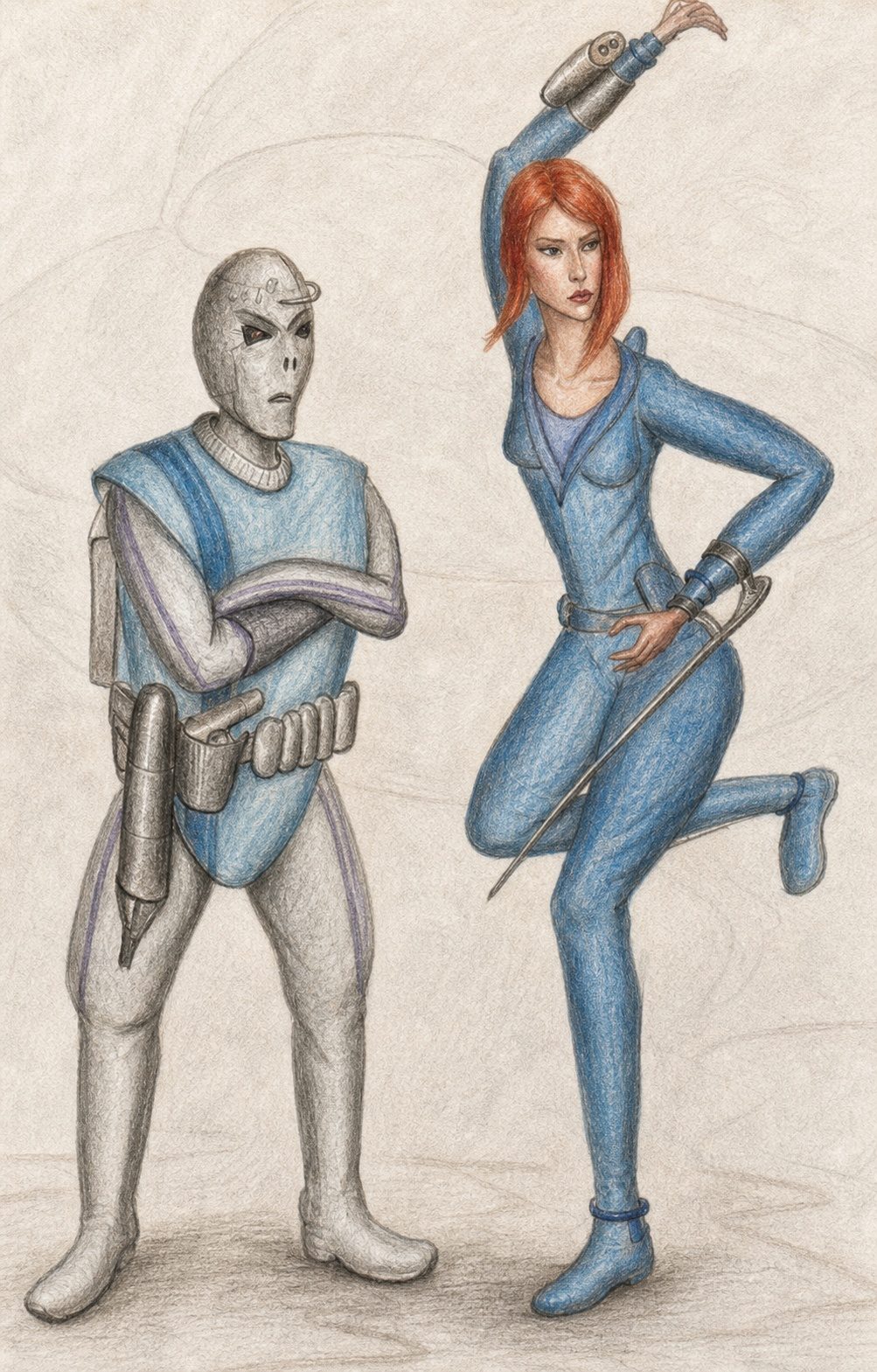
The Tetrarhiya introduced a special class of fighters — the Catchers, most of whom belonged to the Tsayski race. Their task was sabotage and bounty hunting. A great many Catchers were armed with power lances, which required closing to melee range with the enemy. The Catchers' goal was not only the elimination of important targets, but also the capture of "tongues" who could assist in further operations.
The Tehnokraty branch suffered the most severely during the civil war. Oriented toward scientific development, they were not an expansionist branch the way the Simbionty were, and they were very strongly attached to their cities and technologies. It was precisely at their cities that the Simbiont struck its main blows. Regarding the Tehnokraty as the chief heresy and holding them in contempt, the Simbiont robotized billions of members of this branch, turning them into mindless zombies, destroyed their cities, and tried to completely annihilate the Tehnokraty's scientific knowledge. The technology of robotization was also known to the Tehnokraty, and they made active use of it to "reprogram" the Simbiont's zombies. The war of annihilation was lost by the Tehnokraty almost completely. Only a few archons managed to save their armies, leading their armies and fleets away to the fringes of the galaxy. All the Tehnokraty planets within the Wanderers' systems were laid waste.
Some of the Tehnokraty managed to flee; they were welcomed with open arms by the corporate sectors, such as K-1 or N-5, and the Markarus family of the EGS actively drew them into its domains. There they quickly became quite influential factions. For example, powerful hacker groups that emerged straight from the Tehnokrat communities established themselves in the Network of Sector N-5. The most famous was "Digital Dawn" — in effect a sect that dreamed of eternal life and sought ways of "uploading" its consciousness into the Network. They were also engaged in creating AI, believing that they would manage to create a messiah who would avenge the Simbiont for all the horrors that had befallen the Tehnokraty.
On the whole, cults and mysticism flourished — having lived through appalling tragedies, many tried to find a way out through religion and faith. Apocalyptic cults also occupied an important part of the life of yesterday's Tehnokraty. Most Tehnokraty, however, led fairly modest lives as clerks in enterprises and corporations. They fit into their new society fairly easily.
Only a few of the Tehnokrat archons dreamed of reclaiming their systems, understanding that they could not fight either the main branch or the Simbiont.
The Simbionty scattered across space after the civil war. Whereas previously they could be classified as the so-called "Greens," that is, the Moderate faction, during the war they became sharply marginalized. In fact, all the moderates were entirely driven out of the Simbiont's leadership, and the Simbiont itself continued its existence under the command of a number of archon-warlords.
Most of the archons, accustomed to the brutalities of the civil war, leaned toward creating "swarms" — using biotechnology, the overwhelming majority of rank-and-file Wanderers were turned into mindless slaves. Only the archons themselves and their closest circle retained free will. Thus, the archon Avroek concentrated all the "free" ones on a single ship. By various estimates, their numbers came to 80,000 individuals. The rest of the ship and infantry crews were partially "robotized" — in effect deprived of free will. Avroek then began striking various planets in order to capture additional potential soldiers. Once he had raised a sufficient army, he hoped to finish off the Ancients once and for all. But the road to that moment was very long.
Not all archons are like Avroek. The archon Gavrant, for instance, became a mercenary, working for whoever paid him the most. The archon Benji founded his own state, where his robotized troops were used solely as an army, while ordinary citizens lived their accustomed lives. Bad examples, however, were still more numerous. The long and extremely brutal civil war had done its work.
The few surviving moderate Simbionty returned under the authority of the New Galactic Council.
The free states of the sector's fear of the Simbionty was immense. Whereas ordinary citizens do not suffer too greatly from the invasion of nomadic civilizations or other states, the Simbionty's total genocide inspires genuine horror. Many consider a Simbiont incursion to be the worst thing that can happen in the galaxy.
The Simbionty and the Green movements.
The Simbiont pursued an extremely active policy of propaganda across a wide range of territories. Green parties in many different countries became its natural allies. As the Simbiont grew marginalized, the moderate parties broke ties with it, but they were replaced by all manner of groups — from anarcho-primitivists to eco-activists and terrorists. There were also actively supported movements created under the influence of the Ancients cult; these movements regarded the Simbiont as new gods. The Simbiont's various archons treated these movements differently, but the general trend was to support them by every means available.
The "Inseminators" are artificially bred creatures that produced parasites which attached themselves to a sentient being through a bite and were able, to a certain degree, to control that host. Within the host's body a brood of parasites would mature, its main purpose being to spread this offspring. The parasite's host became extremely aggressive and sought to pass the parasite on by biting others in turn. In this way, the parasite spread through the population of entire cities in an avalanche. All the parasites were linked into a single network and could be directed against particular targets — usually unsuspecting military personnel as well as government bodies.
An account of the Simbiont would be incomplete without a description of its cities. Practically all of the Simbiont's cities are a peculiar kind of genetically modified forest. Responsibility for creating cities lies with the Guild of Architects, an organization important to the Simbiont. It all begins with laying out the main square, where the first seeds are planted. After that, the streets are planted one after another. As the roots grow, the houses, squares, and streets merge into a single system. In every house, the load-bearing structure is formed by the roots of the kautsi tree — a genetically modified plant whose growth can be controlled, forcing it to take on this or that shape. The roots perform the same role that steel frameworks play in concrete buildings. As with concrete, the space between the roots is filled with materials fairly common in ordinary construction. Utility lines are likewise made from varieties of kautsi roots. The trees themselves are capable of processing a significant portion of the waste produced by residents. The Guild of Scavengers is, in general, very important to urban life — it collects waste and turns it into biomass, which is used to "feed" the kautsi during construction. Building a house can take anywhere from several weeks to several months, depending on the biomass and stimulants used.
In fact, a characteristic feature of the Simbiont's cities is that the bigger a city becomes, the greater its capacity for further growth.
Some varieties of kautsi are capable of generating electricity, but more often it is generated using bio-power plants — enormous structures that convert solar energy, or the energy of water and wind, and so on, into power. An enormous variety of biomachines is another characteristic feature of the Simbiont's cities; dozens of different firms and concerns are responsible for their creation. Although on the surface of planets biomachines almost always replace mechanical devices, the Simbiont has never managed to build "bio-starships" of acceptable quality. For this reason, starship production is still carried out in the orbits of planets.
The SSL consisted of a union of Simbiont archons who had decided to reclaim at least part of their former power. Tosar had been one of the Simbiont's archons in the Far Eastern Accord, who fled after the Far Eastern War. He merged into the united Simbiont, which soon became part of the Southern League. Tosar belonged to the most fanatical representatives of the Simbiont. He was an advocate of mass robotization tactics. Robotization was carried out with the help of special creatures — the Inseminators, which were meant to inject a subjugating substance into various representatives of the enemy. Thanks to his forcefulness, Tosar quickly rose to leading positions within the Simbiont's command structure. He also advocated the complete destruction of the existing culture of sentient societies, as well as the primitivization of life; in the course of his experiments, cities on conquered planets were broken up and dispersed. Some citizens were killed, some turned into slaves, and the rest became part of new communes, where they were made to raise new creatures for the Simbiont's army. The only category exempt from this fate were the designers of spacecraft — the Simbiont could not yet do without them.
Tosar's ideal dream would have been the complete destruction of technology across the galaxy and its return to a "golden age," when all races lived in harmony with nature. At the same time, he intended to keep for himself a fleet that would prevent any single race from rising above the others. Several archon-followers gathered around Tosar, and he soon became a kind of god to various cults and eco-terrorists in the northern sectors.
Tosar himself imagined himself to be almost a god, but in foreign policy he remained fairly pragmatic — for instance, he established fairly friendly relations with Varbor and Maerstorm. He maintained contact with the Stomei. He also repeatedly visited Sectors V-20 and S-2, where he communicated with the Ancients' principal minds.
Within the Simbiont, Tosar was supported, for example, by the archon Avroek, an even more radical archon who fully robotized entire systems. At the same time, Avroek hated the Ancients, but considered an alliance with them a forced, temporary measure.
The SSL consisted of a union of Simbiont archons who had decided to reclaim at least part of their former power. Tosar had been one of the Simbiont's archons in the Far Eastern Accord, who fled after the Far Eastern War. He merged into the united Simbiont, which soon became part of the Southern League. Tosar belonged to the most fanatical representatives of the Simbiont. He was an advocate of mass robotization tactics. Robotization was carried out with the help of special creatures — the Inseminators, which were meant to inject a subjugating substance into various representatives of the enemy. Thanks to his forcefulness, Tosar quickly rose to leading positions within the Simbiont's command structure. He also advocated the complete destruction of the existing culture of sentient societies, as well as the primitivization of life; in the course of his experiments, cities on conquered planets were broken up and dispersed. Some citizens were killed, some turned into slaves, and the rest became part of new communes, where they were made to raise new creatures for the Simbiont's army. The only category exempt from this fate were the designers of spacecraft — the Simbiont could not yet do without them.
Tosar's ideal dream would have been the complete destruction of technology across the galaxy and its return to a "golden age," when all races lived in harmony with nature. At the same time, he intended to keep for himself a fleet that would prevent any single race from rising above the others. Several archon-followers gathered around Tosar, and he soon became a kind of god to various cults and eco-terrorists in the northern sectors.
Tosar himself imagined himself to be almost a god, but in foreign policy he remained fairly pragmatic — for instance, he established fairly friendly relations with Varbor and Maerstorm. He maintained contact with the Stomei. He also repeatedly visited Sectors V-20 and S-2, where he communicated with the Ancients' principal minds.
Within the Simbiont, Tosar was supported, for example, by the archon Avroek, an even more radical archon who fully robotized entire systems. At the same time, Avroek hated the Ancients, but considered an alliance with them a forced, temporary measure.
During the Third War of the Southern League, the so-called Green Church emerged — a radical organization controlled by Gavrant, based in Sectors Z and Z-1 and steeped in the ideas of primitivism and Silizm, which carried out a series of attacks against supporters of Horde and the Border Bloc. The attacks stirred up the entire region; citizens of Sector Z, who despised their northern neighbors, supported the Green Church's actions, which were marked by extreme brutality. Gavrant, who had originally acted simply as a mercenary, suddenly found himself at the helm of a formidable organization with support across the entire sector. His popularity within the Simbiont soared, even surpassing that of Tosar. At this point Gavrant decided to change his tactics — rather than remain a mercenary, he chose to lead a religious crusade and found his own empire, while also laying claim to leadership of the Simbiont of the Southern League.
To do this, Gavrant lacked a ground army, and he decided to solve this problem by forming an alliance with the Yunsatai. They had heard of his "exploits" and agreed to provide their army in exchange for a number of territories from future conquests. In this way, both allies made up for their respective weaknesses — Gavrant's lack of a large army and the Yunsatai's lack of a good fleet. The newly forged force was formidable — a powerful fleet and practically unlimited manpower reserves.
The Yunsatai's entry into the SL came as no surprise to the IRB, but it seriously changed the balance of the war. At that point the IRB assumed that the main blow would fall on Sector S-2, but Gavrant decided to act more cunningly and threw his forces against Sector M-15.
The invasion went well at first, but stalled after a series of failures in space combat — the Golden Suns' best admiral, Krutolis, wrecked Gavrant's plans for an easy victory. A holy crusade followed, as the Border Bloc's colonial forces, the Order of the Red Rocks, and the Sisters of the Red Tulip descended on the territories occupied by Gavrant and the Yunsatai. As a result, he was forced to abandon Sector M-15, losing all his conquests.
The Simbiont of Sector S-9 stood in opposition to Tosar and his primitivist rhetoric. The archons of Sector S-9 were realists and made active use of the capacity of the mega-shipyards under their control. At first glance, their society did not differ greatly from the old society of the Wanderers, except for a greater involvement in various greening and nature-restoration projects. In reality, however, they were arguably even stranger — they were called Uniates, after their main goal: the creation of a single unified race for the galaxy, one that would take the best parts from the most varied races. The Uniates acted like a sect, multiplying rapidly across the whole galaxy. Their methods of "conversion" to their ideology did not differ greatly from religious ones. At this time the Uniates were actively testing unification technology. Ideally, in their view, it was meant to transform species by medicinal means. The experiments were carried out using "Inseminators." It was believed that transformation could be achieved by this same parasitic method. The bad part was that the Inseminators suppressed their victims' brains.
Alongside S-9 stood the archon Benji, who founded his own state, where his robotized troops were used solely as an army while ordinary citizens lived their accustomed lives, and Gavrant, a mercenary who worked for whoever paid him the most.
The Simbiont was governed in roughly the same way as the Grey Chapter was governed — it comprised 16 archons, each with one vote. At the start of 2019, the distribution of votes stood as follows: 10 for Tosar and 6 for the opposition.
The Simbiont of the Southern League during the Third War of the Southern League.
The Wanderers in the galaxy M-14 succeeded in building a successful society; in the galaxy's developed regions, money had been taken out of circulation entirely — citizens received all goods by default. Work was needed by members of the Wanderers not as a means of securing the ability to survive, but for self-improvement. A significant share of resources came from the labor of robots. Science and scientific progress were the spheres of life allotted the greatest amount of resources. This utopian society existed for quite some time, until the civil war. After the civil war and the "purge" carried out by the Ancients, the galaxy's population was almost entirely wiped out, and the society ceased to exist.
The ideal SW society ceased to exist after the civil war. In many places, remnant factions tried to preserve the old utopian order, but no one managed to do so fully. The Pargan Accord came closest of all. On a number of planets, the old society was recreated, including for certain population groups — the scientific corps, for instance. Others slid into societies of varying degrees of development. Some became autocracies — archon-states; some became democracies; some turned altogether into feudal states, where the former Wanderers became the aristocracy. Not all the leaders of the new societies were representatives of the four main races — representatives of minor races sometimes achieved success as well.
Among the Wanderers there emerged representatives of professions such as smugglers and black-market archaeologists. Both sought to get their hands on technology and equipment from the Wanderer territories lost after the civil war. Such groups were often sent out by the remnant Wanderer factions. But far more common were independent groups made up of a handful of members — a pilot, an archaeologist, a fighter, and sometimes a doctor. The technology could be sold at a high price on the black market within the remnant factions, or to other countries.
Trade with other countries likewise flourished. Whereas soon after the civil war this was mostly barter trade, with the emergence of the Pargan Accord a currency was put into circulation — the parganiy. It became the principal currency both of the Accord itself and of many archon territories.
The so-called Obelisks are cyclopean structures scattered throughout the space controlled by the Star Wanderers. The Obelisks are massive repositories of information about the surrounding worlds, as well as production complexes that gather the necessary resources from various systems. Their construction is incredibly costly and is undertaken only on worlds where sustaining a colony is impossible but which hold critical importance. It is believed that there are around 500 to 1,000 Obelisks in the galaxy in total. Many of them were built back in the era of the Wanderers' dominance in the east of the galaxy; now they operate in the background.
Among treasure hunters, the Obelisks have a bad reputation — getting inside is extremely difficult, and getting out is even harder. But persistent rumors circulate about them, claiming a great many artifacts and technologies can be obtained by making one's way inside an Obelisk. The most desperate and experienced hunters have long been staging raids inside them. So far, no one has managed to reach the "Bright Room" — a mythical chamber inside an Obelisk said to hold an enormous number of artifacts. Even so, something has been extracted — the best teams have made it to the "outlying" chambers and carried out a fair number of extremely valuable finds.
The difficulty of working inside an Obelisk lies in the fact that space there is not constant — rooms can shift position, and corridors can change direction. Security systems lie in wait for intruders, and the sensors of the hunters' instruments go haywire.
The society of the Simbiont is difficult to characterize in a single article. The various Simbiont states differ greatly from one another.
One example is the Tanag Simbiont — a classless, not especially developed society. The whole of TS society amounted to one giant experiment. Villages were surrounded by high fences that protected the local population from robotized creatures. Cities were destroyed, and the entire society was rapidly primitivized.
As another example, one can point to the society of the Simbiont in Sector U-1. This is a relatively developed society, where biotechnology supplemented high technology. Technologies for body enhancement and the creation of artificial life were actively developed.
One thing remains constant across all Simbiont societies — the chief value within them is the dzitau tree. Dzitau serves as the most important mutagen in any production process. Its sap is used to generate new life forms and to develop biological enhancements. It also helps prevent rejection of new organs. But dzitau has one important peculiarity — growing it requires watering it with a biological substance, of which blood works best. And not just any creature's blood, but a quite specific one: if you want to synthesize an anti-rejection agent for a human, you must feed it with human blood; for a Beyg, with Beyg blood, and so on. This circumstance has given rise to a large blood market within the Simbiont, along with a number of highly specific "professions," such as amputators and extractors:
Extractors were a criminal gang found throughout the Simbiont. They were known for fitting themselves with "extractor tentacles" near the face or on the hands. These tentacles allowed them to draw blood from their enemies, which could then be sold.
Amputators were representatives of organ banks and biolabs who collected debts from their clients by exacting a toll in blood and organs.
An entire subculture of the Dzitau-Touched emerged — some members of the Simbiont implanted dzitau directly into their own bodies, augmenting it and thereby extending their lives; such people were called the Dzitau-Touched.
Also worth singling out from the general mass are the mutators — the creators of modifications, people who can add enhancements to the bodies of living creatures. Unlike geneticists and surgeons, mutators work in makeshift conditions, but they can offer certain unique "modifications."
Botandziu are specialists in growing dzitau. They often work closely with mutators and extractors.
Bio-sculptors hold a notable place in Simbiont society — they are, in effect, surgeons and specialists in bio-augmentation. Most bio-sculptors work in the so-called Flesh Streets — quarters where residents of the Simbiont can subject their bodies to various enhancements. Demand for their services is very high, which makes them highly respected members of society. Bio-sculptors may work alone, in groups, or within fairly large organizations.
At the bottom of Simbiont society are the so-called "rental bodies" — people who rent out their own bodies to others. Growing new limbs and other body parts is a fairly long process requiring considerable effort. For this reason, some prefer to buy the services of "bodies" in order to skip the first stage — growing a rudimentary limb. After some time, the limb is transplanted from the "body" to the client, and the "body" receives its fee.