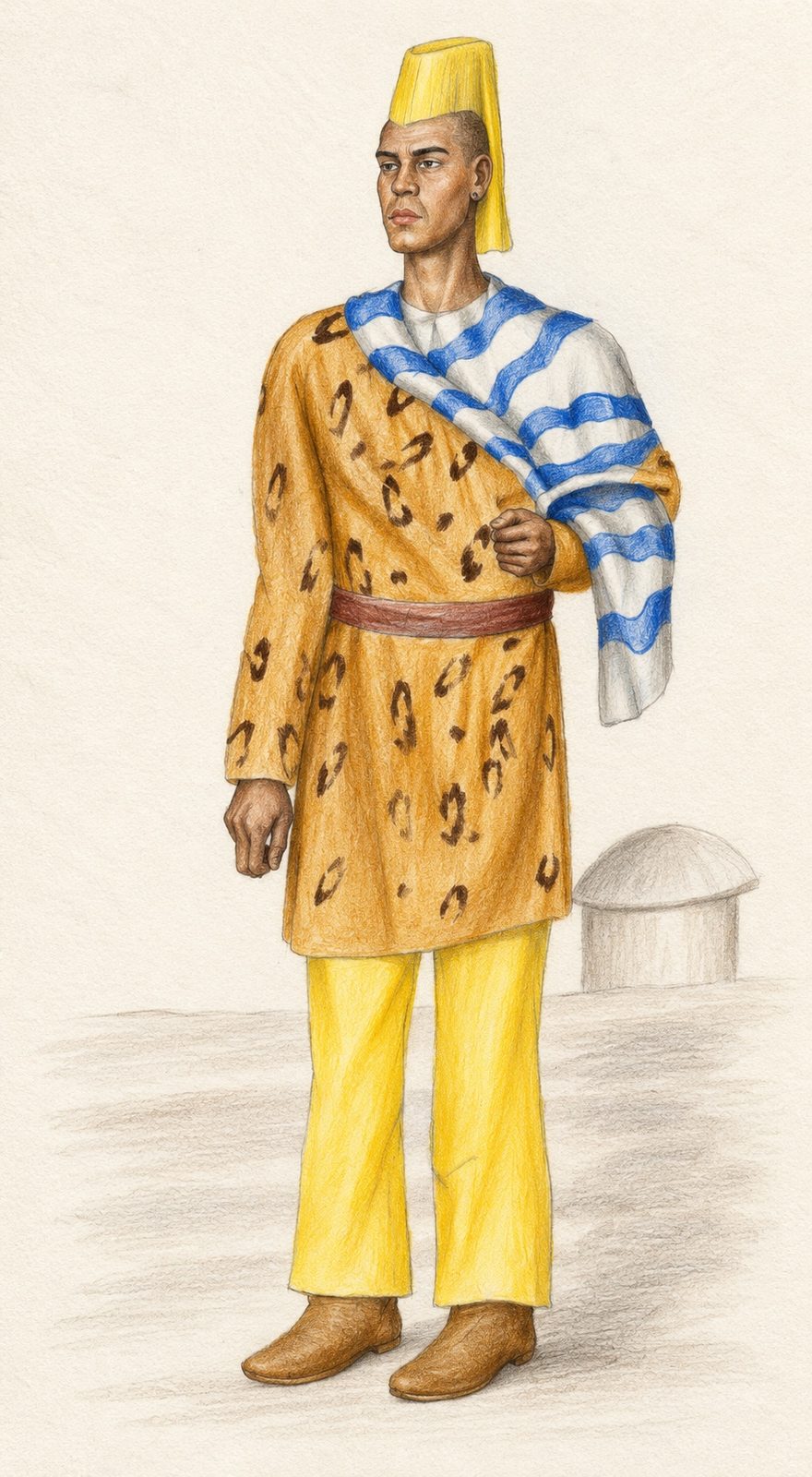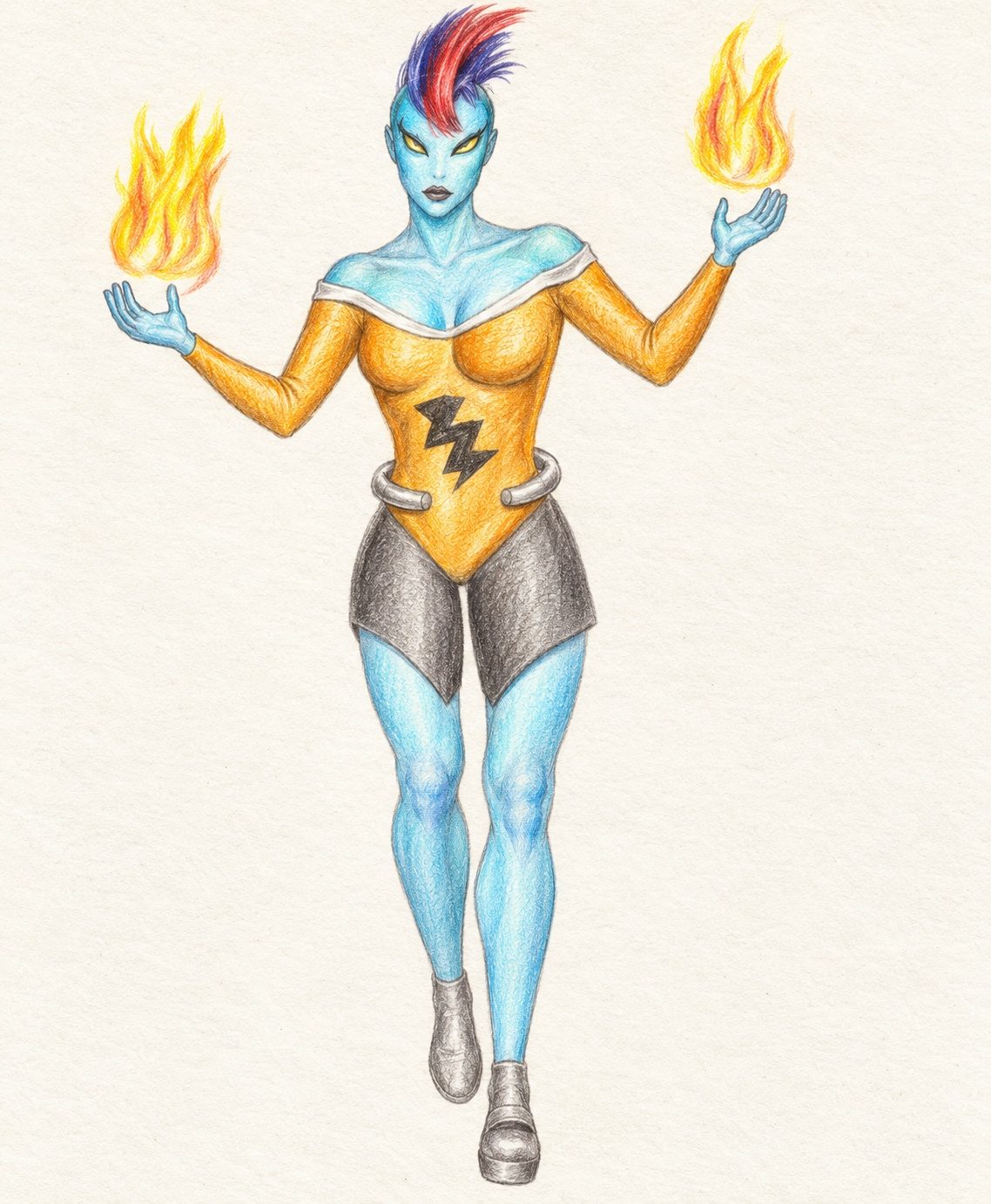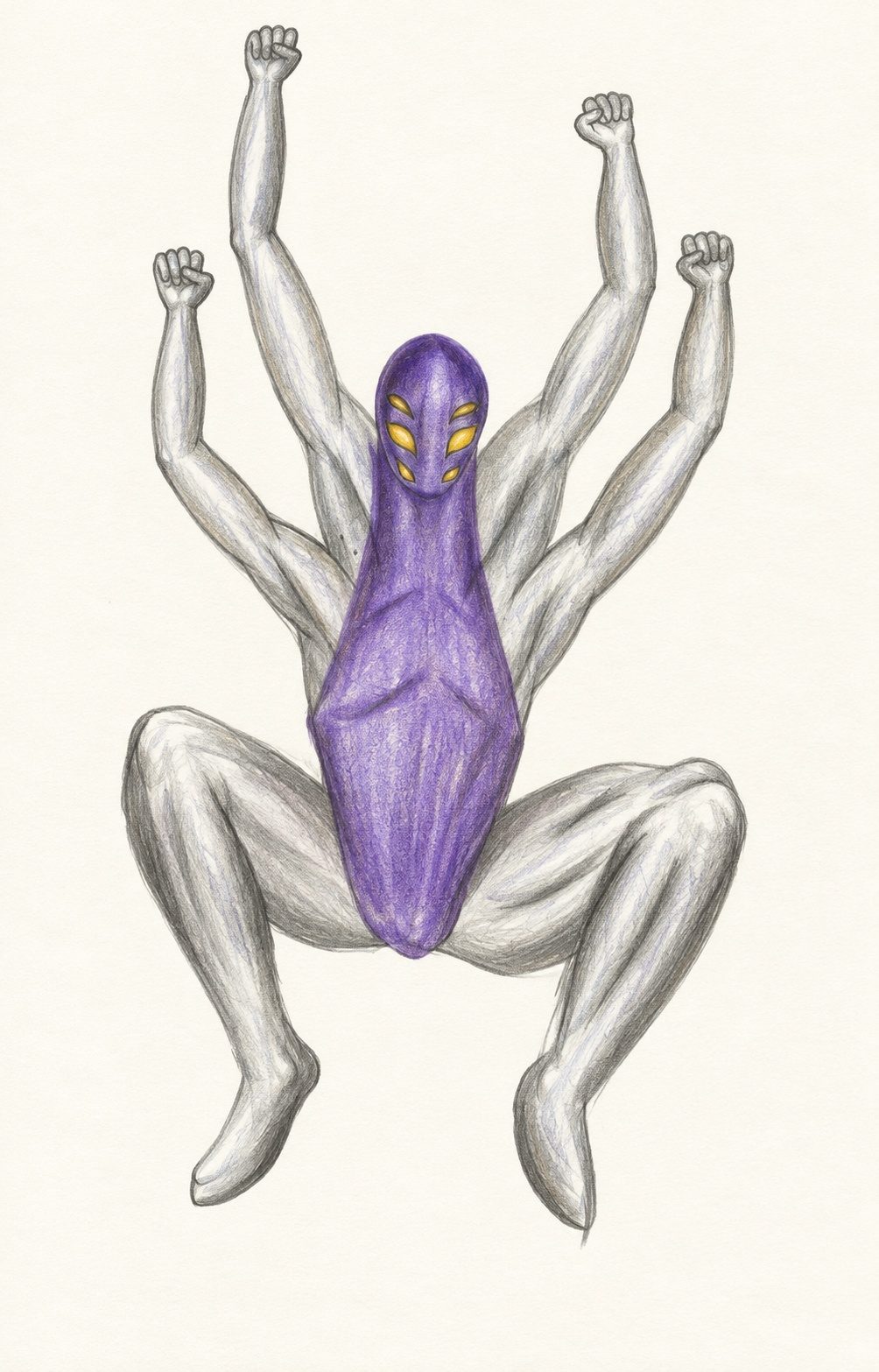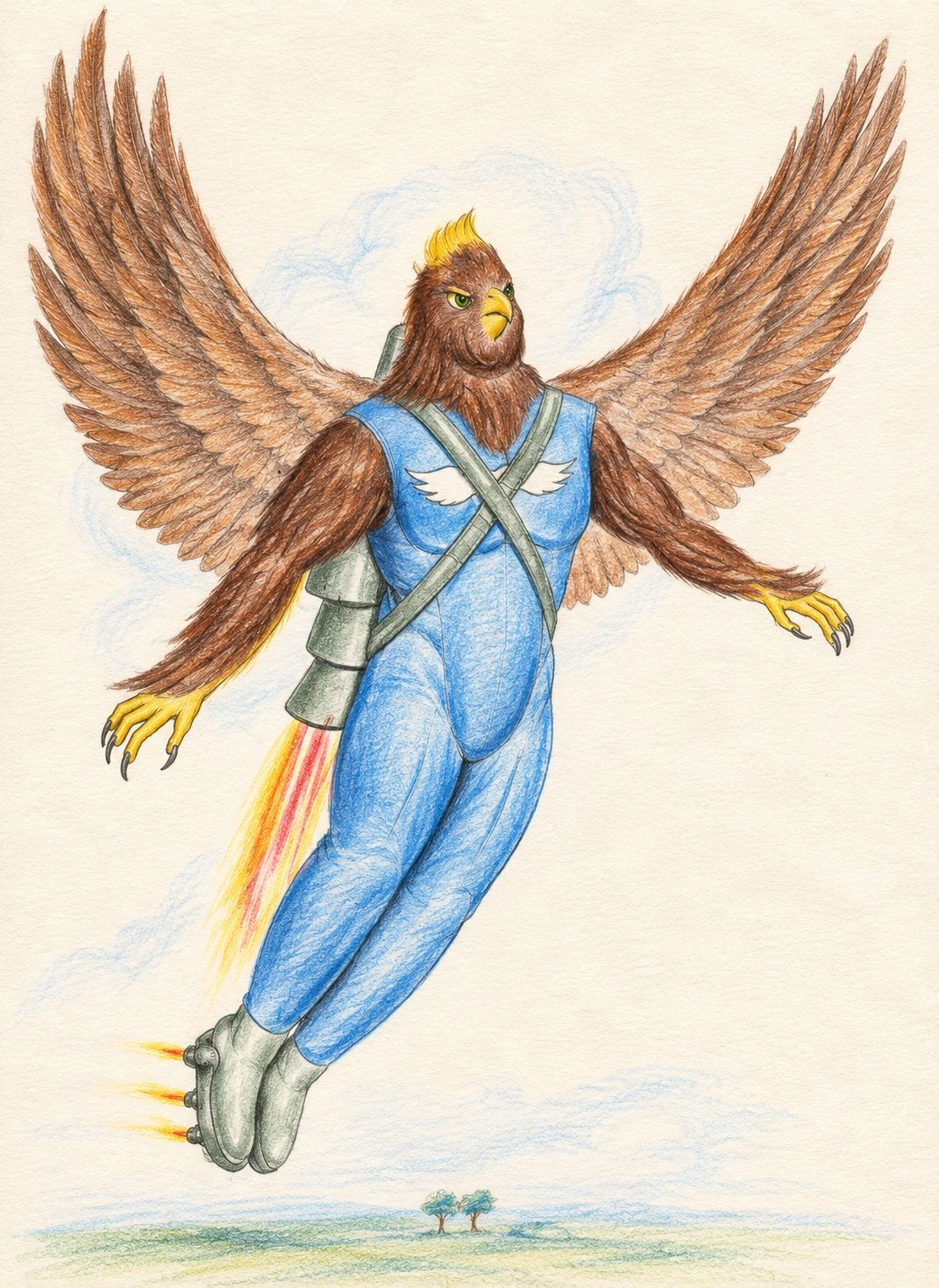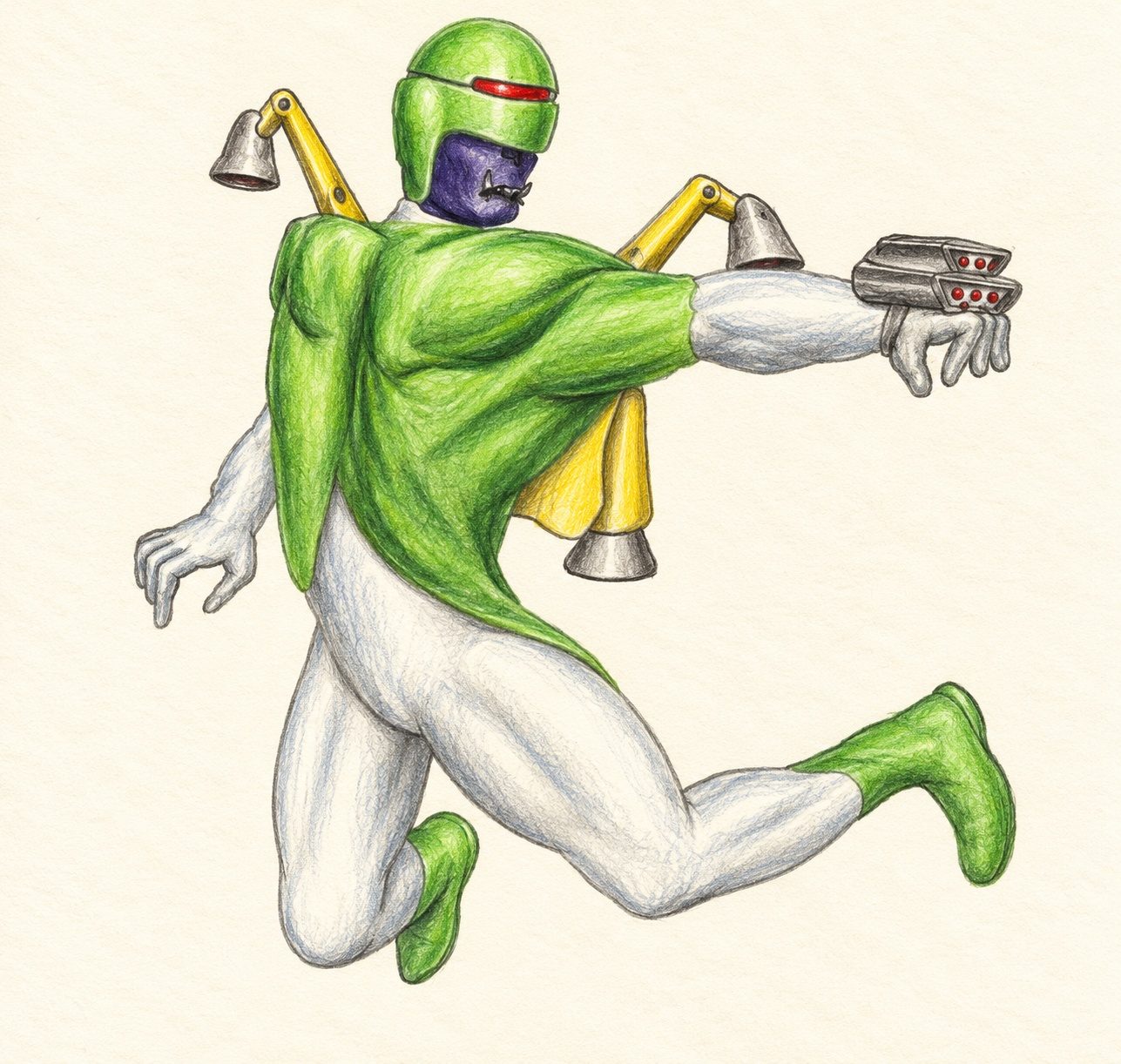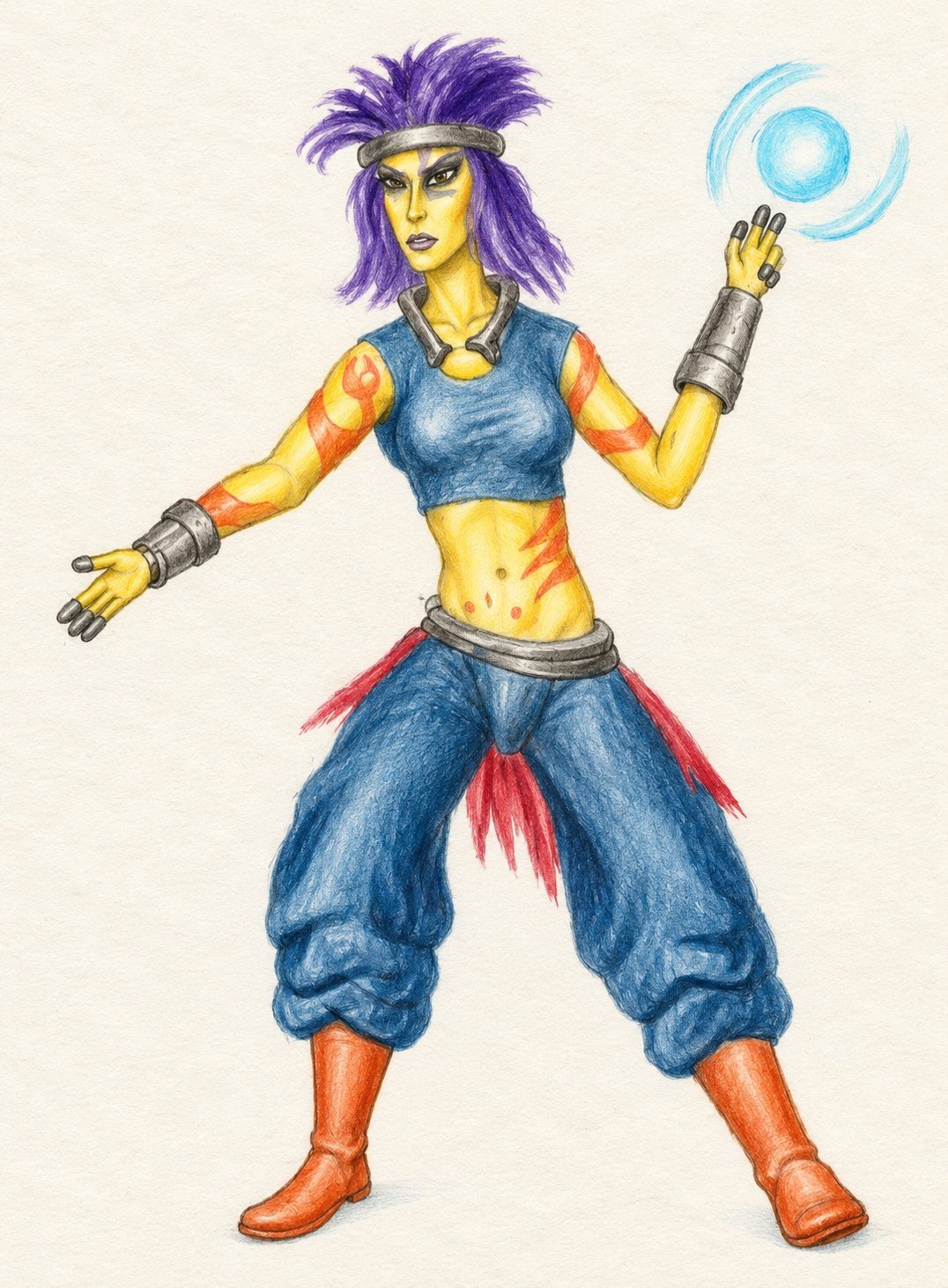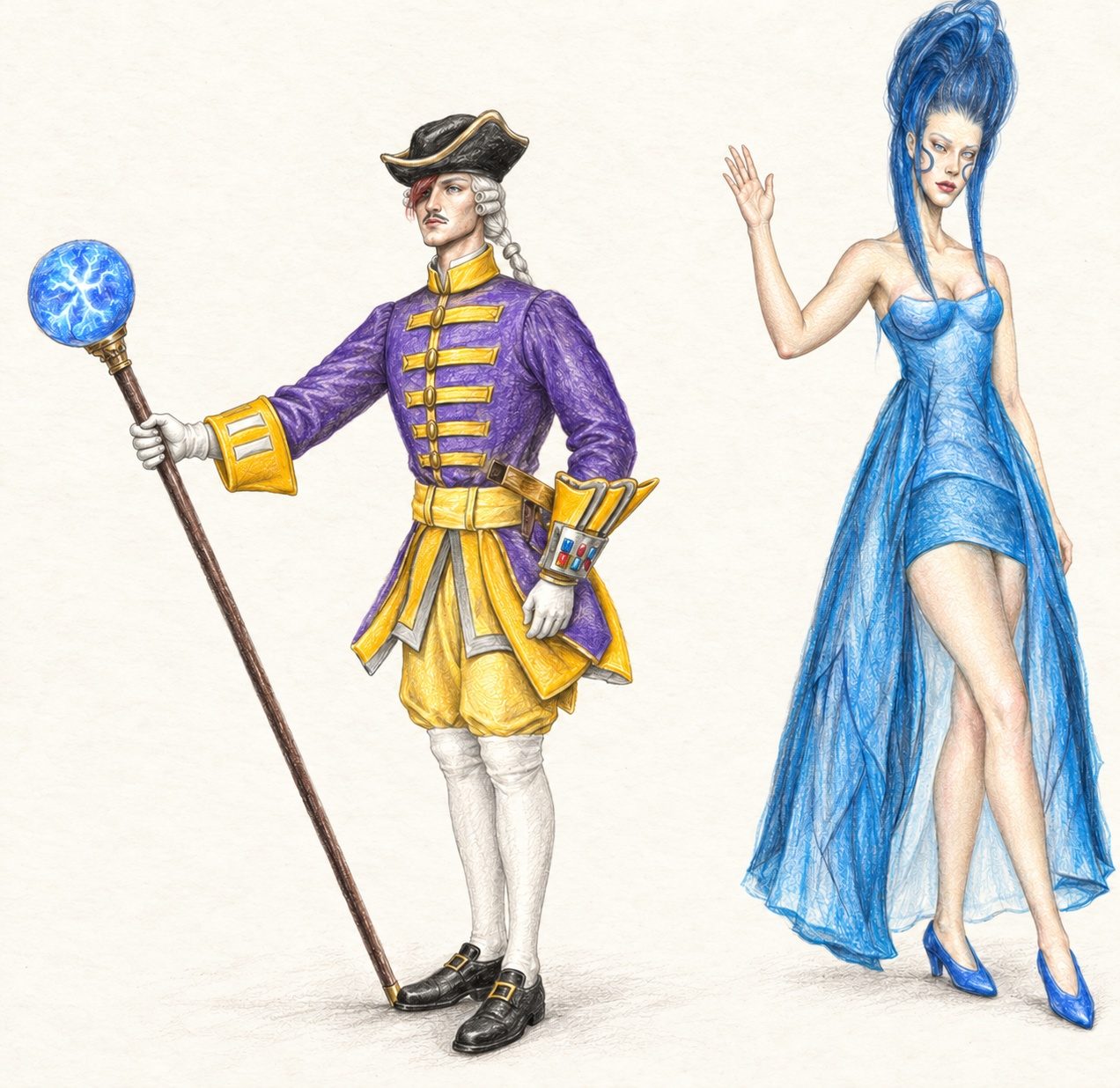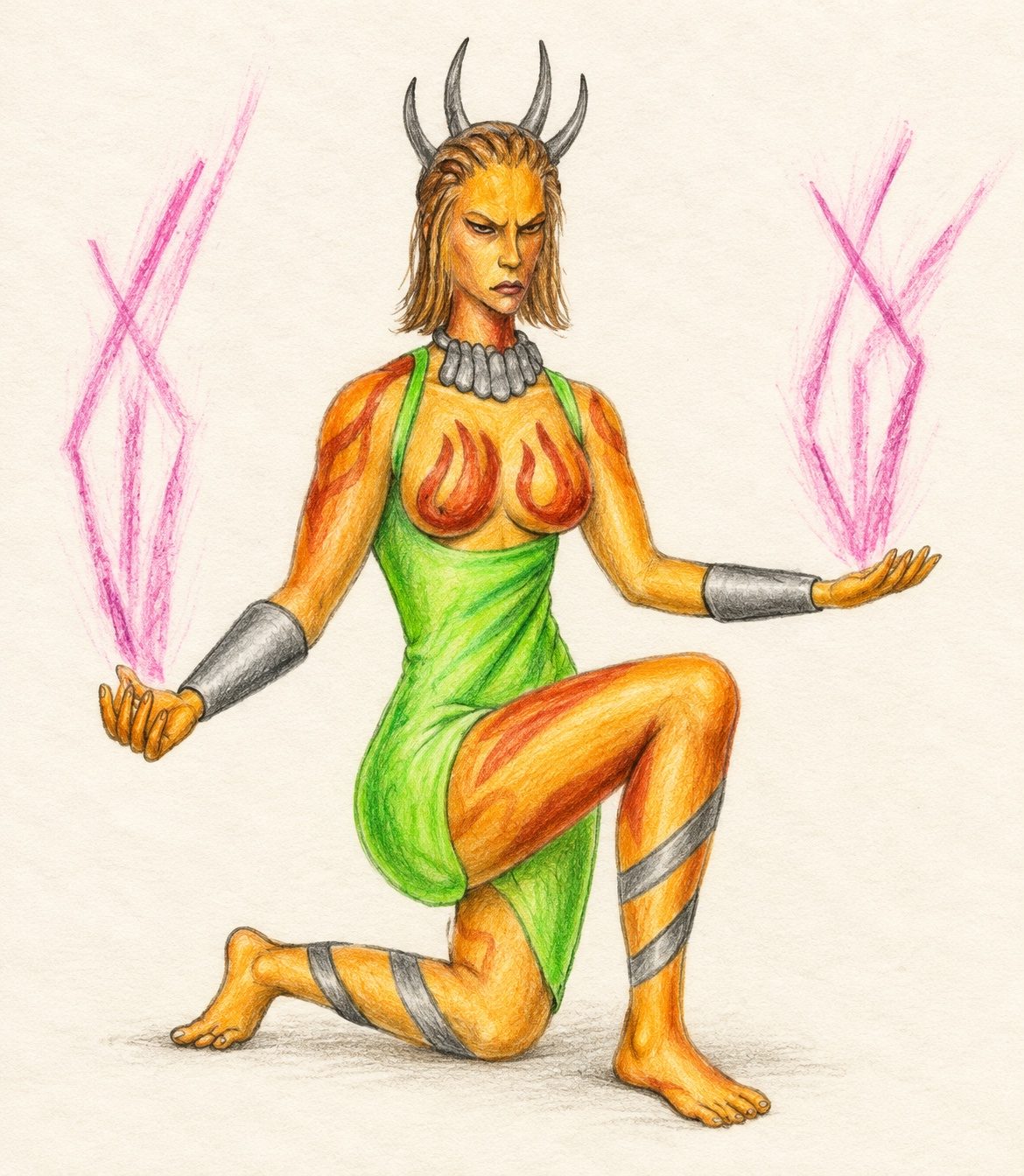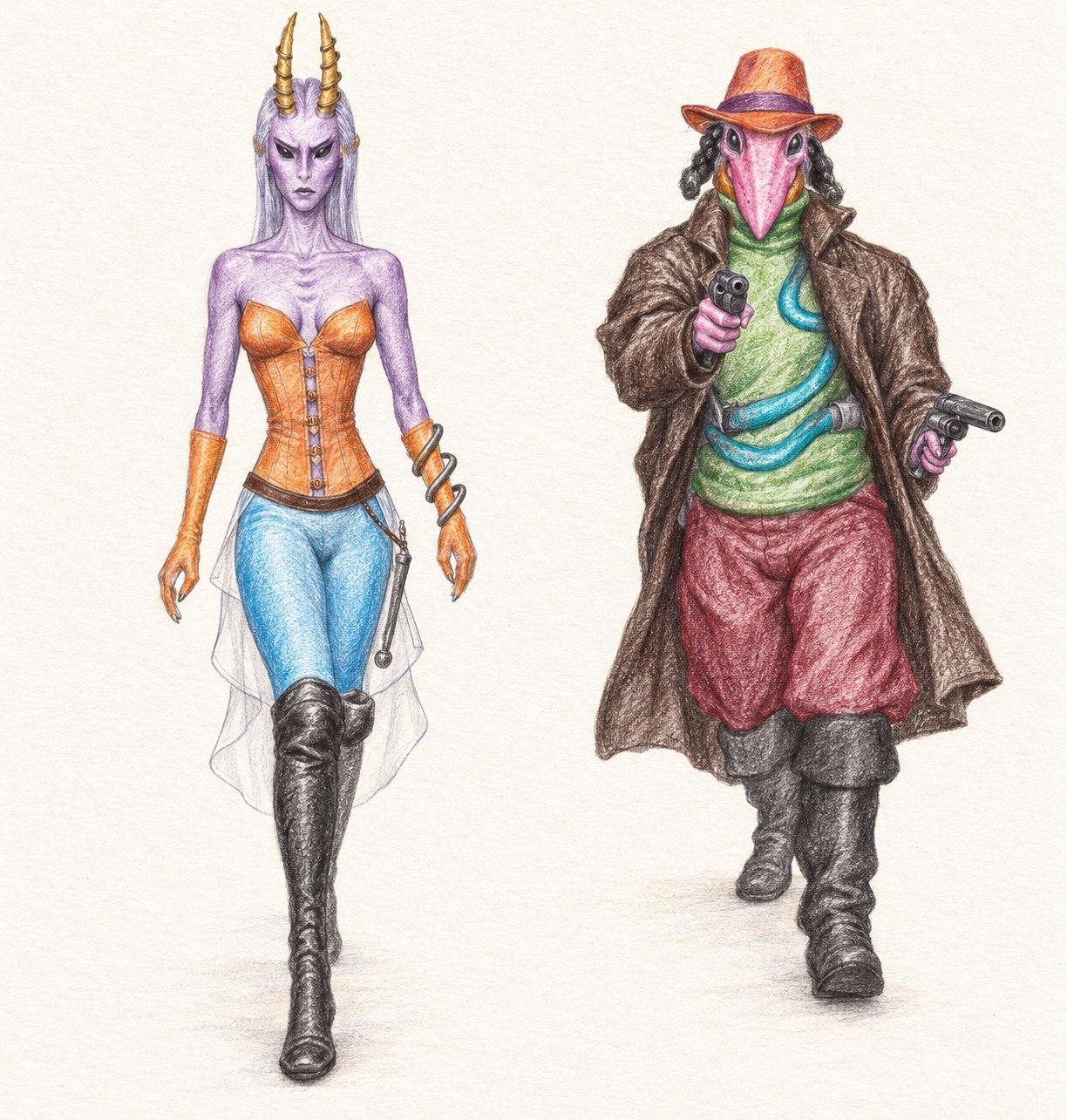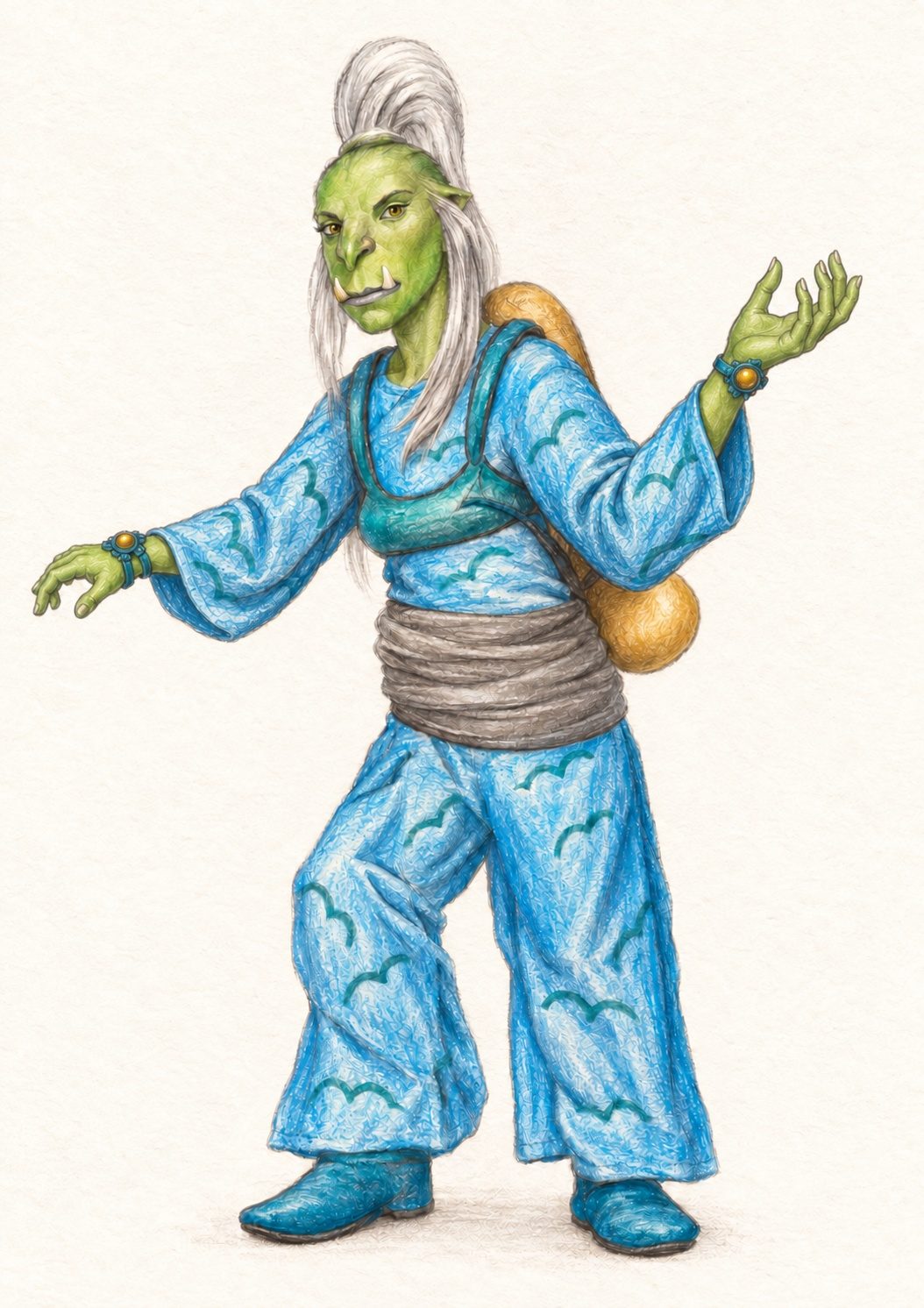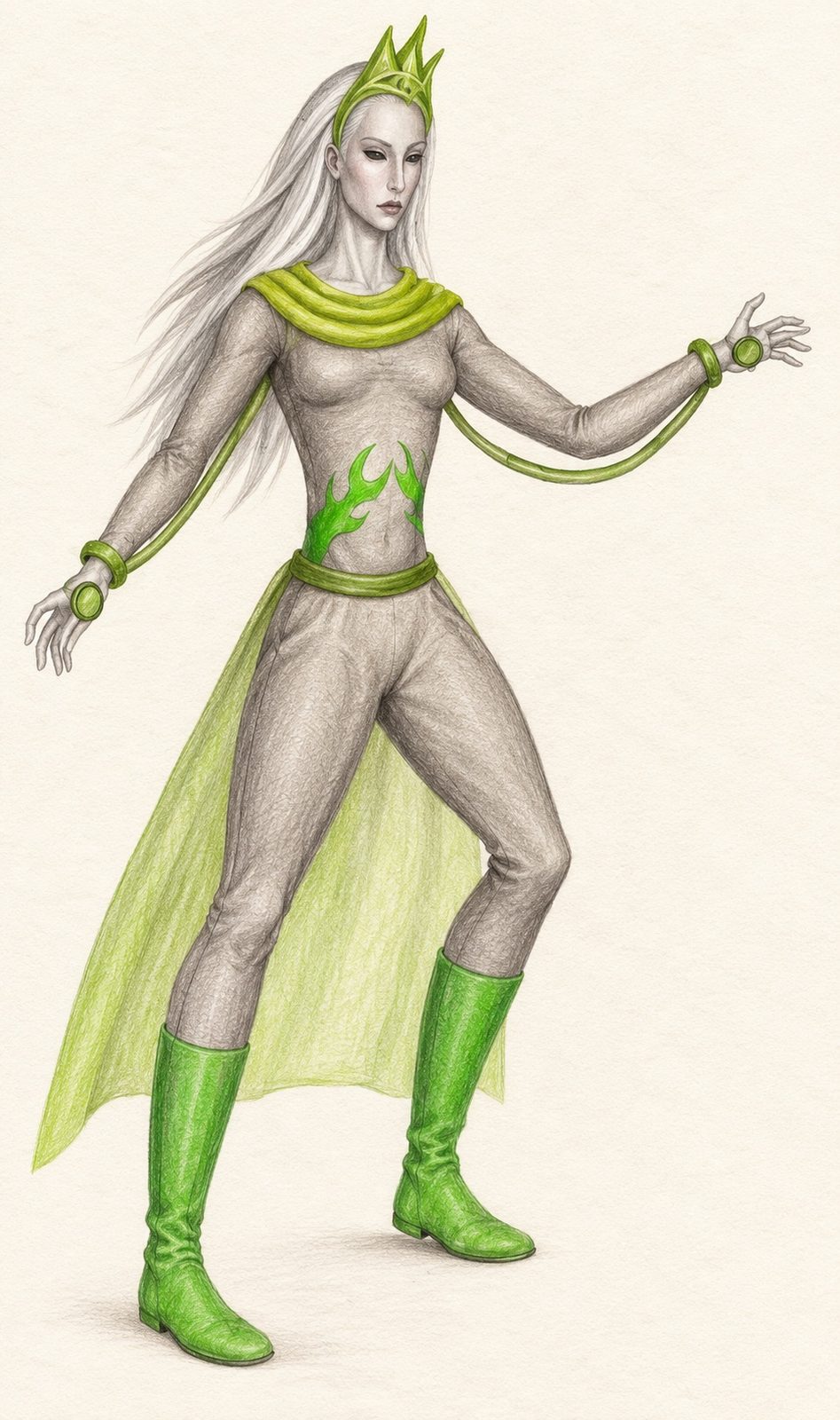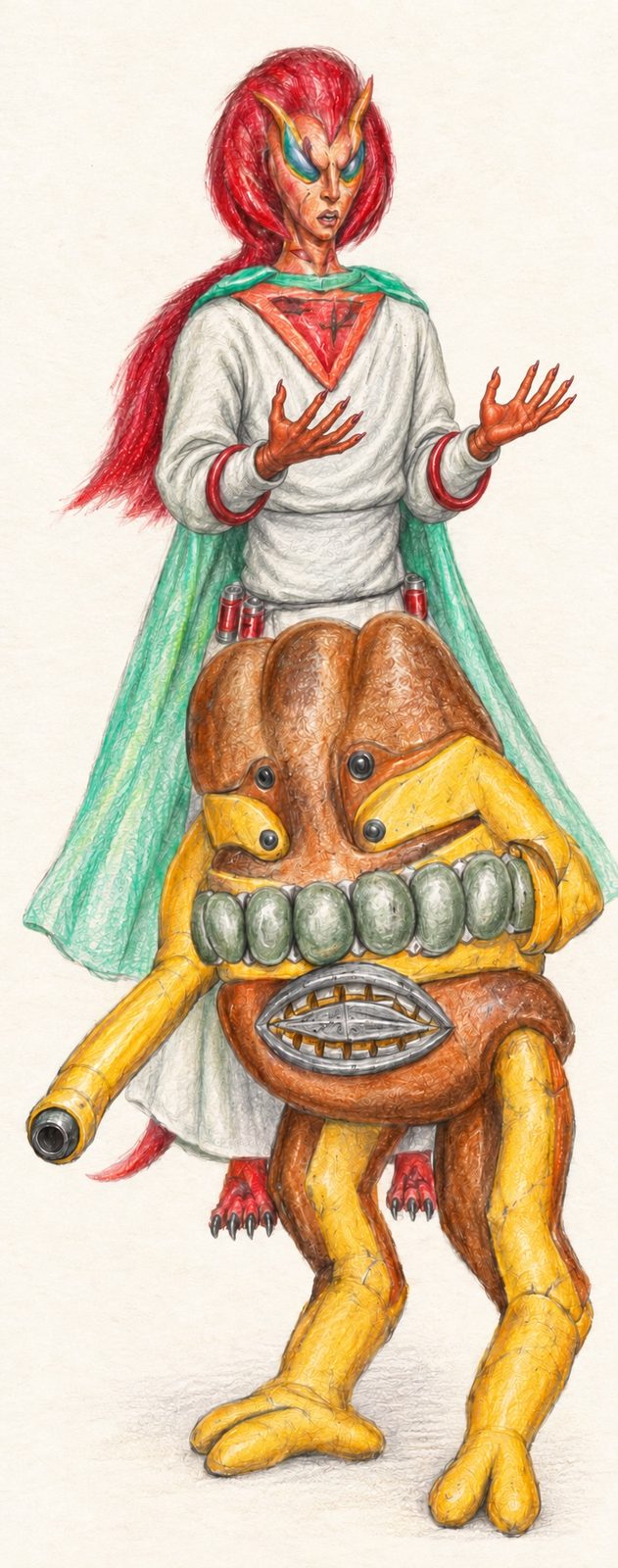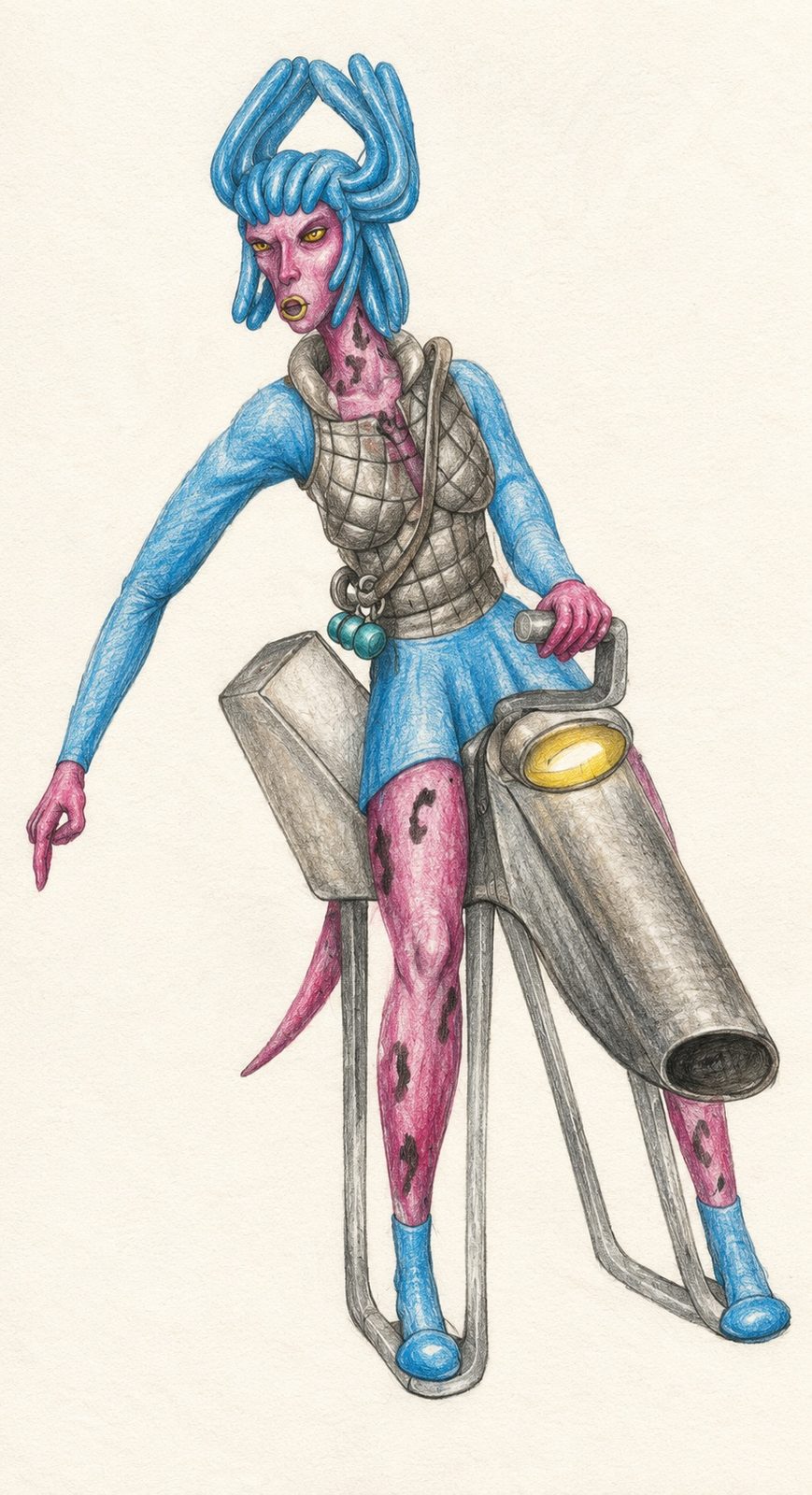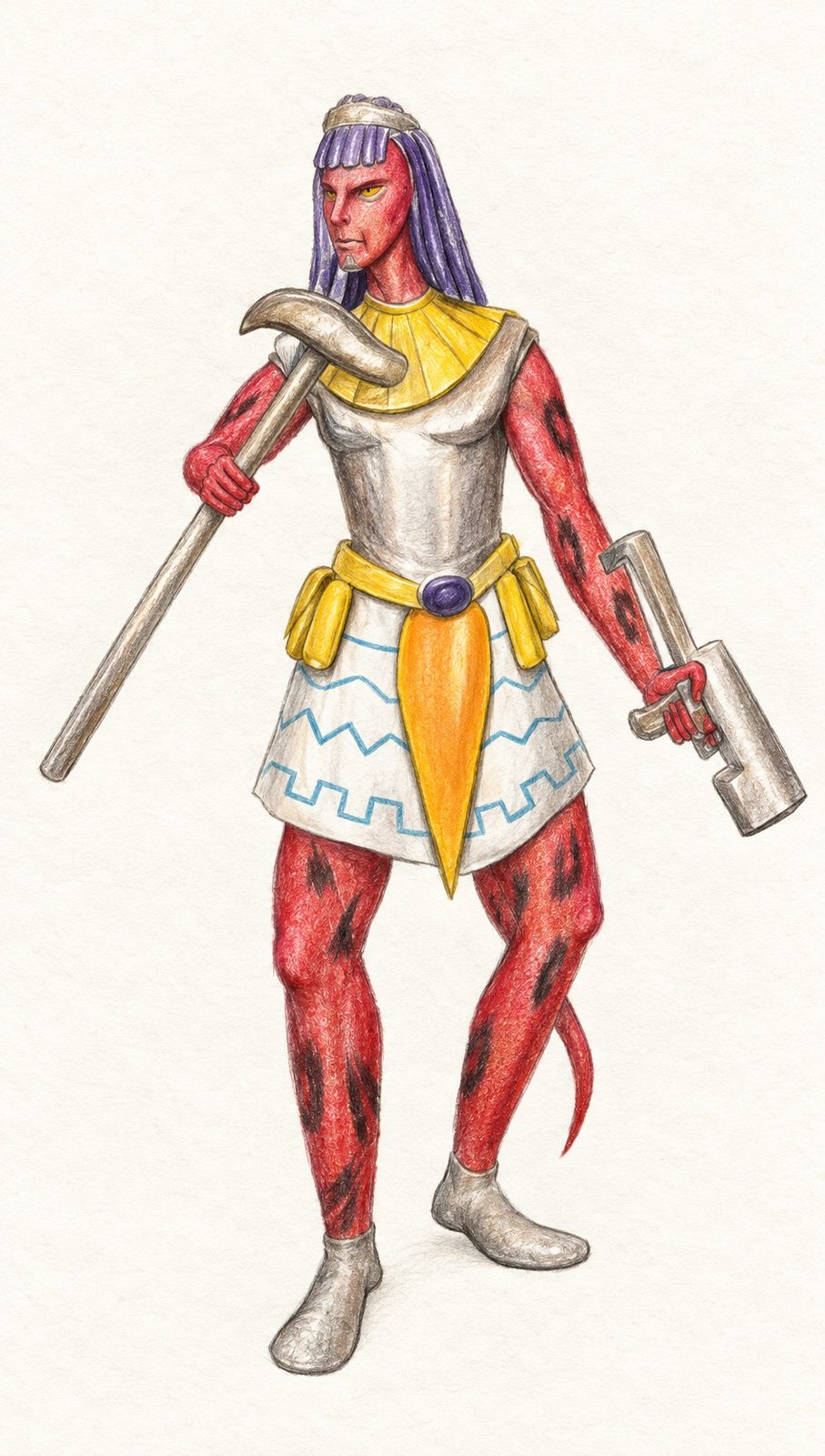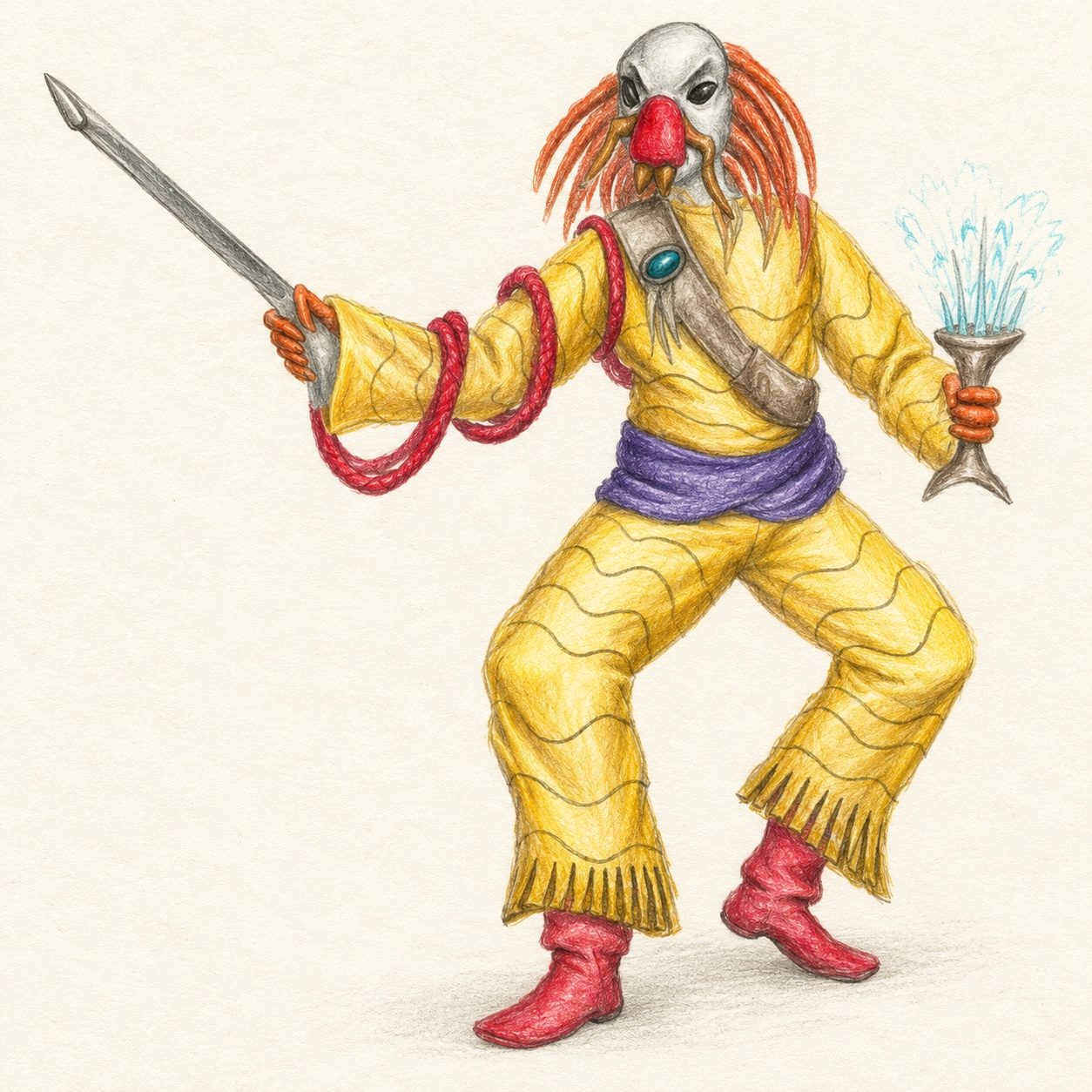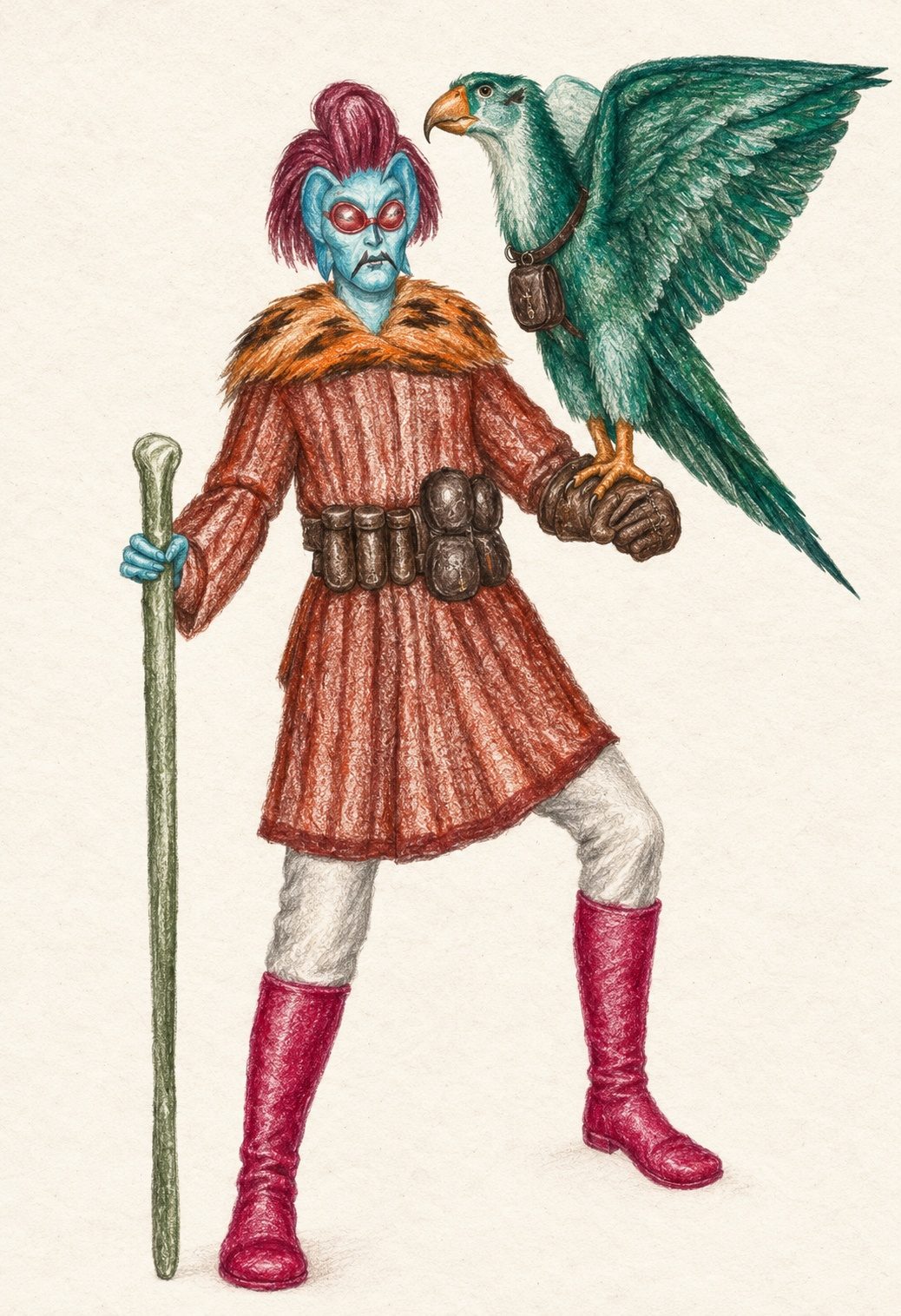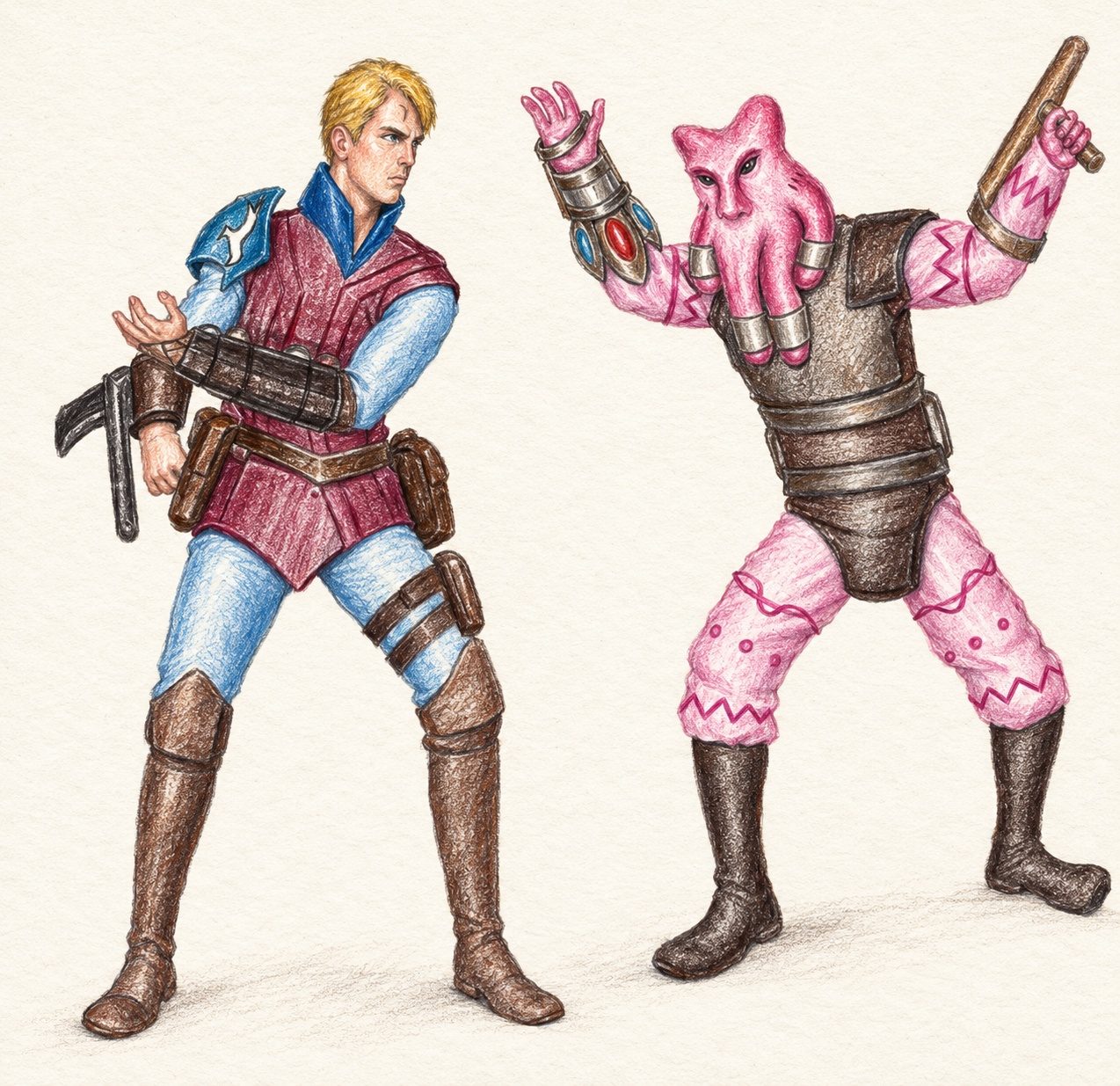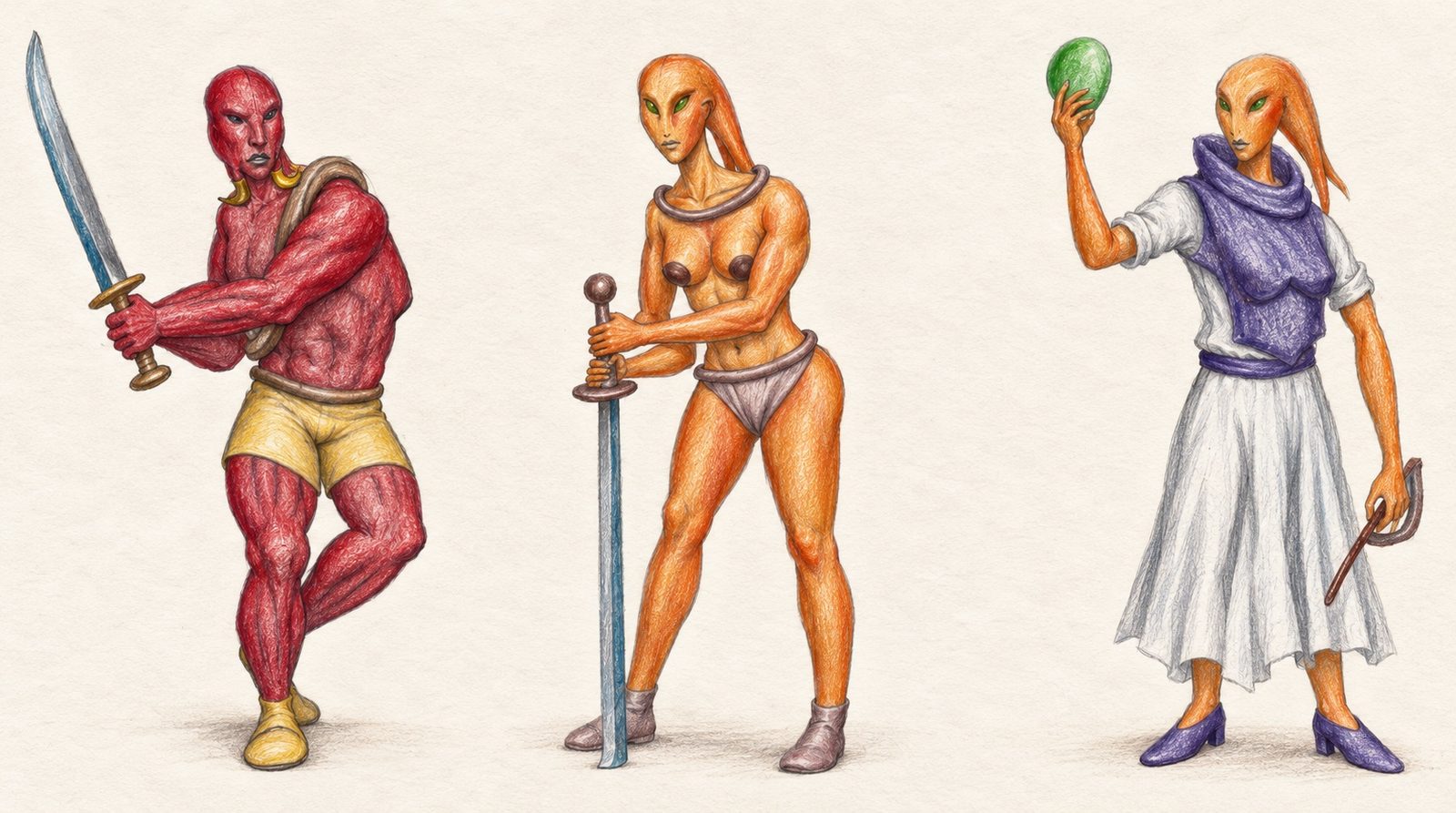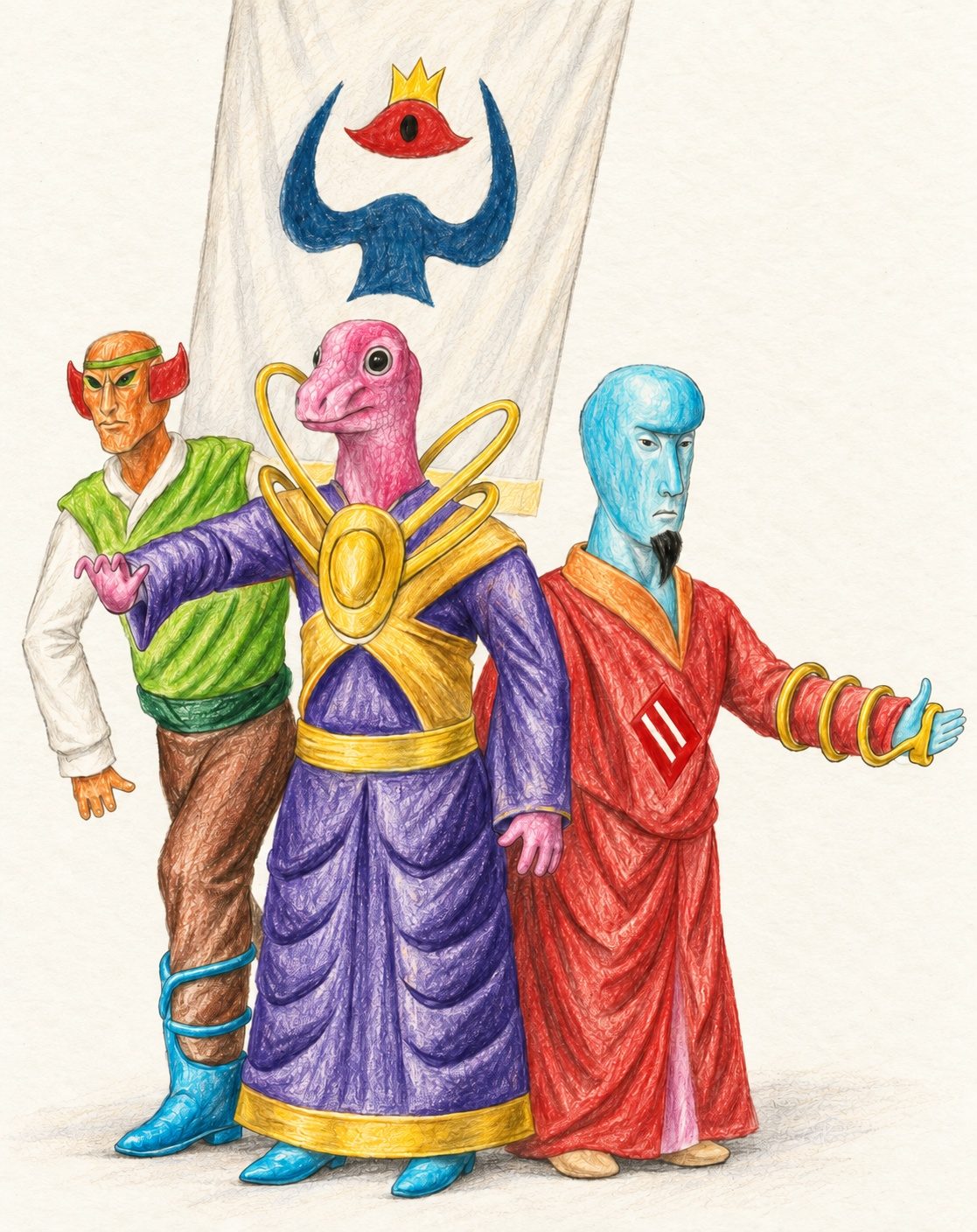
Humans and other sentients who know how to adapt the artefacts of vanished civilisations to their own use. In backward sectors they are feared as sorcerers; in developed ones a squad of well-equipped soldiers can deal with even a strong techag.
Techags are humans or members of other sentient races who can adapt the artefacts of ancient civilisations to all kinds of uses. Over the galaxy's history thousands of civilisations have vanished, and many of them had very interesting technologies. A techag's craft lies in making ancient technology work for them.
One example is the Yueit culture. The Yueits were very unlike humanoids and possessed many regeneration technologies; techags retune their regeneration-field generators for a specific race. A techag usually specialises in the artefacts of a single civilisation, and only the most advanced can work with many.
The galaxy is full of beings with "paranormal" abilities — telekinesis, pyrokinesis and more. Ordinary people take them for mages and sorcerers, but the reality is more prosaic: behind these abilities lie technical marvels, incredibly expensive and often inherited from the great empires of antiquity. It was beings like these who once founded the Dark Brotherhood, which later abandoned the idea entirely.
Why do techags exist at all, if implants can be bought in the corporate sectors? Implants are rarely made to order, and techags like to stand out. Some technologies of dead civilisations are unusual and powerful. And an artefact is often cheaper: unique combat implants cost a fortune, while a techag may find an artefact for free.
Some artefacts must be implanted in the body, which is not easy — they were rarely designed for humans. So techags take drugs that prevent rejection. The most valuable implants are those of the Star Wanderers, who used them to enhance elite soldiers in the days of their dominance, and those of vanished races and ancient empires. Their price can exceed that of a small starship, and implanting them is risky. In the Viceroyalty of Parrato (Sector M-11) the parasitic Kerevir race is even hunted for a fluid that prevents rejection of one ancient race's implants.
Techags of remote sectors often make do with ordinary military implants: by the standards of backward societies even these greatly enhance the wearer. In Sector M-26 techags boost their abilities with spices — there they serve not only as seasoning but as an enhancing substance.
Artefacts are sold both on the open market and on the black market, where dangerous items change hands. Treasure hunters make fortunes from rare finds. The Estaria system, for instance, was once home to a mysterious race, and techags will pay a great deal for its artefacts; the army guards the system, but daredevils still break through — whole gangs divide the surface between them.
In a number of sectors there is a so-called "institution of techags", and techags there are very influential figures. The institution carries real weight in the uncivilised sectors, where "science is indistinguishable from magic". In developed sectors — A, B, D and others — techag abilities matter less: a squad of well-trained, well-equipped soldiers can easily deal with even a strong techag.
In the backwoods of northern Sector Z techags are considered dangerous sorcerers best left alone. In Sector K-3 techags and shamans hold great power over society. In Sector S, against a background of low technology, techags who command the lost technologies of antiquity enjoy special influence; they accompany combat units on campaign. In backward Sector M-27 even devout Silizmists have to reckon with techags, and on Aruat, where the laws of the first prophets ban firearms and beam weapons, palace coups are fought with blades, needle guns — and techags.
In Sector V-14 techags often travel with wandering troubadours, performing tricks and looking for work along the way. They also serve as technicians, being among the few who are at home with complex machinery. In the Mining Zone of the Corporate Union of Sector Z-3, techag schools train sheriffs and judges who represent the interests of the corporations or of Parliament. In Sector S techags, women especially, keep slaves as personal companions: they buy clever, well-read ones, and techags even compete over whose slave is smarter.
There is one exception — Sector Kh-9: fairly developed, yet with an unusually large role for techags. During the Wanderers' civil war, the archon of the Technocrats launched a programme here to create super-soldiers using costly genetic and engineering technologies. Most of them died when the Symbionts arrived, but the survivors — also called techags, as is the fashion in the galaxy — played a notable part in the rise of new states after 10013. In the Fourth Vaastag they took the leading posts.
Techags band together in chapters, orders, guilds and secret societies. The best known:
The Grey Chapter — a union of techags of Sector V-5, masters of artificially controlled Vargs. During the wars with the Ancients it grew into a galaxy-wide power (see below).
The Crescent Chapter — a techag sect of Sector M-27 that counts itself part of the Iridist branch of Silizm. It was founded by Al-Duom Ar after a pilgrimage to Sectors Z and A, and he still leads it. Many devout locals consider the chapter heretics but have to work with it. Its Aralek fighters with blade implants were known as "flayers".
The Davir Chapter — a techag order of Sector N-3 controlled by the Infinite Alliance and influential in the Republic of Sivraya. In imitation of it, Emperor Antro Vandiss created the Kavkarant Chapter, luring influential techags from neighbouring sectors with large sums. In 10018, on the planet Kavtarga, the two chapters clashed in a firefight: the Davir Chapter lost nine techags, the Kavkarant Chapter one.
The Chapter of the Green Veil — a techag union of Sector P-3 that stays neutral and sees itself as the sector's protector. Its de facto head, Ariyada Eikatar, studied the Ancients in Sectors S-2 and V-20 and now leads the party opposing them.
The Eagle and Grun Chapters — the main chapters of Sector V-11, which is strewn with artefacts of the Khodrona civilisation, from trinkets to huge abandoned factories. The first leans towards the Eagle Dynasty, the second towards the Gruns; there are many smaller chapters too, such as the Golden Chapter.
The techag schools of the Dark Brotherhood and the Sisters of Dlon — these powers' internal schools for work in the uncivilised sectors. Sister-techags became an active lever of the Sisters of Dlon's policy in the south of the galaxy.
The Saigat-Masots — a secret techag order and the secret police of the Amab Dynasty. Only orphans taken in infancy were admitted, and they were raised in unquestioning worship of the emperor. The Saigat-Masots could execute anyone suspected of disloyalty, up to and including feudal lords, and requisition any equipment or people.
The Invisible Beasts and the Breathless Shadows — secret societies of Amab techags, once marginal and close to the criminal world. When Emperor Karab stopped trusting the Saigat-Masots during the Third War of the Southern League, he raised them up. The Invisible Beasts used camouflage to kill by night without a trace; the Breathless Shadows likewise admitted only those who had proved themselves by killing.
ZAVESA ("the Veil") — an agency of the Federation of Free Systems (Sector Kh-9), a special police force of techags and former super-soldiers answerable only to the president. It numbers 2–4 thousand techags, and every techag in the country must register with it. Its agents hunt dangerous criminals and renegade techags who dream of their own micro-states — and unlike the secret services of other countries, many of them are genuine stars with fan clubs.
The Techag Directorate of the Sayan clan — a department of the Horde's Sayan clan, which works in the uncivilised sectors. The Directorate makes portable devices and implants for techags that are little inferior to the Star Wanderers' own; all of Sayan's techags answer to it. For nine years the clan was led by a former techag, Baraya Sayan.
The Grey Chapter began as a regional power in Sector V-5. Its backbone is the Vargs, a race found in that sector by the Chapter's first members. 99% of Vargs are uncouth dolts; the rest are Henslings, Vargs with the abilities of chieftains, or Branslings, Vargs with enhanced intellect. At first techags made deals with Henslings, trading the benefits of civilisation for help in wars. Then Maerstorm began augmenting Henslings, turning them into puppets of his will, and Varbor went further and augmented the Vargs themselves.
Vargs reproduce by budding, but only when well fed. On the "Varg planets" stand huge farms worked by hordes of slaves; Vargs come to the farm gates and trade some of their kin for food. Those traded are augmented and released to "free grazing", and when needed the augments are activated and the Vargs board starships. Exhausted slaves are simply fed to the Vargs, and fleeing the farms is pointless.
When agents of the Ancients infiltrated Sector V-5, the Chapter split into their supporters and opponents, and in March 10016 the dispute turned into armed conflict. The supporters won. The war in Sector M-22 brought the Chapter enormous fame, and thousands of techags from the south of the galaxy began to join it — even disaffected techags of the Dark Brotherhood. In May 10016 the Chapter Council was formed: 20 delegates from each of five currents, meeting every two months, each time in a new place.
In June 10016 Garius Maerstorm, leader of the western faction, took hostage 18 techags who had decided to withdraw their troops and, with the backing of the Ancients' Petrels, won command of all the Chapter's Vargs. In his campaign against the Natog Principalities he shipped more than 30 million Natogi into slavery in June alone. But on 2 April 10017, at the Battle of the Grey Peaks, almost 10 million of the Chapter's Vargs lost to 6.5 million fighters of the Holy Alliance, and many techags fled the sector.
Techags serve states, corporations and armies. In backward sectors they fight as mercenaries or in military service — as in the Veisiar-Sapreit conflict. In the Kingdom of Tippili techags, many of them chapter members, are the only legal opposition: the king tolerates it only for the sake of friendship with the chapter. In the Kabran Tyranny techags became a third force alongside the army and the militias.
In the war with the Pagoans, in 10015 the DOVU Department created a Special Coordination Directorate that brought together techags, Natogi, Klunartsy and Kataz hunters; in the first phase of the war it proved the most effective force of all. In the war between DAV and the Republic of Sontro in 10018, both armies tried to win techags and mercenaries over to their side, and techags supported the soldiers at the front directly.
In 10015, on the planet Kuer-Folt, the Sisters of Dlon, a chapter and the Kataz hunters together destroyed an Ancients' "team"; several techag chapter members died in that battle. And in the final battle, in the Guvirnt system, the Kataz hunters, the guard of the Sisters of Dlon and techags wiped out the Ancients' forces entirely.
Arstei Kipras — a human and former agent of the Star Wanderers, carrying their implants. In 9973 he convinced the Black Kiorns of Aiveriad that he was the reincarnation of their hero Nast, passed their trials with ease and over 22 years united the country, turning it into his own brutal personal dictatorship.
Aior — a human woman, formerly a member of the Consortium of Sector S-1. After the Wanderers' defeat she took over the Divitai community, which regarded her as a goddess, and traded in information; her Divitai mafia frightened even the Dur Cartel. She helped the Dark Brotherhood in its uprising against Shtuugur.
Arten Kreis — a former explorer who crashed in "the Rift" and became a techag in the Star Wanderers' service; he later headed the private army of the Morion corporation.
Arius Breis — a techag who lived for five years in "the Rift" and acquired Wanderer implants; the sole survivor of Operation "Seizure" on the planet Kubrei in 10016.
Kavirtizar Navo Tak — a Seng techag, weapons designer for the Pagoan leader Favravii, who experimented with the "roboticisation" of civilians. Killed by mercenaries of the Southern Frontier.
Garius Maerstorm — leader of the Grey Chapter's western faction and commander of its Vargs in the wars on the side of the Ancients.
Some races tolerate implants especially well and make excellent techags: the Dvutoks; the Valyans, three-metre giants who withstand even the heaviest augmentations; and the Metazaru, whom the Eagle Dynasty elevated for their adaptability to implants and used extensively in its techag troops. Thanks to their heat-resistant skin, Deveylias often become firefighters, smelters or techags.
Some Eagle techags are strong enough to stand against a small army: the whole Eagle civilisation is built on studying and copying the artefacts of the past. Jomon techags eat blue Gadinus worms to strengthen their bodies. The Kharnasts even have a separate estate, the Kari — techags and those close to technology. And the Marihay Prods, who undergo extensive gene therapy, achieve better results than techags.
Not everyone welcomes techags. In the south of the galaxy the Church of the Two-in-One God and the Nayurian missionaries close to it rooted out the power of techags, accusing them of sorcery and serving the devil — and in a number of uncivilised sectors this worked. In Sector V-11 operated the Paladins of the Golden Sun, an anti-techag union that the IRB used for dirty work.
A special threat is the Black Parasite. A heavily augmented techag infected by it becomes a "chermag": the parasite greatly strengthens his implants, while the drugs techags take for enhancement strongly affect the parasite.