
The Drags belong to the category of uncivilised races and live mainly in the south of the galaxy. Like a number of other races they were once subjects of the Star Wanderers, who used them as a fighting force in sector P-4 — which is how the Drags came to be scattered across a multitude of that sector's systems.
The race was never especially clever: a Drag's understanding of technology was nil. But they were very good at causing pain and punishing anyone who would not submit.
The upheaval began after the civil war among the Wanderers. Two factions fought over P-4 — the main branch and the Symbiont. The latter worked on raising the Drags' fertility and so planted a time bomb: they began to multiply uncontrollably and became a threat to their own masters.
At first the Symbiont dropped Drags onto the planets of the main branch, where they bred and did serious damage — this led to the effective destruction of the main branch in the sector. But soon the Symbiont itself faced the consequences of its experiments. The Drags overthrew their gods: battered by the war with the main branch, the Symbiont had nothing to set against them. Captured Wanderers were made to build the Drags a space fleet and weaponry.
The Drags have never been a single force. Having taken the sector, they immediately began fighting one another for power and influence, and gradually several Drag kingdoms formed in P-4, each headed by the strongest and most influential Drag. Today it is a war-torn expanse divided between more than a dozen warlords: borders here are nominal, since everyone is at war with everyone and first one warlord, then another, expands his holdings. Remnants of Wanderer territory survive too, desperately defending themselves against their former weapons.
In the north of the sector stood three Natog states — a shield for the neighbouring sectors against the Drags, though after the Drag Breakthrough little was left of those principalities. There too the Drag Frontier was set up to keep the Drags from leaving the sector by the northern route; those systems were controlled by the Wanderers. In the west operates the Snagazi clan Altitta: nobody leaves or enters the sector except through its brokerage, and that costs a great deal. The clan also lives off the slave trade — shipping skilled slaves from the northern sectors, scientists and engineers, into P-4 and taking Drag slaves in return, whose speciality is heavy physical labour. The Drags are in constant need of labour and engineers, and their spacecraft are repaired and built by the scrapper princes — the big companies refuse to deal with races like these.
The orders of the sector, such as the Golden Lions, have made war on the nomadic races — Drags, Vargs, Jomons — one of their specialities.
Drag society is built on cruelty and submission: a stronger Drag owns the weaker ones, and a chieftain's power may be contested in single combat. The females yield little to the males in cruelty and belligerence, but usually hold a subordinate position.
Labour is a disgrace among Drags — only a warrior can be a full man. All the work is done by two social groups: females and slaves taken in war. The slaves are castrated, which makes them less aggressive, and set to the heaviest work. Cowardice on the battlefield is another road into slavery.
The Drags are egg-layers: a female can lay hundreds of eggs at once. The hatchlings usually devour one another, and in the end only a few of the strongest survive. Where natural Drags bred once a year, those improved by the Wanderers breed once every twenty standard days.
An average Drag who survives birth lives twenty standard years — the constant conflicts and wars see to that. The strongest and most influential reach fifty. The heads of the kingdoms make desperate attempts to prolong their lives: one Drag is known to be a hundred years old, kept alive by Dofaraki technology.
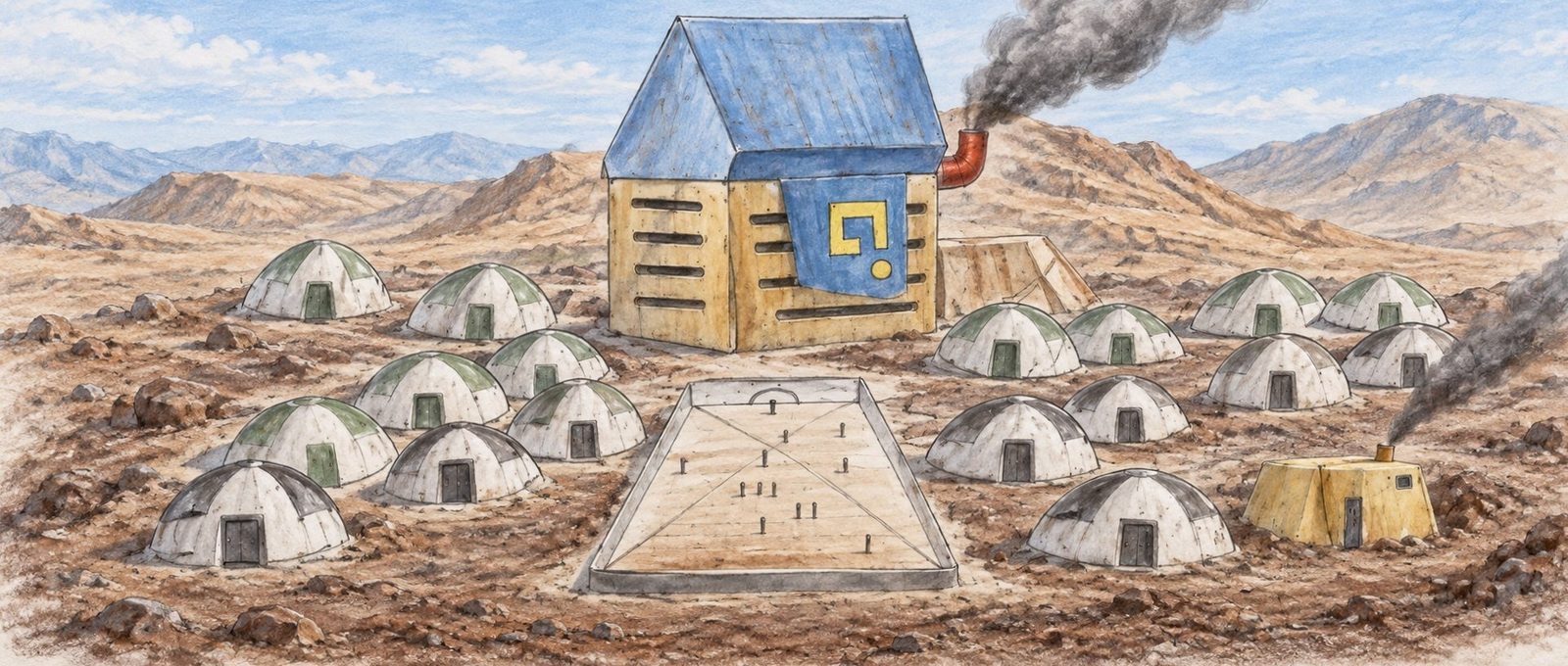
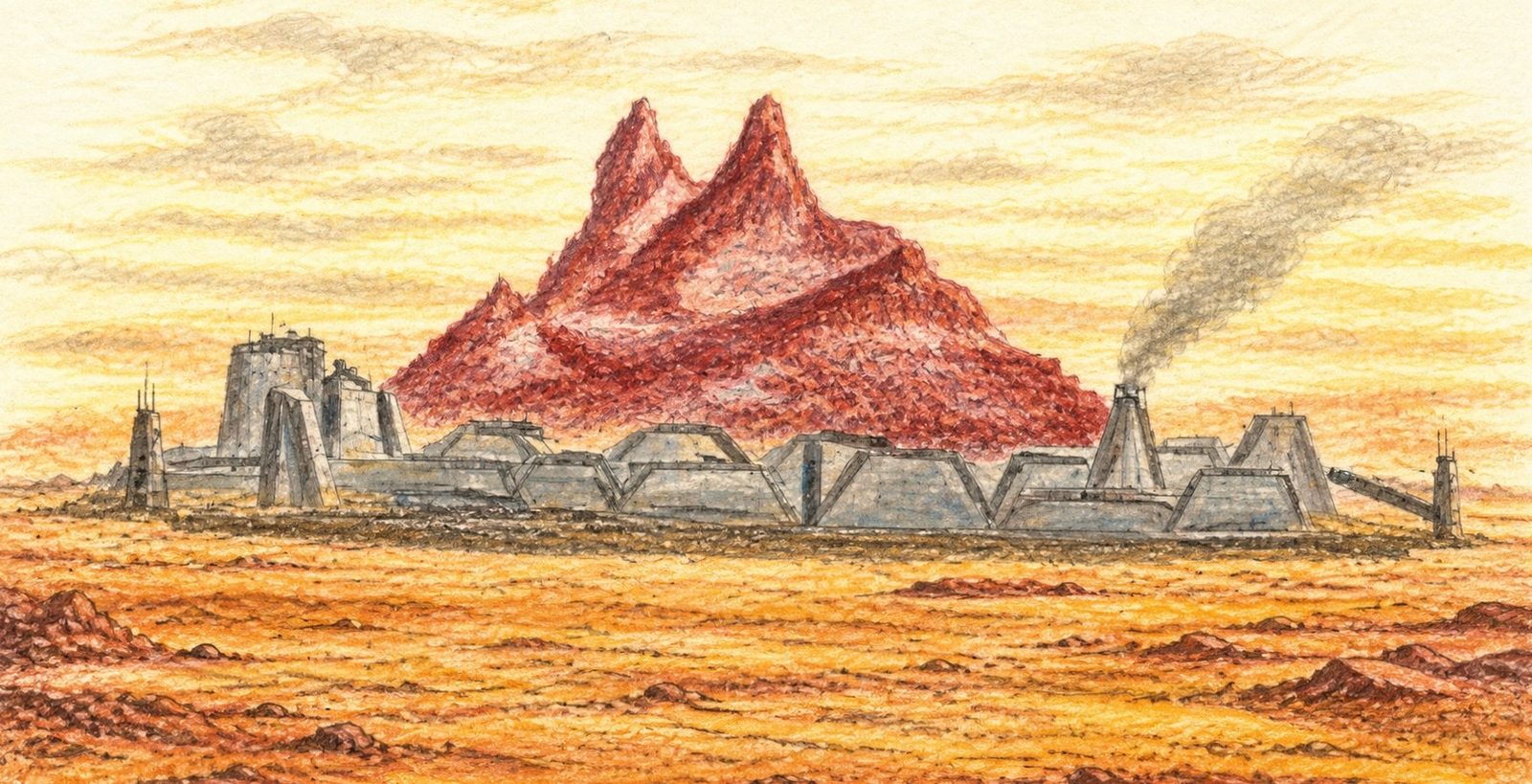
Drag cities are most often enormous villages built without any planning. Most houses are of mud brick or outright temporary — yurts and tents; only the nobility and the chieftains have permanent, sturdy buildings. Most cities have no sewerage; special Drags and slaves organised in work gangs cart away the waste, and the dung goes to the fields as fertiliser.
The Drags' staple food is the Zhiratan Mushroom, undemanding and highly nutritious. These fungus-like plants grow up to three metres tall even on the poorest soil, and their fields cover the land around the settlements. The owners of the fields are wealthy Drags with standing in society, but greater still is the standing of those who hold the factories and plants: slaves of other races often work there, and these plants supply the Drag armies with equipment. Private business means small companies and planters, and every businessman keeps a small army of his own to fend off competitors and anyone who wants to seize the business.
The Drags have no concept of money and the economy runs on barter. The nearest thing to money is cartridges, which serve as a universal means of payment. Banking does not exist in this society either.
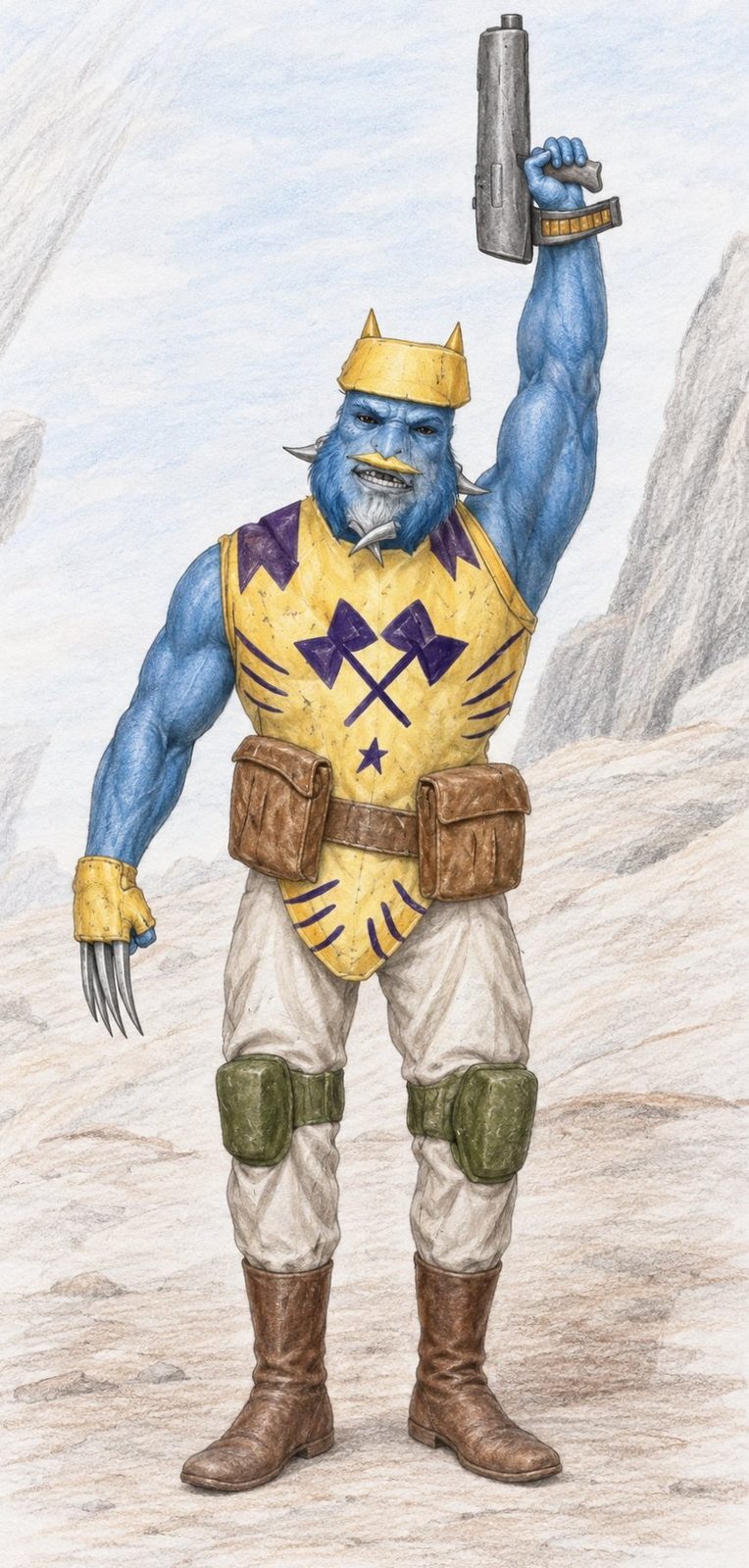
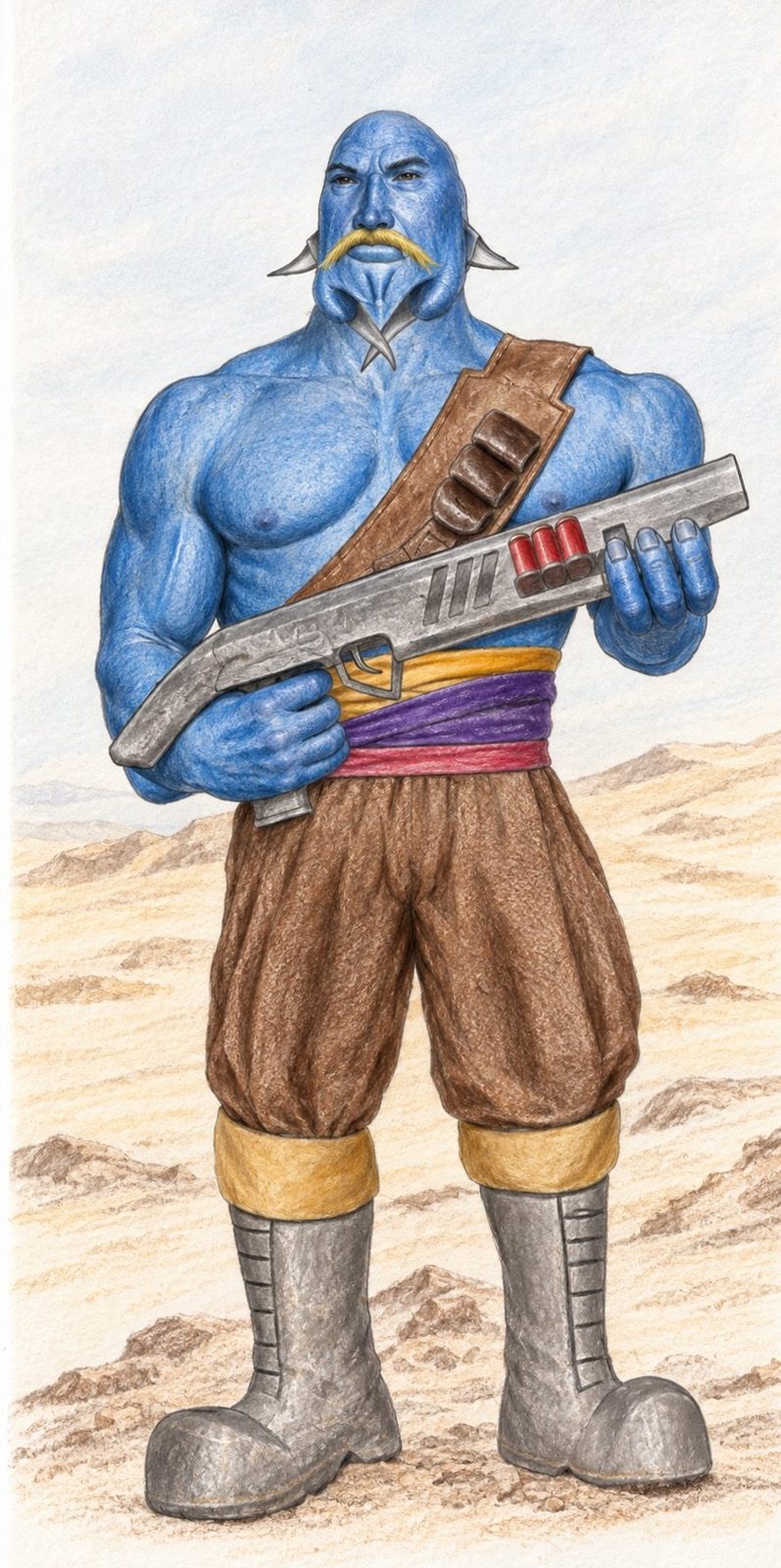
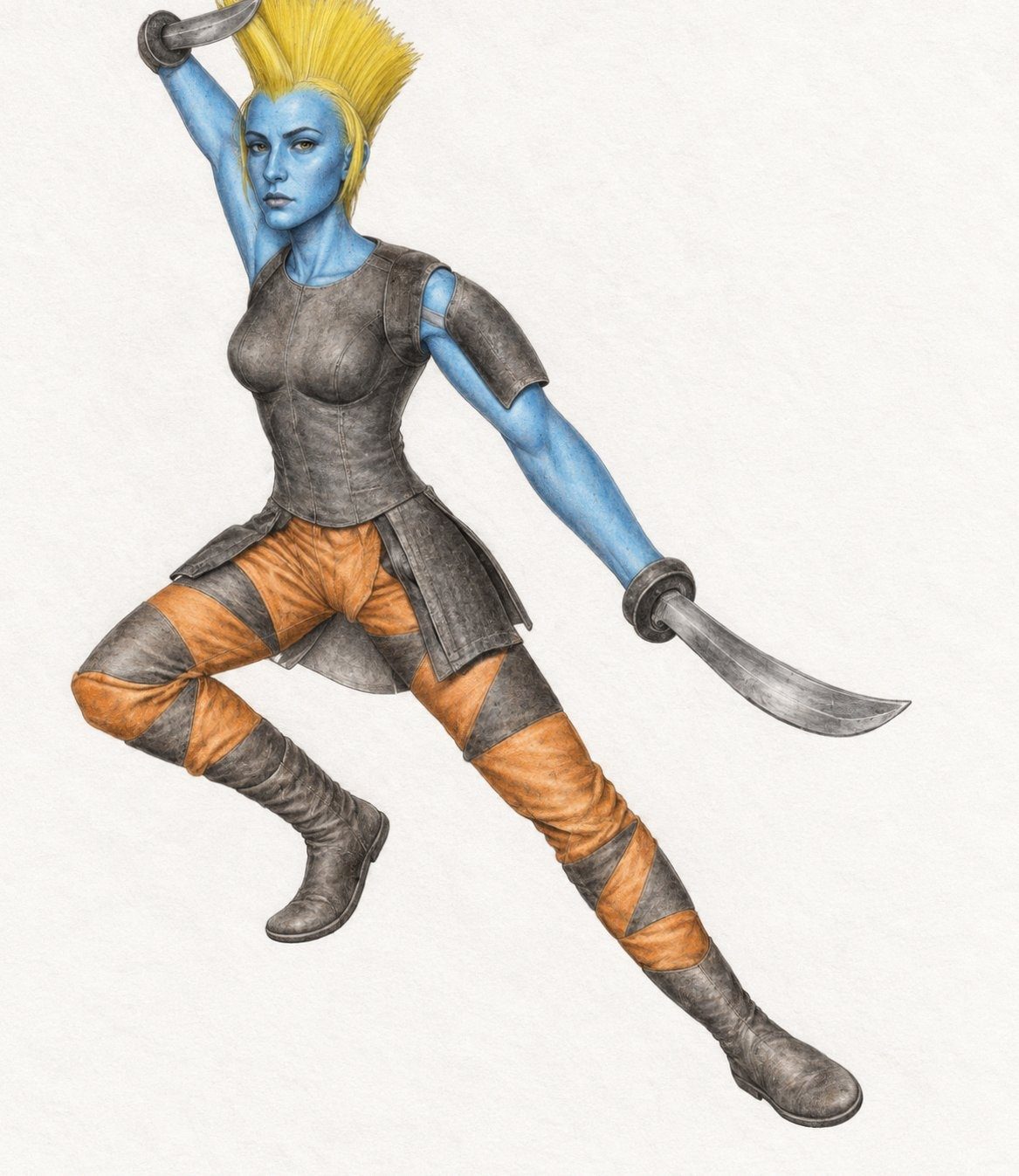
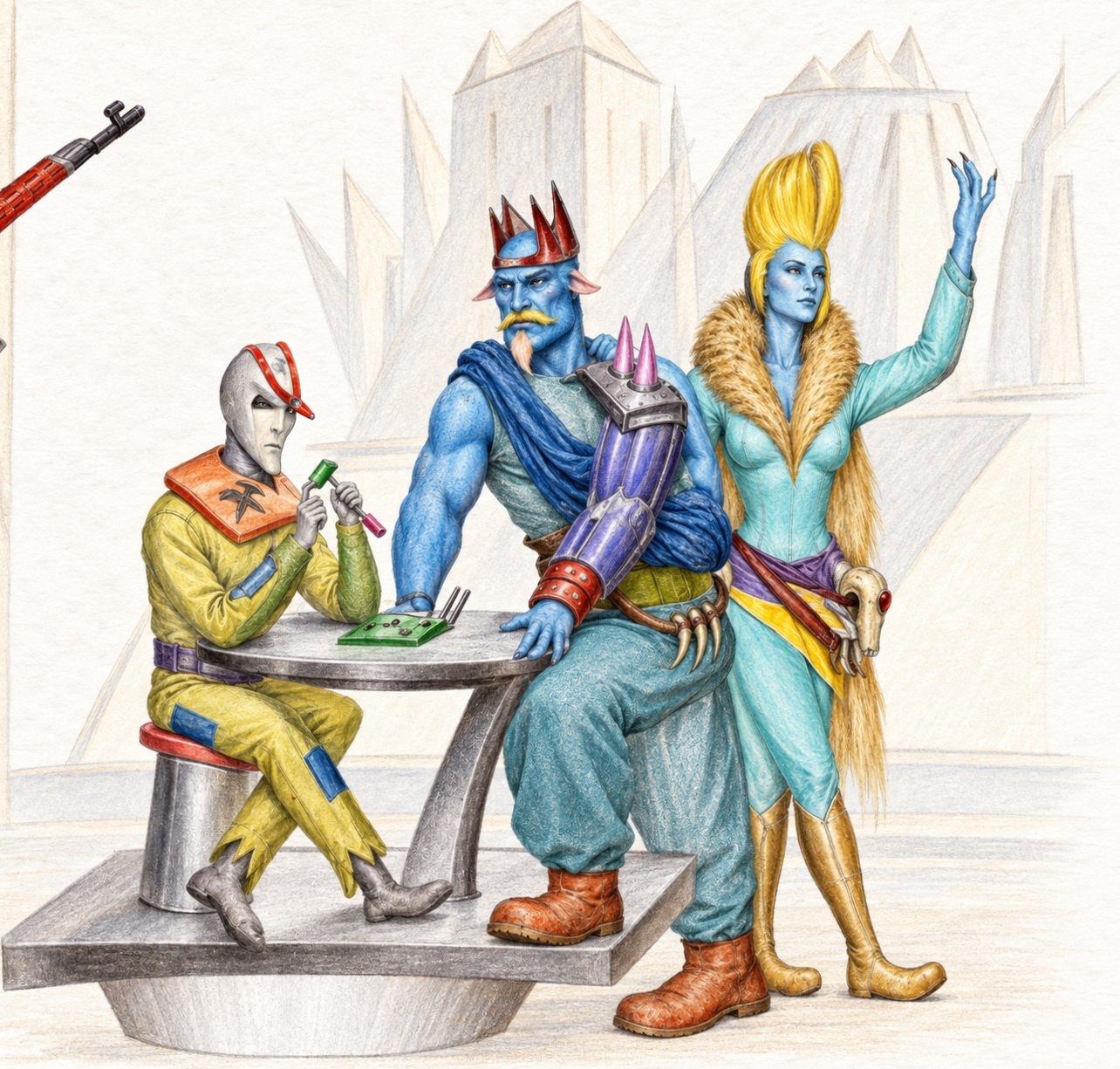
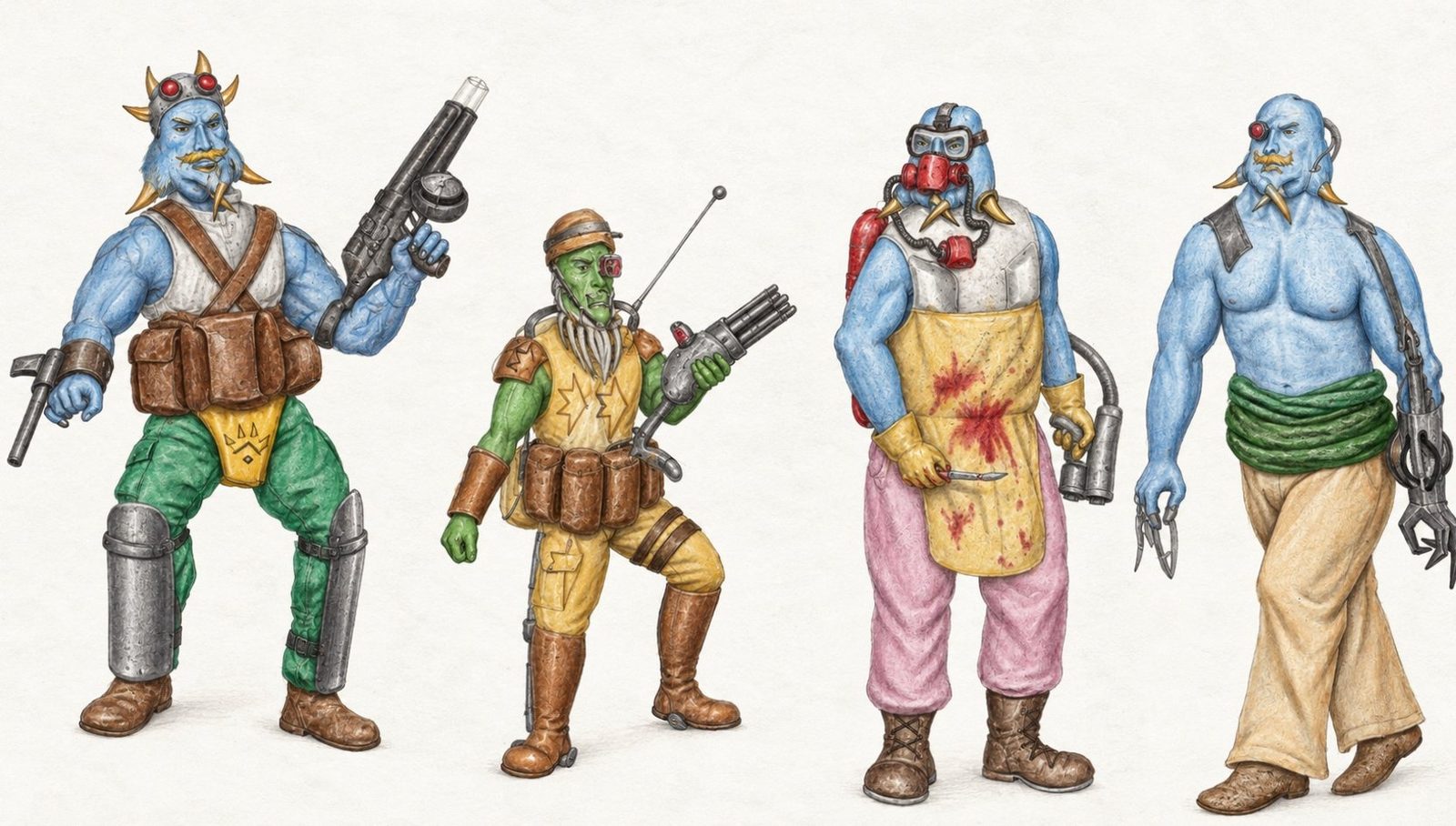
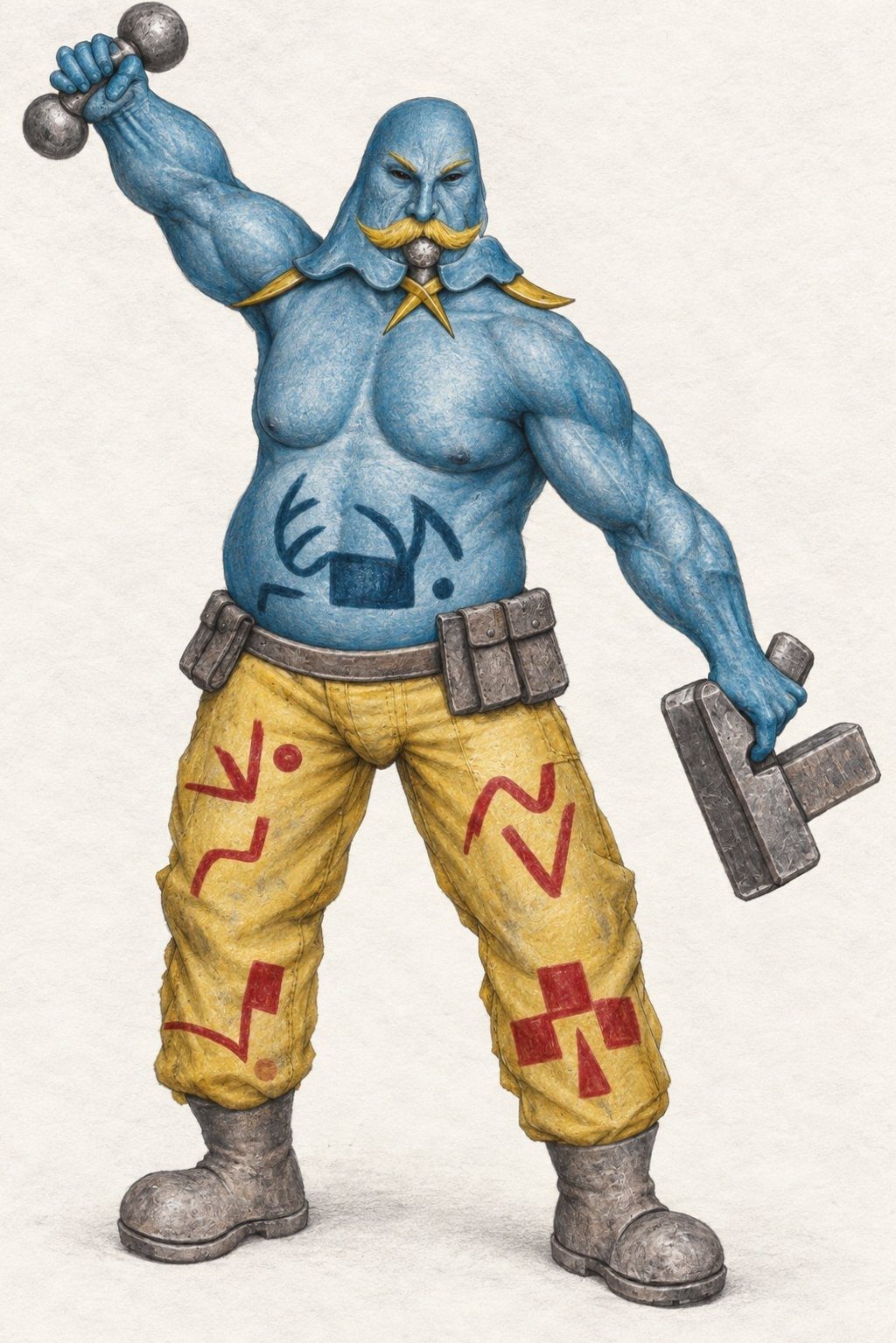
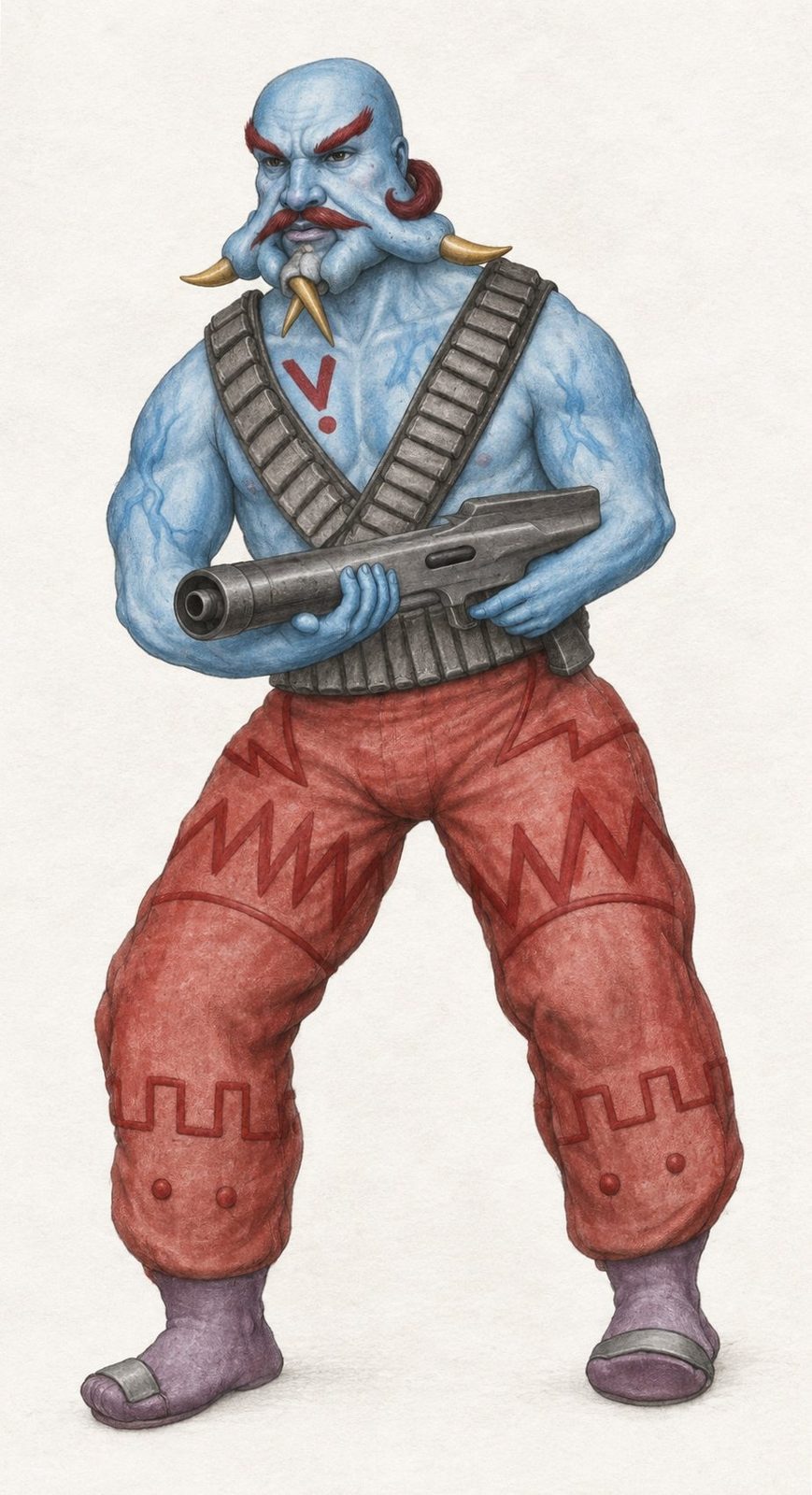
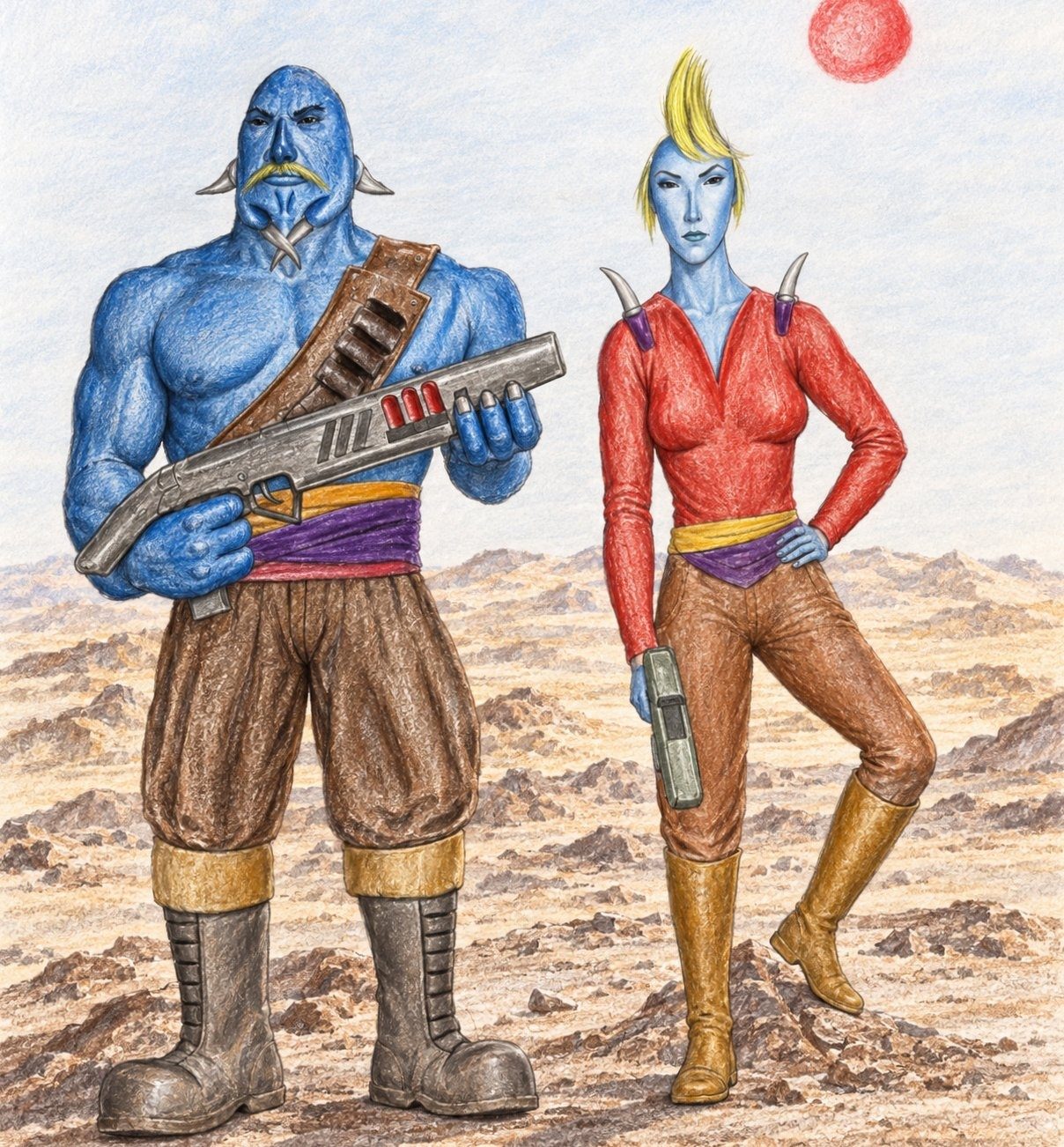
A Drag is a stocky humanoid with light-blue skin, yellow bony spikes on the face in the manner of whiskers and tusks, and a crest on the head; among the nobility the crest is taller and brighter. Many Drags wear no armour at all, and mark their standing in society with clan signs on body and clothing.
The illustrations show, in order: a pair of Drags — a fighter with a rifle and a female; two Drag settlements — a small one with a Drag football pitch in the middle, the chieftain's fortified house and collapsible yurts, and a typical settlement of sector P-4; and the flag of one of the warlords.
Below, with captions, are Drag fighters of various armies and wars, a valkyrie, a Drag court with a chieftain, a princess and a slave technician, and the “Sector P-4” sheet with a specialist fighter, a Natog, a Drag surgeon and an augmented Drag.